Patjuk, Red Bean Porridge
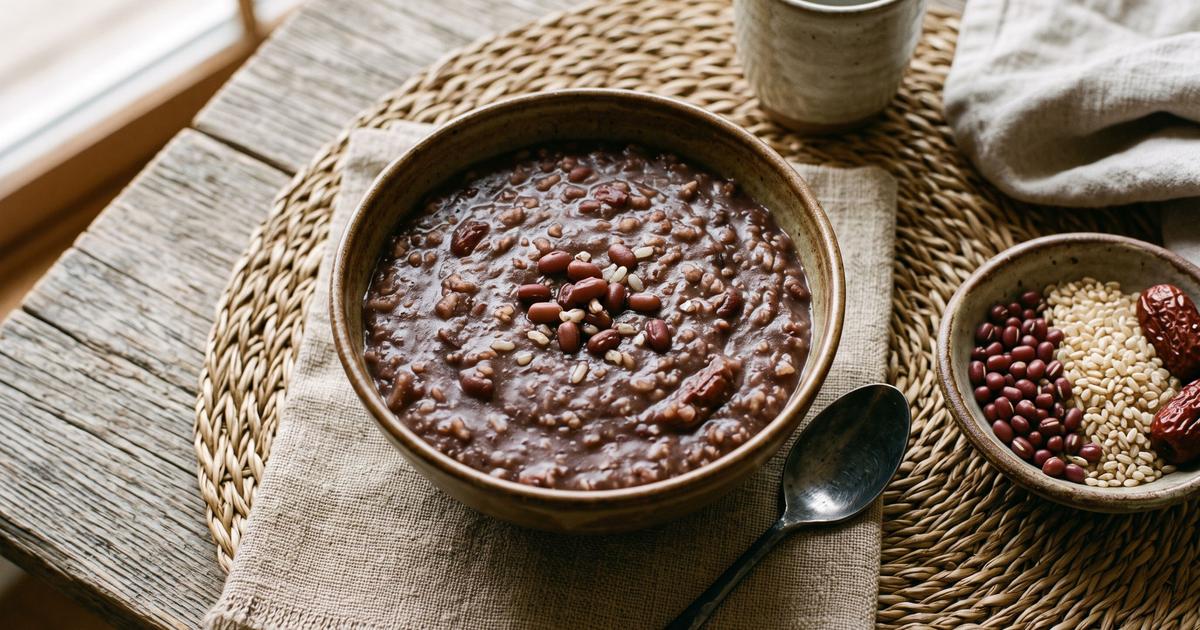
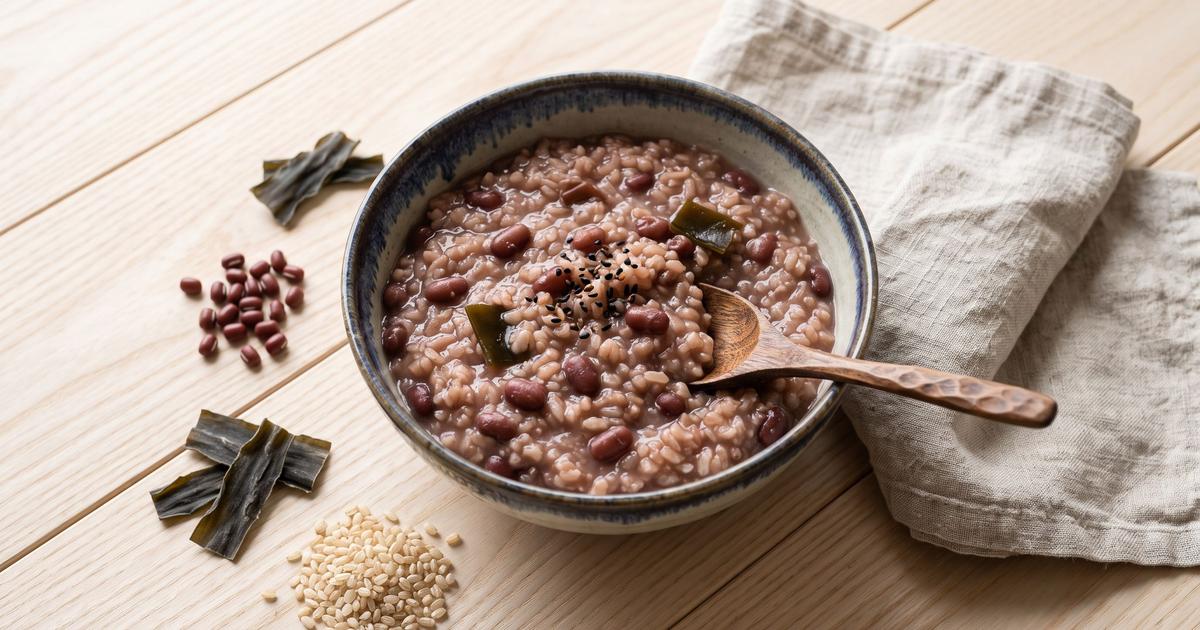
Patjuk is a thick Korean porridge of red beans, eaten through the winter and traditionally at the solstice, when a bowl of it is said to see out the cold. It is a meal, not a sweet: the adzuki are simmered down until they collapse, short-grain rice thickens the pot, and the sweetening is restrained, a note rather than the point. Rock sugar is the usual choice, but a little blended date does the same work and keeps the fiber. Boiling and draining the beans once at the start is a small step that takes the raw edge off. It reheats into an even thicker, more comforting bowl the next day.
Ingredients
- 1 cup Adzuki beans, dried
- 1/2 cup short grain brown rice
- 3 Medjool dates, pitted
- 2 slices Ginger, coins
Method
- Cover the adzuki beans with water in a pot, bring to a boil, and cook 5 minutes. Drain and discard this first water. Adzuki carry a raw, faintly bitter edge, and dumping the first boil is the traditional way to wash it out.
- Return the beans to the pot with the ginger coins and 6 cups (1420 ml) fresh water. Simmer, partly covered, for about 50 minutes, until the beans are so soft they crush with no resistance.
- Fish out the ginger, then mash the beans right in the pot, or blend half and return it. Push a little more than half to a puree and leave the rest whole, which gives patjuk its signature body: creamy, with beans still to find.
- Stir in the short-grain brown rice and simmer another 30 minutes, adding hot water as needed, until the rice is fully soft and the porridge is thick enough to mound on a spoon. The sticky short-grain rice is what thickens it, so do not swap in a long grain.
- Blend the dates with 3 tablespoons (45 ml) hot water into a smooth paste and stir it through at the end. Korean patjuk is only lightly sweet, closer to savory than a dessert, so add the date paste gradually and stop while it still tastes of bean. Serve hot.
Nutrition
Estimated per serving: 240 calories, 10 g protein, 9 g fiber, 10 mg sodium. Computed from USDA FoodData Central reference values for the main ingredients. This is an approximation, not a laboratory measurement. How these are computed.
Cost per serving is estimated from US national-average retail prices for cheap staple forms, using BLS dried-bean prices and USDA produce prices. Prices vary by store and season, so treat it as a guide, not a receipt. How this is computed.