Hobak-juk (Kabocha Porridge)
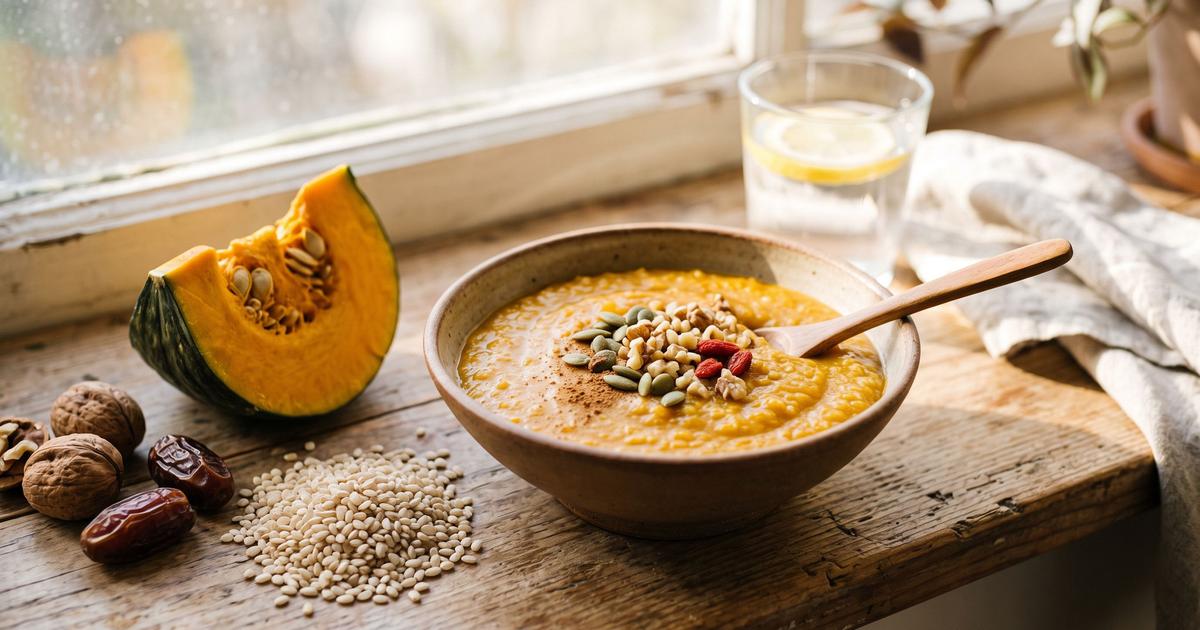
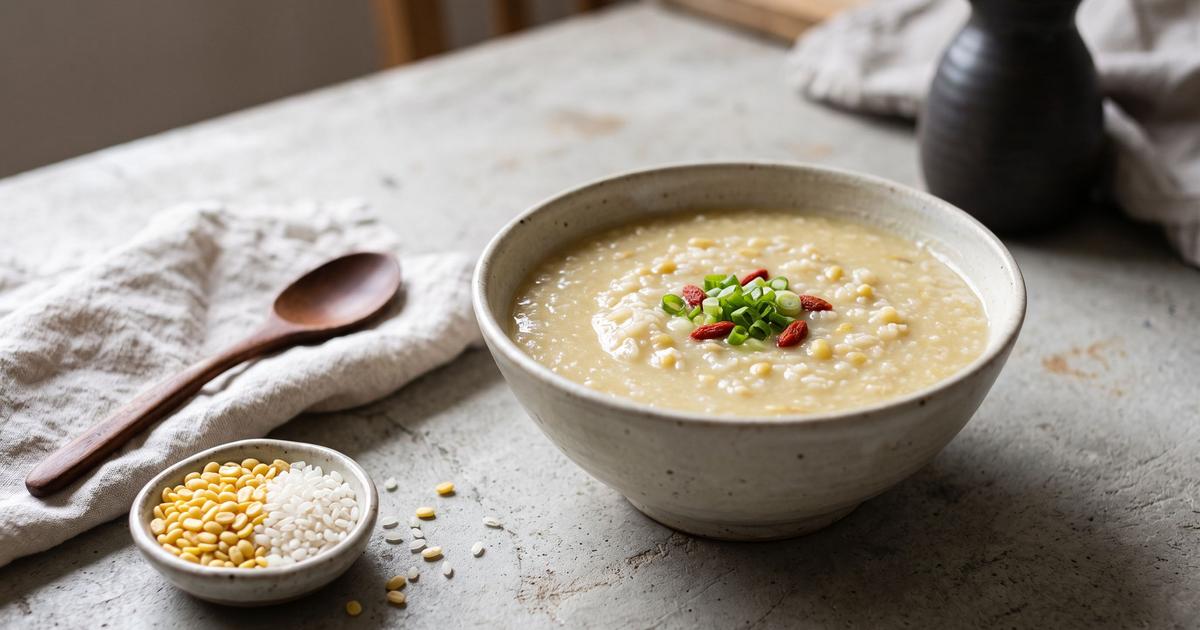
Hobak-juk is what a Korean kitchen makes for someone who is unwell or simply wants something gentle first thing in the morning: pumpkin or kabocha cooked down with sweet rice into a smooth, faintly sweet porridge. The usual recipe leans on polished glutinous rice and added sugar. Neither is necessary. Short-grain brown rice cooks down just as soft while keeping its bran, and kabocha is sweet enough that a few blended dates finish the job. It reheats well through the week with a splash of water, which makes a single pot several unhurried breakfasts.
Ingredients
- 1 1/2 lb Kabocha squash, seeded, cut into chunks
- 1/2 cup short grain brown rice
- 4 wholes Medjool dates, pitted
- 1 tbsp Sesame seeds, toasted
Method
- Rinse the rice, then simmer it in 3 cups (710 ml) water, covered, for about 35 minutes, until the grains blow out soft and the pot turns loose and creamy. Short-grain brown rice keeps its bran, so it needs longer and more water than the white sweet rice this dish usually uses; the reward is fiber the polished grain has none of.
- While the rice cooks, steam the kabocha chunks over simmering water 15 minutes, until a fork slides through. Kabocha's skin is edible and thin, so there is no need to peel it: it softens fully and adds color.
- Blend the steamed kabocha with the dates and 0.5 cup (120 ml) water until completely smooth. Kabocha is drier and sweeter than most winter squash, which is exactly why it needs no sugar; the dates only nudge it along.
- Stir the kabocha puree into the cooked rice and simmer together 5 minutes, loosening with hot water to a pourable, spoon-coating porridge. Cooking them together for a few minutes marries the two so it tastes like one thing rather than squash stirred into rice.
- Serve warm, topped with toasted sesame. Traditionally a pinch of salt goes in at the end; here the roasted squash and date read sweet-savory on their own, so skip it and let the sesame finish the bowl.
Nutrition
Estimated per serving: 180 calories, 4 g protein, 5 g fiber, 20 mg sodium. Computed from USDA FoodData Central reference values for the main ingredients. This is an approximation, not a laboratory measurement. How these are computed.
Cost per serving is estimated from US national-average retail prices for cheap staple forms, using BLS dried-bean prices and USDA produce prices. Prices vary by store and season, so treat it as a guide, not a receipt. How this is computed.