Nurungji (Toasted Rice Crisps)
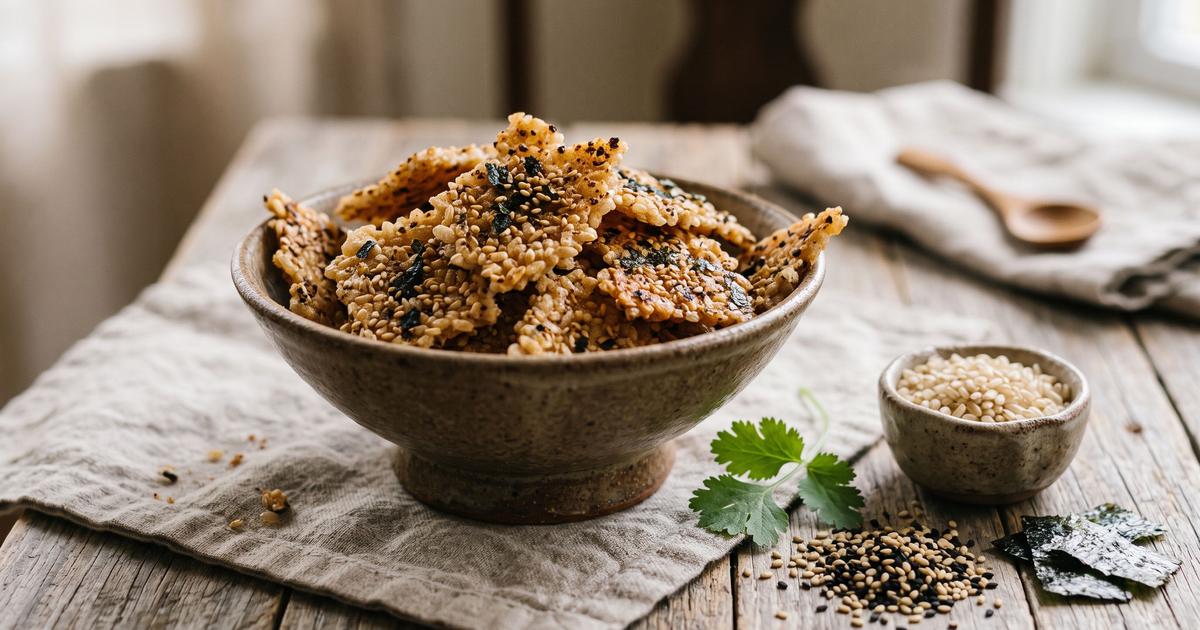
Every pot of rice cooked over direct heat leaves a layer scorched to the bottom, and in Korea that layer, nurungji, is not a mistake but a prize: crunchy, toasty, eaten as a snack or poured with hot water into a simple tea. This makes it deliberately, from leftover rice, in a dry pan. Short-grain brown rice gives it more chew and a nuttier toast than white, and because the whole thing is just grain and heat, it is about the cheapest snack you can put together. A shower of sesame and crumbled nori is all the seasoning it wants.
Ingredients
- 3 cups short grain brown rice, cooked, day-old
- 1 tbsp Sesame seeds, toasted
- 1 sheet Nori, crumbled
- 1/2 tsp Gochugaru, optional
Method
- Use cold, day-old cooked rice. The bran on brown rice holds moisture, and a night in the fridge dries the grains just enough that they crisp rather than steam when they hit the pan.
- Heat a wide nonstick pan over medium and press about a quarter of the rice into a thin, even round with the back of a spatula. Press hard: firm contact with the hot dry pan is what browns the starch on the surface and fuses the grains into one sheet, no oil required.
- Toast undisturbed 5 to 6 minutes, until the underside is deep golden and lifts away in one piece, then flip and toast the second side 3 to 4 minutes. Moving it too soon breaks the sheet before it sets, so leave it alone until it releases on its own.
- Slide the crisp onto a rack and repeat with the rest of the rice. Cooling on a rack, not a plate, keeps the underside from steaming soft: the shard finishes brittle as it cools.
- Break into shards and toss with toasted sesame, crumbled nori, and the gochugaru if you want a little heat. The toasted brown-rice flavor is nutty enough to carry the snack, so no salt is needed, just the sea note from the nori.
Nutrition
Estimated per serving: 170 calories, 4 g protein, 3 g fiber, 15 mg sodium. Computed from USDA FoodData Central reference values for the main ingredients. This is an approximation, not a laboratory measurement. How these are computed.
Cost per serving is estimated from US national-average retail prices for cheap staple forms, using BLS dried-bean prices and USDA produce prices. Prices vary by store and season, so treat it as a guide, not a receipt. How this is computed.