Ttangkong Gangjeong, Peanut and Date Clusters
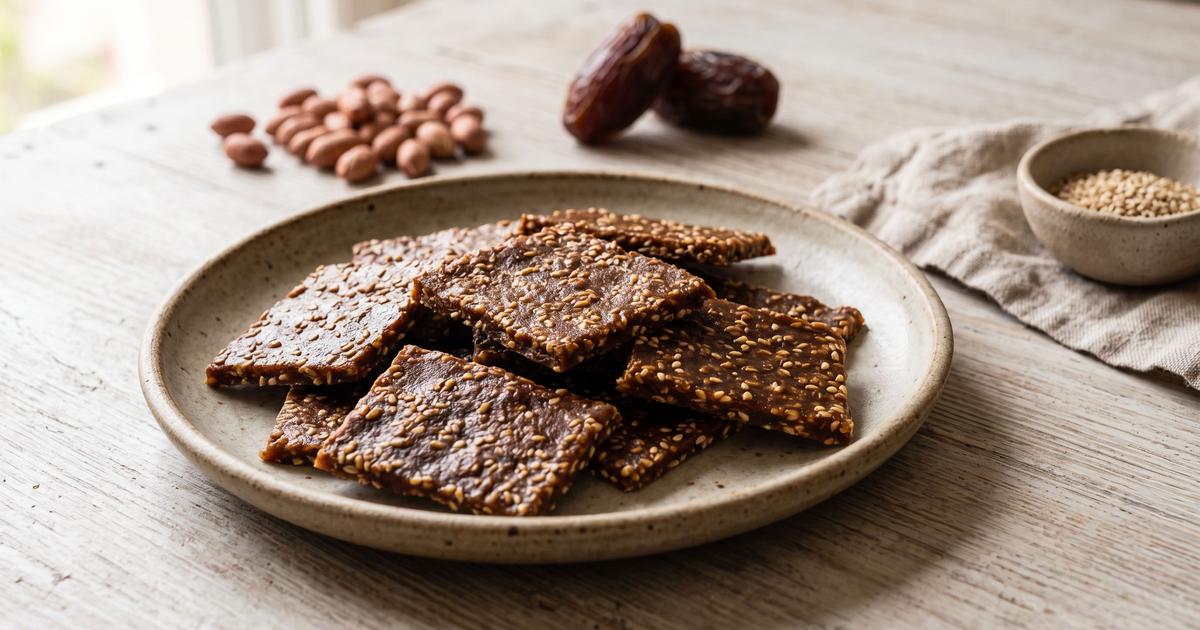
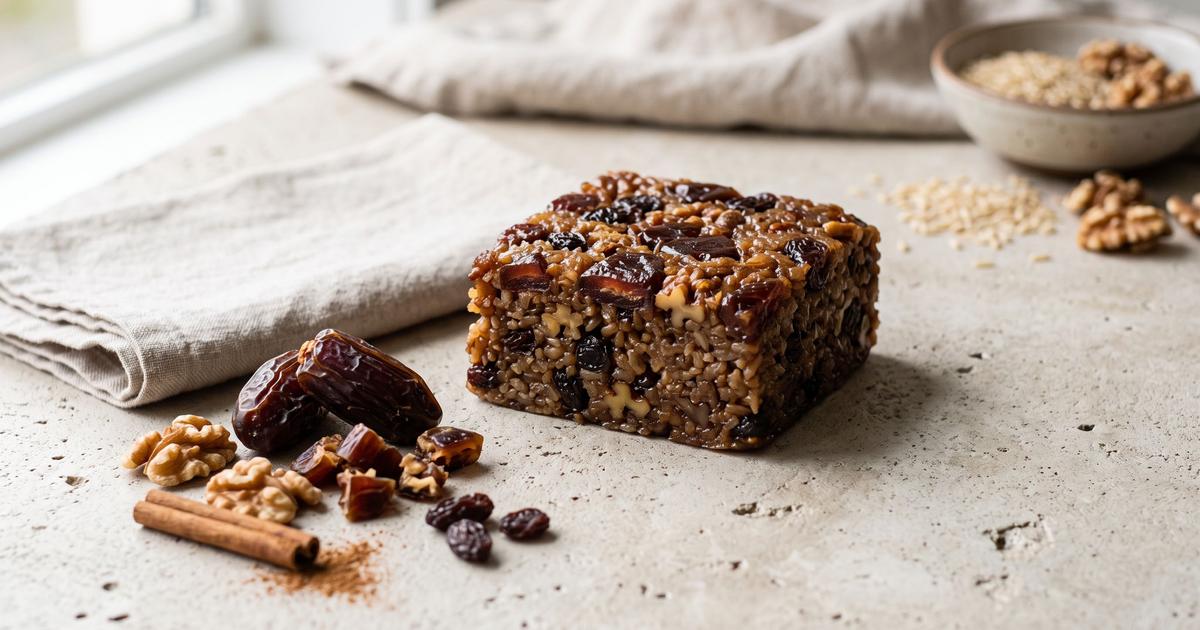
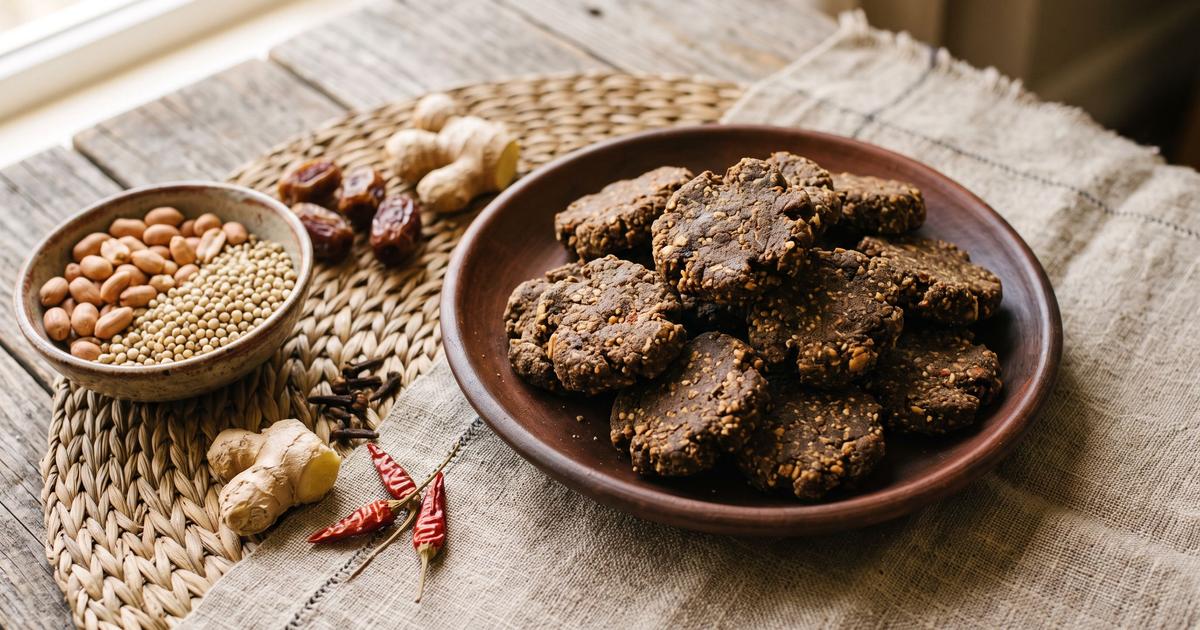
Gangjeong covers the Korean family of pressed, syrup-bound snacks, from puffed rice to nuts, cut into neat squares for the New Year and for tea. The binder is normally a cooked sugar syrup, and here reduced dates do that work: blended smooth and simmered down, they turn glossy and sticky enough to hold a pan of toasted peanuts together. Fold the nuts in off the heat, press the mass flat while it is still warm, and cut it only once it has cooled and firmed. The result is brittle and sesame-flecked, sweet from fruit alone.
Ingredients
- 2 cups Peanuts, raw
- 8 pieces Medjool dates, pitted
- 2 tbsp Sesame seeds, toasted
- 1/2 tsp Ginger, grated
Method
- Toast the peanuts in a dry pan over medium heat until they are golden, about 7 minutes, then rub off any loose skins. Toasting sets the crunch and the flavor that have to hold up once the nuts are coated.
- Blend the dates with 6 tbsp (90 ml) hot water into a smooth, thick paste. Dates replace the cooked sugar syrup that binds the usual gangjeong, and blended they pour and coat evenly.
- Simmer the date paste in a wide pan over medium heat, stirring, for 3 to 4 minutes, until it thickens and turns glossy and sticky. Driving off the water concentrates the sugars so the coating sets firm as it cools instead of staying tacky.
- Take the pan off the heat and stir in the peanuts, sesame, and ginger until every nut is coated. Folding off the heat keeps the paste from scorching while you work.
- Scrape the mixture onto parchment, lay a second sheet on top, and press it flat to about 1/2 inch (1 cm) thick. Cool it completely, then cut into squares. Pressing while warm compacts the clusters so they hold together, and cutting them cold gives clean edges.
Nutrition
Estimated per serving: 240 calories, 10 g protein, 4 g fiber, 5 mg sodium. Computed from USDA FoodData Central reference values for the main ingredients. This is an approximation, not a laboratory measurement. How these are computed.
Cost per serving is estimated from US national-average retail prices for cheap staple forms, using BLS dried-bean prices and USDA produce prices. Prices vary by store and season, so treat it as a guide, not a receipt. How this is computed.