Yangnyeomjang, Korean Scallion and Sesame Sauce
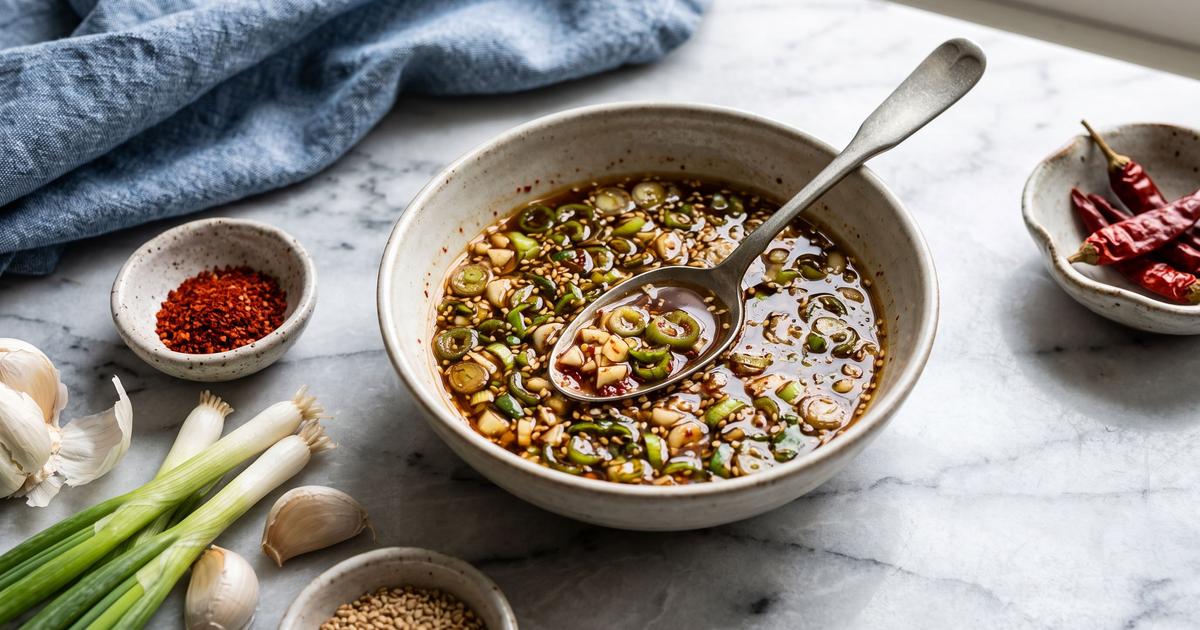
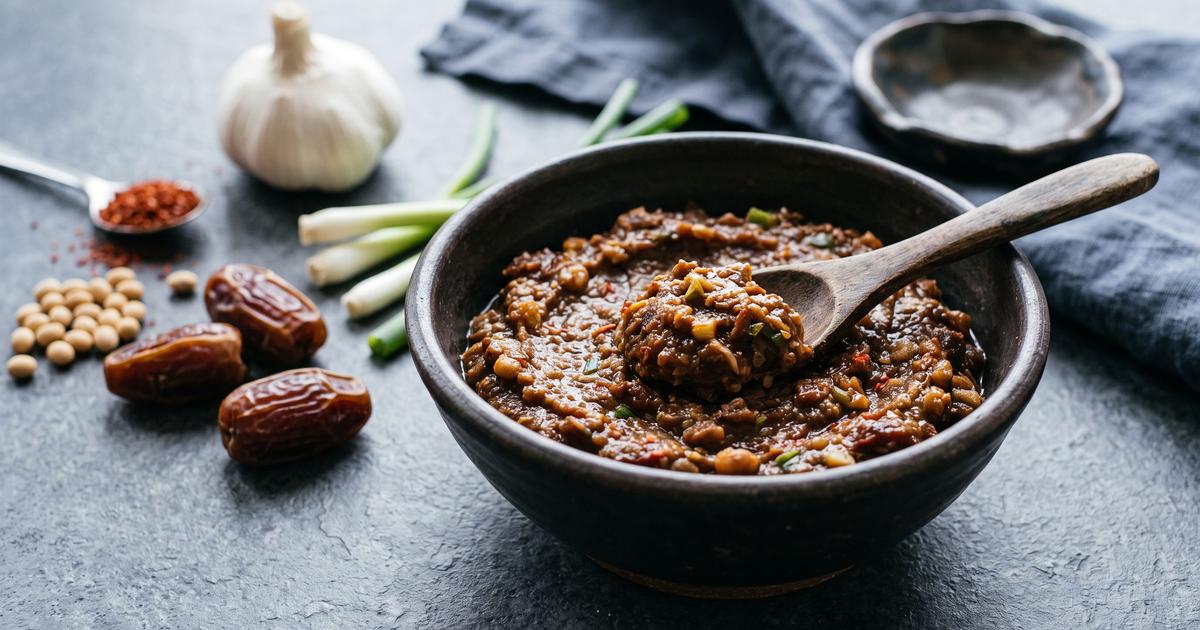
Yangnyeomjang is the sauce that sits on the Korean table and turns something plain into a meal, spooned over blocks of steamed tofu, a bowl of rice, or a plate of just-blanched vegetables. It is nothing more than seasoned soy sauce, but the balance is the point: soy for salt, vinegar for lift, scallion and garlic for punch, gochugaru for gentle heat and color, and toasted sesame for the finish. Cutting the tamari with water and a mashed date lets you use it freely without leaning on salt, and giving it ten minutes to sit pulls the raw edges together. Keep a jar in the fridge and most simple dishes season themselves.
Ingredients
- 3 tbsp Low-sodium tamari
- 1 tbsp unseasoned rice vinegar
- 1 piece Medjool dates, pitted, mashed with 1 tbsp (15 ml) hot water into a paste
- 3 pieces Scallions, finely sliced
- 1 clove Garlic, grated
- 1/2 tsp Ginger, grated
- 1 tbsp Gochugaru
- 1 tbsp Sesame seeds, toasted and lightly crushed
Method
- Whisk the tamari, vinegar, date paste, and 2 tbsp (30 ml) water together. The water and date stretch the tamari so the sauce can season a dish generously without the full sodium hit of straight soy sauce; this dilution is the trick to using soy lightly.
- Stir in the scallions, garlic, ginger, gochugaru, and sesame. Adding these raw keeps them sharp, and the coarse gochugaru gives color and a slow, rounded warmth rather than the sharp bite of a hotter flake.
- Let the sauce sit 10 minutes before using. The gochugaru softens and blooms in the liquid and the raw garlic mellows into it, which is why a short rest makes it taste more settled.
- Spoon it over steamed tofu, plain rice, blanched greens, or roasted vegetables. Because it is the seasoning and not a garnish, drizzle it on; a little goes a long way. It keeps 5 days refrigerated.
Nutrition
Estimated per serving: 20 calories, 1 g protein, 1 g fiber, 220 mg sodium. Computed from USDA FoodData Central reference values for the main ingredients. This is an approximation, not a laboratory measurement. How these are computed.
Cost per serving is estimated from US national-average retail prices for cheap staple forms, using BLS dried-bean prices and USDA produce prices. Prices vary by store and season, so treat it as a guide, not a receipt. How this is computed.