Baechu-geotjeori, Fresh Napa Cabbage Kimchi Salad
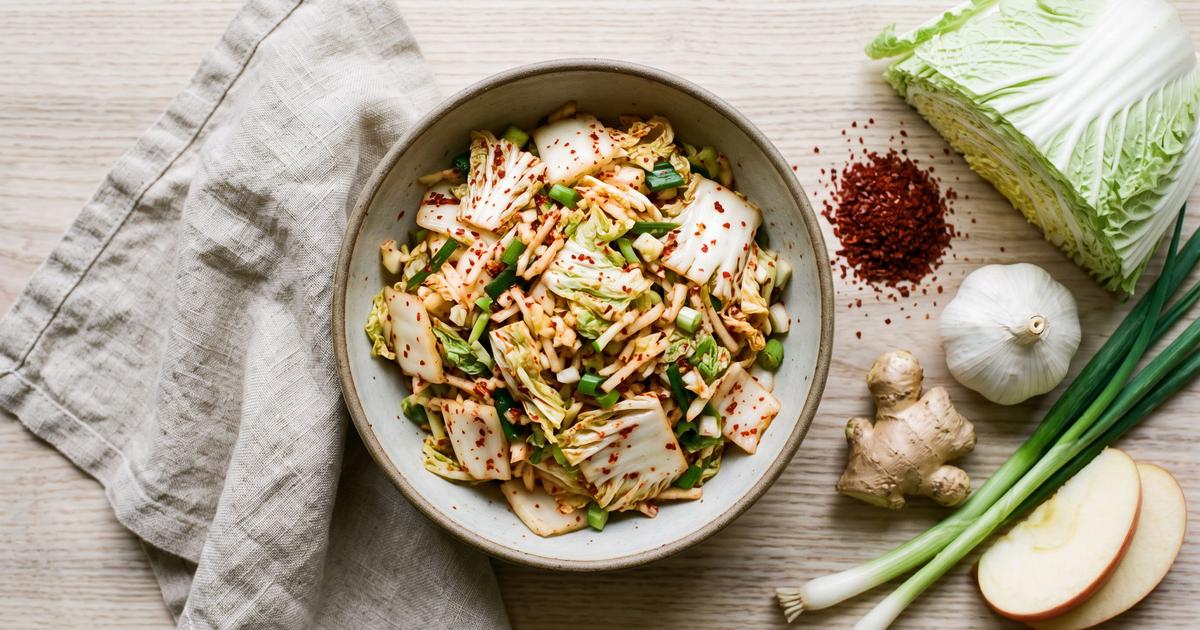
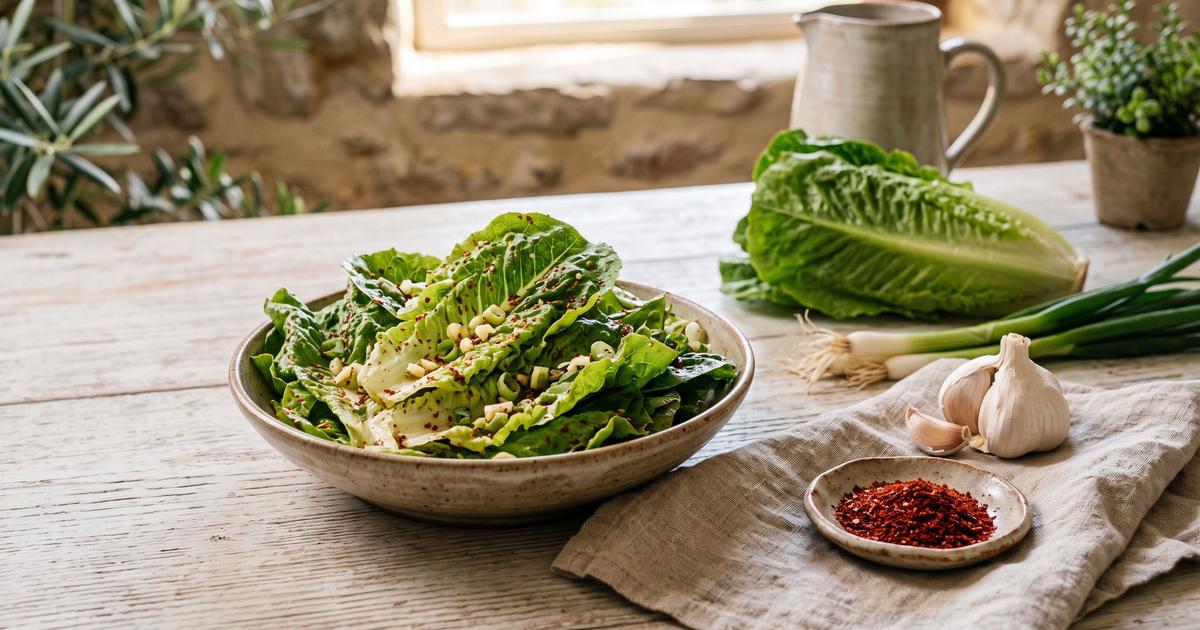
Geotjeori is fresh kimchi, the kind made in minutes and eaten the same day rather than packed away to sour for weeks. Baechu-geotjeori uses napa cabbage, dressed at the last moment so the leaves stay crisp and the garlic and gochugaru taste bright rather than fermented. A full kimchi leans on a long salting and salted seafood for its savory depth; this quick version wilts the cabbage with a measured splash of tamari and borrows sweetness and body from grated apple, so it stays light and needs no added salt. Massage the paste in by hand, and serve it as a sharp, spicy counterpoint to anything mild.
Ingredients
- 1 lb Napa cabbage, about 450 g, cut into 1.5-inch (4 cm) pieces
- 1 tbsp Low-sodium tamari
- 2 tbsp Gochugaru
- 3 cloves Garlic, grated
- 1 tsp Ginger, grated
- 1/2 piece Apples, grated
- 1 tbsp unseasoned rice vinegar
- 3 pieces Scallions, cut into 1-inch (2.5 cm) lengths
- 1 tbsp Sesame seeds, toasted
Method
- Toss the cut napa with the tamari and let it sit 10 minutes, then squeeze the pieces gently to shed their water. A brief cure from the tamari draws out enough moisture that the leaves bend without going limp, and squeezing keeps the finished salad from turning watery; this measured tamari is the only salt, standing in for the heavy brine a full kimchi uses.
- Meanwhile stir the gochugaru, garlic, ginger, grated apple, and vinegar into a loose paste and let it stand while the cabbage wilts. Sitting in the wet paste blooms the gochugaru's color and softens its raw edge, and the apple gives the sweetness and body that fish sauce and sugar bring to an aged kimchi.
- Add the drained napa, scallions, and sesame to the paste and massage it through with your hands. Hands coat every piece evenly and bruise the cabbage just enough to take up the seasoning, which a spoon cannot do as well.
- Eat it right away, or within a day. Unlike buried, aged kimchi this one is meant to be fresh and crunchy, so there is no fermenting to wait on; the crunch is the whole appeal.
Nutrition
Estimated per serving: 45 calories, 2 g protein, 3 g fiber, 200 mg sodium. Computed from USDA FoodData Central reference values for the main ingredients. This is an approximation, not a laboratory measurement. How these are computed.
Cost per serving is estimated from US national-average retail prices for cheap staple forms, using BLS dried-bean prices and USDA produce prices. Prices vary by store and season, so treat it as a guide, not a receipt. How this is computed.