Musaengchae (Spicy Radish Salad)
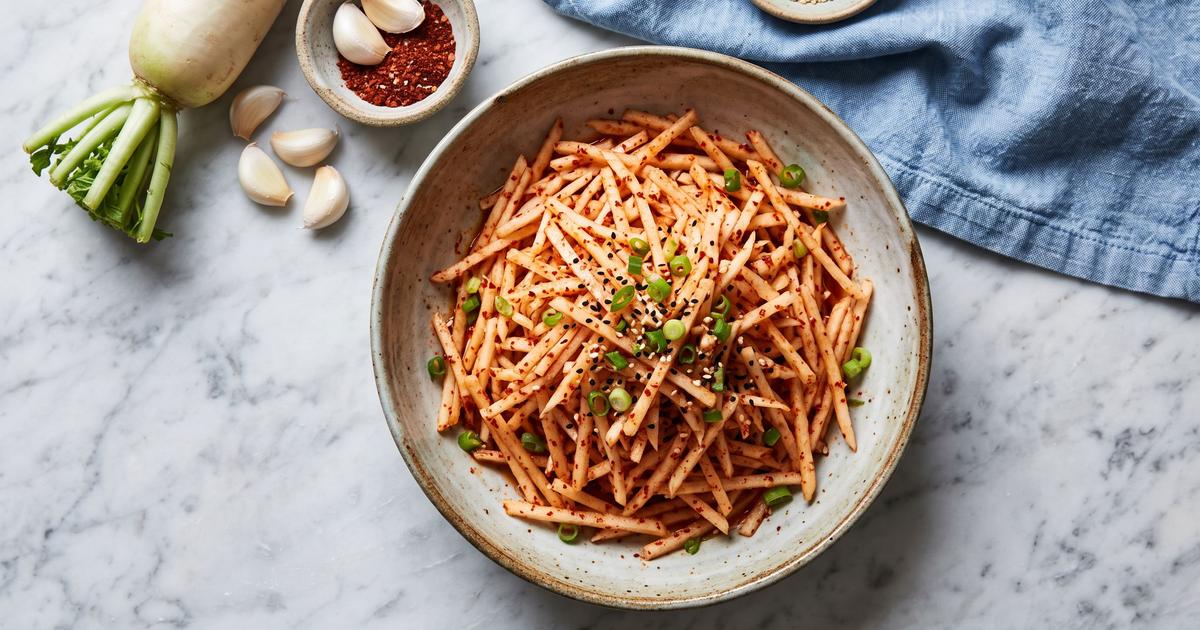
Musaengchae is a everyday Korean banchan, a tangle of julienned daikon seasoned with gochugaru until it glows red. Korean cooks usually salt the radish first to soften it, then squeeze out the water, but that step trades away the vegetable's best quality: its crunch. Leaving the salt out keeps the matchsticks brisk and juicy, and unseasoned rice vinegar supplies the brightness the brine would have. The gochugaru goes on dry, before any liquid, so the coarse flakes bloom in the radish's own moisture and stain it evenly, and a single date replaces the usual spoon of sugar.
Ingredients
- 1 lb Daikon radish, peeled and cut into thin matchsticks (about 4 cups)
- 1 1/2 tbsp Gochugaru
- 2 cloves Garlic, grated
- 2 tbsp unseasoned rice vinegar
- 1 piece Medjool dates, pitted, mashed with 1 tbsp (15 ml) hot water into a paste
- 2 pieces Scallions, thinly sliced
- 1 tbsp Sesame seeds, toasted
Method
- Cut the daikon into planks, stack them, and slice into matchsticks as thin as you can manage. The thinner the cut, the faster the radish drinks in the dressing and the more evenly the color spreads through the pile.
- Sprinkle the gochugaru over the radish first, on its own, and toss with your hands until every strand is stained an even red. Coating the dry radish before any liquid goes in lets the chile bloom against the moisture the radish itself gives up, which is what sets the color.
- Add the garlic, rice vinegar, and date paste and toss again. Musaengchae usually starts by salting the radish to draw out water, but skipping the salt keeps these matchsticks crisp and snappy instead of limp, and the vinegar brings the tang the brine would have added.
- Fold in the scallions and sesame seeds. Serve right away, or chill an hour first: the flavor deepens as the radish sits, and it holds in the fridge for up to four days.
Nutrition
Estimated per serving: 40 calories, 1 g protein, 2 g fiber, 30 mg sodium. Computed from USDA FoodData Central reference values for the main ingredients. This is an approximation, not a laboratory measurement. How these are computed.
Cost per serving is estimated from US national-average retail prices for cheap staple forms, using BLS dried-bean prices and USDA produce prices. Prices vary by store and season, so treat it as a guide, not a receipt. How this is computed.