Ssamjang (Doenjang Dipping Sauce)
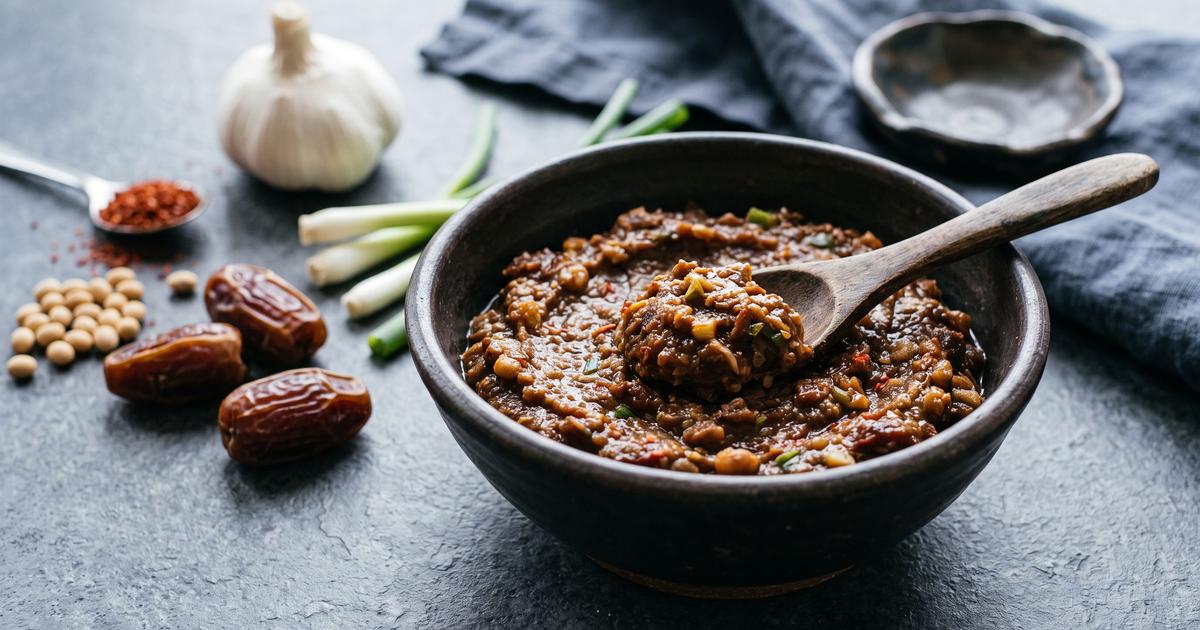
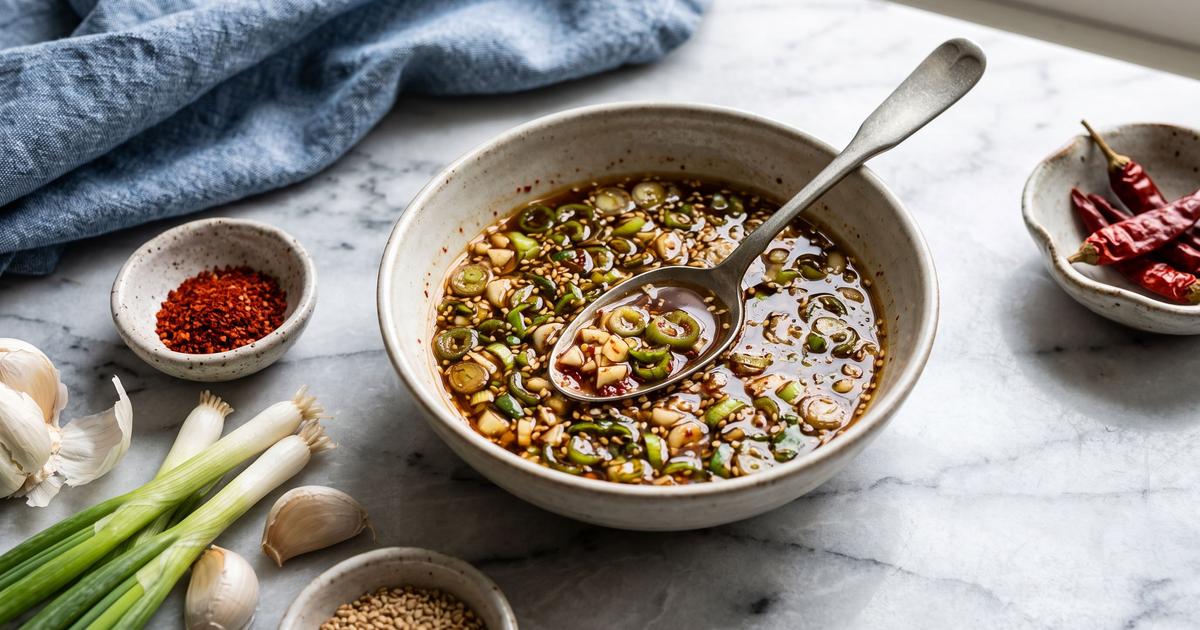
Ssamjang is the dip that makes a Korean ssam, the lettuce-leaf wrap, work: a concentrated, funky, slightly sweet paste smeared in small amounts inside each bite. Its backbone is doenjang, the soybean paste fermented without rice koji that runs deeper and saltier than miso. There is no salt-free way to make doenjang, and no reason to fake it, so this uses just a tablespoon and a half for the whole batch and leans on garlic, gochugaru, scallion, and sesame to fill it out. Date paste replaces the sugar and syrup a standard ssamjang hides. Because a wrap takes only a dab, the sodium spread across a meal stays modest. Anyone watching sodium closely should go lighter still.
Ingredients
- 1 1/2 tbsp Doenjang
- 2 wholes Medjool dates, pitted
- 1 tsp Tomato paste
- 1 tsp Gochugaru
- 2 cloves Garlic, grated
- 2 wholes Scallions, minced
- 1 tbsp Sesame seeds, toasted, half ground
- 1 tsp unseasoned rice vinegar
Method
- Blend the dates with 2 tablespoons (30 ml) warm water into a smooth paste. Classic ssamjang is rounded with sugar, corn syrup, or honey; date paste does the same rounding and brings a little body of its own.
- Mash the doenjang, date paste, tomato paste, gochugaru, garlic, and vinegar together into a thick, spreadable mixture. The tomato paste stands in for the gochujang that usually shares the base, adding red color and a savory sweetness without more fermented salt.
- Stir in the scallions and sesame, grinding half the seeds first. Crushing some of the sesame releases its oil, which is what makes the dip cling to a lettuce leaf instead of sliding off.
- Rest 10 minutes before serving so the raw garlic mellows into the paste. Doenjang carries essentially all the salt in this dip, so keep the spoonfuls small: it is meant to punctuate a bite of vegetables and grain, not coat them. A little over each wrap is the whole idea.
Nutrition
Estimated per serving: 40 calories, 2 g protein, 1 g fiber, 220 mg sodium. Computed from USDA FoodData Central reference values for the main ingredients. This is an approximation, not a laboratory measurement. How these are computed.
Cost per serving is estimated from US national-average retail prices for cheap staple forms, using BLS dried-bean prices and USDA produce prices. Prices vary by store and season, so treat it as a guide, not a receipt. How this is computed.