Kkaennip-jorim, Soy-Braised Perilla Leaves
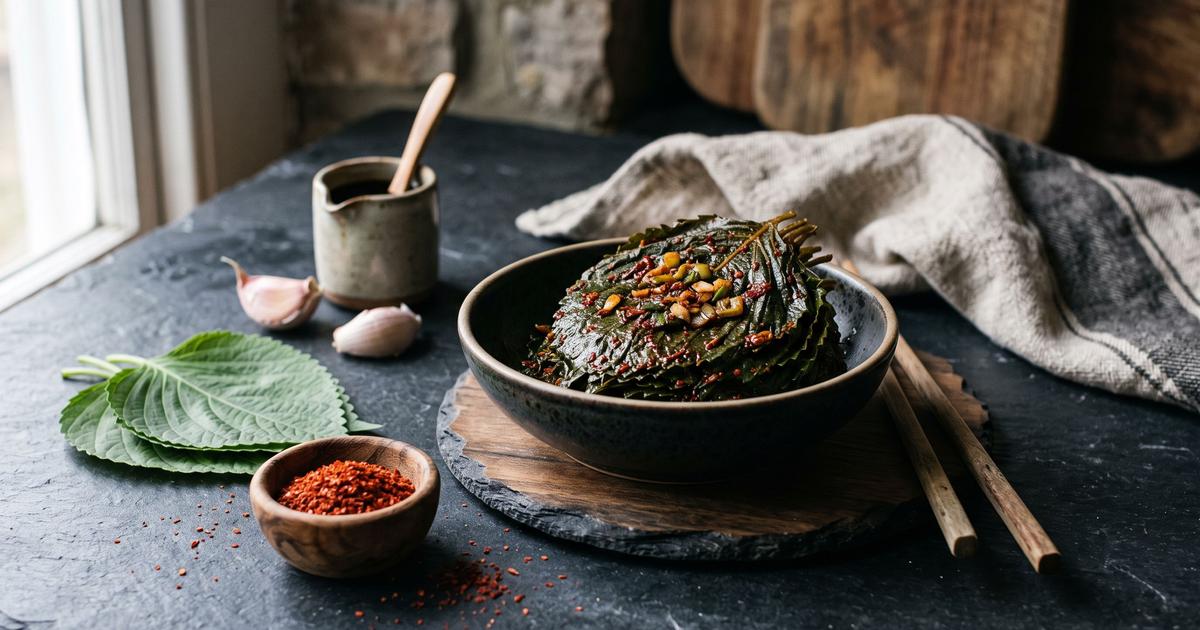
Kkaennip are Korean perilla leaves, sold in the pantry here as shiso, their close cousin: big, soft, and aromatic somewhere between mint, basil, and anise. Kkaennip-jorim layers them with a soy-and-chile seasoning and steams them briefly into one of the most beloved banchan, a small pungent side eaten a leaf at a time with rice. The trick is to season only every few leaves, because the sauce is strong enough to carry the whole stack, which keeps the tamari measured. A mashed date does the sweetening that rice syrup usually handles. Make it a day ahead; the flavor needs the overnight rest.
Ingredients
- 30 pieces Shiso, perilla leaves, washed and patted fully dry
- 2 tbsp Low-sodium tamari
- 1 tbsp Gochugaru
- 3 cloves Garlic, minced
- 2 pieces Scallions, minced
- 1 tbsp Sesame seeds, toasted
- 1 piece Medjool dates, pitted, mashed with 2 tbsp (30 ml) hot water into a paste
Method
- Stir the tamari, gochugaru, garlic, scallions, sesame, and date paste together into a loose seasoning. It is potent and salty on its own, which is exactly what lets a small amount flavor a tall stack of leaves.
- Stack the perilla leaves in a small pot, spooning a little seasoning onto every second or third leaf rather than each one. Smearing it sparingly between layers seasons the whole pile without drowning it, so a couple of tablespoons of tamari does the whole batch.
- Add 2 tbsp (30 ml) water to the pot, cover, and steam over low heat 3 to 4 minutes, until the leaves darken and turn tender. Perilla wilts fast, so a short covered steam melts the layers together while the sauce soaks in, where a longer cook would turn them to mush.
- Let it cool, then refrigerate at least a few hours, ideally overnight. Like most jorim, it is better the next day once the seasoning has fully soaked in, and it keeps a week; peel off a leaf or two at a time to eat with rice.
Nutrition
Estimated per serving: 35 calories, 2 g protein, 2 g fiber, 200 mg sodium. Computed from USDA FoodData Central reference values for the main ingredients. This is an approximation, not a laboratory measurement. How these are computed.
Cost per serving is estimated from US national-average retail prices for cheap staple forms, using BLS dried-bean prices and USDA produce prices. Prices vary by store and season, so treat it as a guide, not a receipt. How this is computed.