Gamja-jorim, Korean Soy-Braised Potatoes
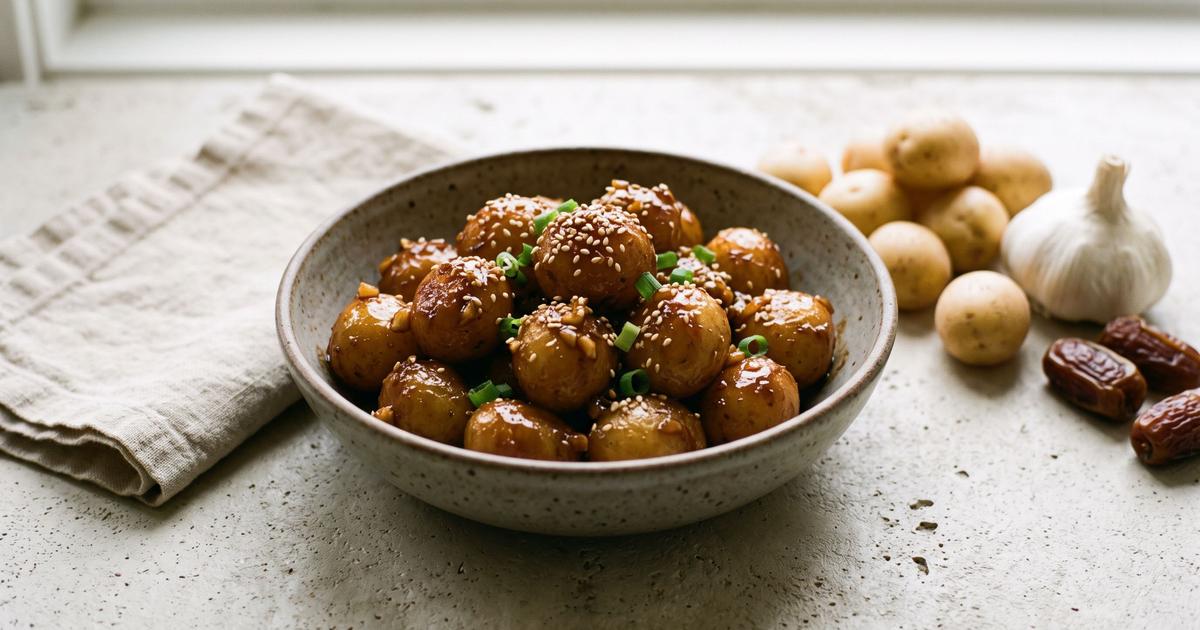
Gamja-jorim is one of the most common banchan in Korea, a small dish of potatoes simmered in soy sauce until they take on a dark, glossy, sweet-salty glaze. The technique, jorim, is simply braising something down until the liquid all but disappears onto the food, concentrating the seasoning as the water leaves. Parboiling the potatoes first keeps the braise brief so they stay intact, and a mashed date does the sweetening that corn syrup or sugar usually handles, caramelizing at the end into the shine the dish is known for. The tamari is measured and essential here; used this way, a small amount glazes a whole batch. Make it ahead and it only improves.
Ingredients
- 1 1/4 lb Potatoes, about 570 g waxy potatoes, cut into 1-inch (2.5 cm) chunks
- 2 tbsp Low-sodium tamari
- 3 cloves Garlic, sliced
- 1 piece Medjool dates, pitted, mashed with 2 tbsp (30 ml) hot water into a paste
- 1 piece Dried Thai chile, snipped, optional
- 2 pieces Scallions, sliced
- 1 tbsp Sesame seeds, toasted
Method
- Parboil the potato chunks in plain water for 5 minutes, then drain. A head start in water means the braise itself can be short, so the potatoes hold their shape instead of breaking down during a long simmer.
- Return the potatoes to the pot with 1 cup (240 ml) water, the tamari, garlic, date paste, and chile, cover, and simmer 10 minutes until nearly tender. The date paste replaces the corn syrup usually stirred into the glaze, and it caramelizes lightly as the liquid cooks down.
- Uncover and cook, shaking the pan often, until the liquid reduces to a few glossy spoonfuls that cling to the potatoes. Jorim means simmered down to a glaze, so keep everything moving at this stage to coat the potatoes rather than let the sugars in the date catch and burn.
- Off the heat, toss with the scallions and sesame. Serve warm or cold; it keeps 4 days and is a standard make-ahead lunchbox side, better once the seasoning has soaked in overnight.
Nutrition
Estimated per serving: 130 calories, 3 g protein, 3 g fiber, 210 mg sodium. Computed from USDA FoodData Central reference values for the main ingredients. This is an approximation, not a laboratory measurement. How these are computed.
Cost per serving is estimated from US national-average retail prices for cheap staple forms, using BLS dried-bean prices and USDA produce prices. Prices vary by store and season, so treat it as a guide, not a receipt. How this is computed.