Danmuji, Turmeric-Pickled Daikon
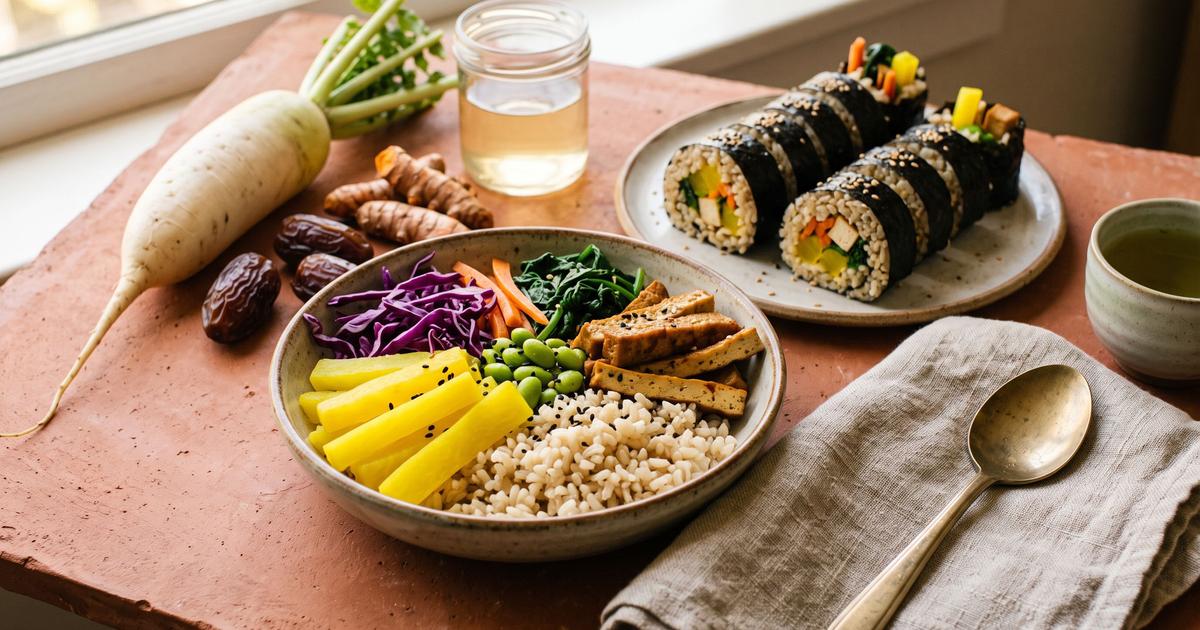
Danmuji is the sunshine-yellow pickled radish that comes with Korean-Chinese noodles and gets rolled into kimbap, usually a factory product stained with dye and heavy with sugar and salt. Made at home it is just daikon, vinegar, and turmeric, which does all the coloring on its own, with dates standing in for the sugar and no salt at all. The radish stays crisp for weeks and turns from sharp to sweet-sour as it cures. Keep the pieces submerged and give it a couple of days before you dig in. A jar in the fridge is a standing crunchy side for any bowl that needs one.
Ingredients
- 1 1/2 lb Daikon radish, about 680 g, peeled and cut into batons or 1/4-inch (6 mm) rounds
- 1/2 cup unseasoned rice vinegar
- 1/2 tsp Turmeric
- 3 pieces Medjool dates, pitted, mashed with 3 tbsp (45 ml) hot water into a paste
- 1 piece Bay leaves, optional
Method
- Pack the daikon tightly into a clean jar. Cutting it into even batons or rounds means the brine reaches all of it at the same rate, so the pickle cures evenly.
- Warm the vinegar, 1/2 cup (120 ml) water, turmeric, date paste, and bay in a small pot just until it steams and the date dissolves, then take it off the heat. Gentle warming melts the date into the brine and blooms the turmeric, which dyes the daikon the bright yellow the pickle is known for, no coloring needed.
- Pour the warm brine over the daikon so it is fully submerged, pressing the pieces down; if they float, weight them with a small dish. Anything above the liquid will not cure, so keeping everything under the brine is what makes it keep.
- Cool, cover, and refrigerate at least 2 days before eating; it is better after 4. The daikon trades its raw sharpness for a sweet-sour crunch and keeps a month, ready to slice into kimbap or set beside a rice bowl.
Nutrition
Estimated per serving: 25 calories, 1 g protein, 1 g fiber, 20 mg sodium. Computed from USDA FoodData Central reference values for the main ingredients. This is an approximation, not a laboratory measurement. How these are computed.
Cost per serving is estimated from US national-average retail prices for cheap staple forms, using BLS dried-bean prices and USDA produce prices. Prices vary by store and season, so treat it as a guide, not a receipt. How this is computed.