Sigeumchi Namul, Seasoned Spinach
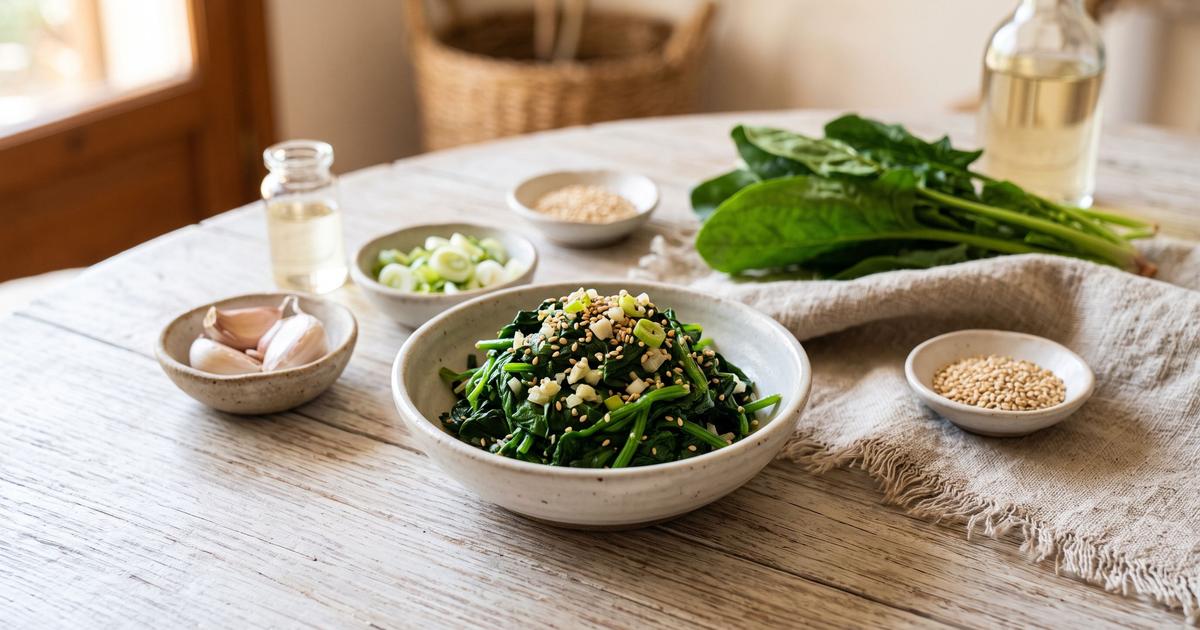
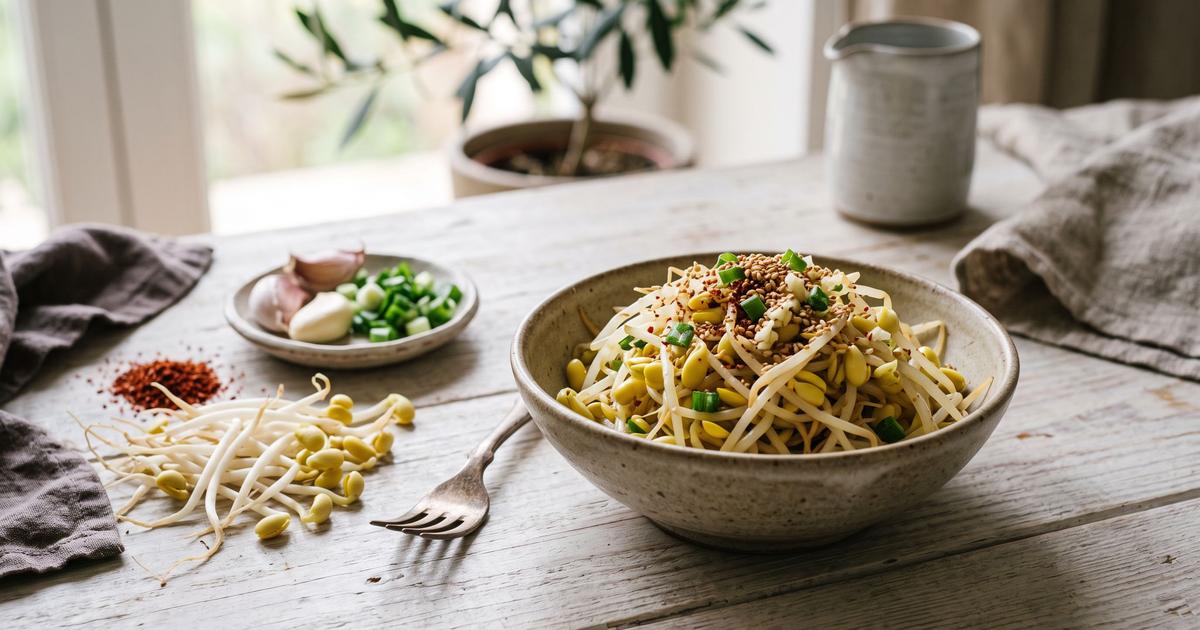
Namul is the broad Korean category of seasoned vegetable side dishes, and spinach is the most common of them, a small green mound that shows up on nearly every table of banchan. The technique is simple but exacting: a fast blanch, an ice-cold shock, and then a serious squeeze, because pressing the water out is what makes the difference between limp and springy. The usual seasoning is sesame oil, garlic, and salt; here toasted whole sesame seeds bring the nuttiness, garlic and scallion bring the punch, and a splash of rice vinegar does the brightening that salt would. Make it ahead, since it is meant to be eaten cool.
Ingredients
- 1 lb Spinach, whole leaves, washed
- 2 cloves Garlic, grated
- 2 Scallions, sliced thin
- 1 tbsp Sesame seeds, toasted
- 1 tsp unseasoned rice vinegar
Method
- Bring a large pot of unsalted water to a rolling boil. Drop in the spinach and blanch for just 30 to 45 seconds, until the leaves collapse and turn deep green. Any longer and it goes slimy and loses its color.
- Drain immediately and plunge the spinach into a bowl of cold water to stop the cooking. This shock keeps the green bright and the texture springy rather than mushy.
- Gather the cooled spinach into a ball and squeeze hard with both hands to wring out as much water as you can. This step is not optional: wet spinach dilutes the dressing and the banchan turns watery in the bowl. Then loosen the pressed ball with your fingers.
- Toss the spinach with the grated garlic, scallion, and toasted sesame seeds. Crush the sesame lightly between your fingers as they go in to release their oil and aroma. Traditional namul uses a spoon of sesame oil here, but toasted whole seeds carry that nutty note without it.
- Add the rice vinegar and toss again. A few drops of acid stand in for the pinch of salt this dish would normally get, lifting the garlic and sesame. Serve at room temperature, and it keeps two days in the fridge.
Nutrition
Estimated per serving: 55 calories, 4 g protein, 3 g fiber, 30 mg sodium. Computed from USDA FoodData Central reference values for the main ingredients. This is an approximation, not a laboratory measurement. How these are computed.
Cost per serving is estimated from US national-average retail prices for cheap staple forms, using BLS dried-bean prices and USDA produce prices. Prices vary by store and season, so treat it as a guide, not a receipt. How this is computed.