Gaji Namul, Steamed Eggplant
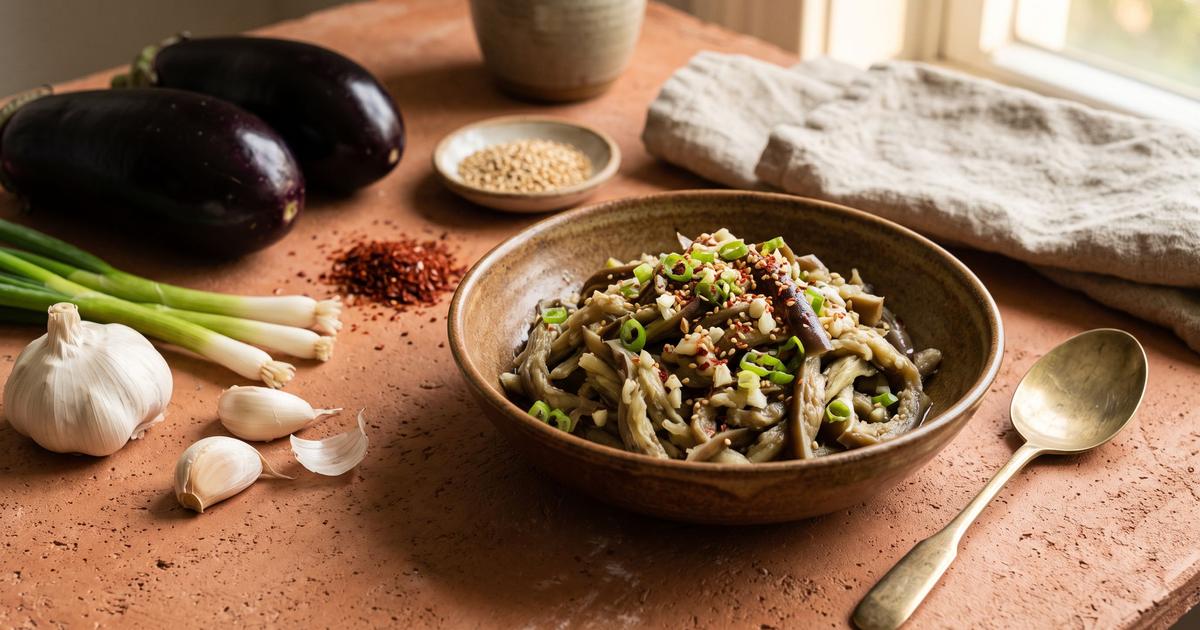
Gaji namul is the eggplant entry in the wide Korean family of namul, the seasoned vegetable sides that crowd the table alongside rice. The technique is all about the steam: cooked this way, eggplant turns melting and clean-tasting instead of greasy, and it tears into soft ribbons that soak up seasoning. The usual dressing is sesame oil, garlic, and salt. Here toasted sesame seeds bring the nuttiness, a light measure of tamari does the salting job while staying sparing, and gochugaru and rice vinegar give it edge. Make it ahead and eat it cool, the way banchan is meant to be served.
Ingredients
- 1 1/2 lb Eggplant, about 680 g, slender Asian eggplant if you can find it
- 2 cloves Garlic, grated
- 2 Scallions, sliced thin
- 2 tsp Low-sodium tamari
- 1 tsp unseasoned rice vinegar
- 1 tsp Gochugaru
- 1 tbsp Sesame seeds, toasted
Method
- Halve the eggplant crosswise, then quarter each piece into long batons, and steam over boiling water 8 to 10 minutes until fully soft and translucent. Eggplant is a sponge that drinks up any oil it meets, so steaming it collapses the flesh silky with none at all.
- Spread the steamed eggplant on a plate to cool, then squeeze each piece gently and tear it into strips with your fingers. Torn edges are ragged and porous, so they hold the dressing far better than a clean knife cut would, and squeezing sheds the water that would thin it.
- Toss the strips with the garlic, scallions, tamari, rice vinegar, gochugaru, and sesame. Crush the sesame lightly as it goes in to release its aroma; two teaspoons of tamari season the whole dish, and the vinegar and garlic lift it so it never tastes flat.
- Serve at room temperature. Like most namul it is better after an hour of resting and keeps 2 to 3 days in the fridge, which makes it a good one to fold into a lunch box or a spread of banchan.
Nutrition
Estimated per serving: 60 calories, 3 g protein, 4 g fiber, 190 mg sodium. Computed from USDA FoodData Central reference values for the main ingredients. This is an approximation, not a laboratory measurement. How these are computed.
Cost per serving is estimated from US national-average retail prices for cheap staple forms, using BLS dried-bean prices and USDA produce prices. Prices vary by store and season, so treat it as a guide, not a receipt. How this is computed.