Oi-muchim, Korean Spicy Cucumber Salad
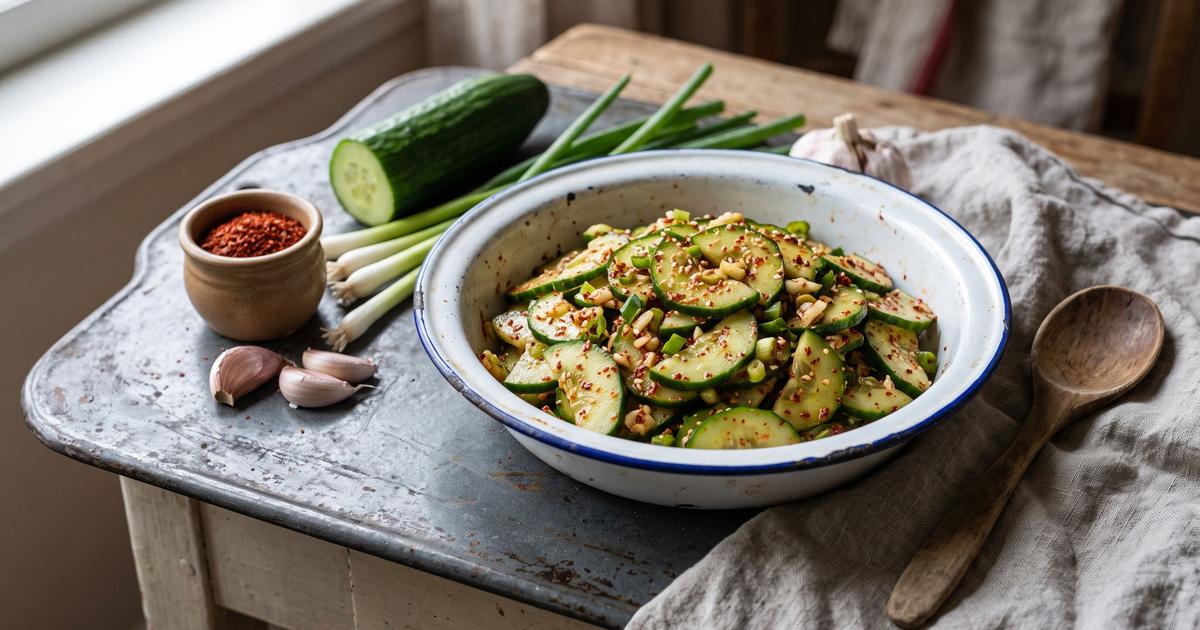
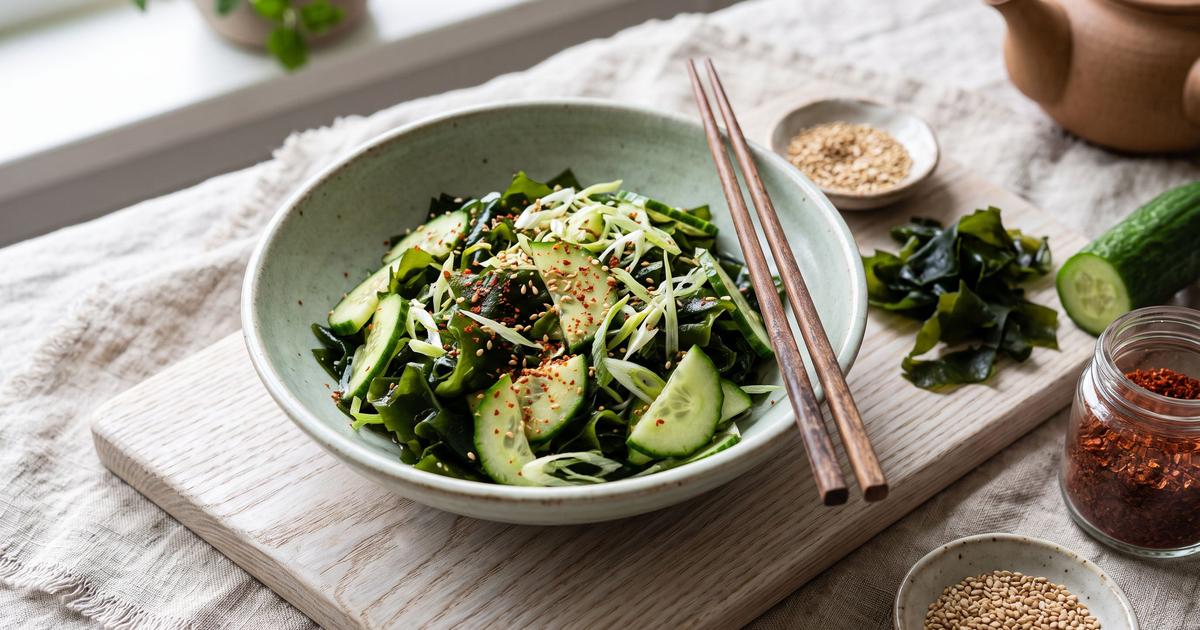
Oi-muchim is the quick, spicy cucumber banchan that lands on Korean tables all summer, sliced into thin half-moons and dressed with gochugaru rather than smashed and soy-dressed like its Chinese cousin. The coarse Korean chile flakes give it sweetness and smoke as much as heat, and garlic and scallion make it pungent. Pressing the cucumber with a little vinegar draws out its water the way salting would, so the dressing stays bright instead of watery and the dish needs no added salt. A mashed date softens the heat where a pinch of sugar normally would. Dress it just before serving to keep the crunch.
Ingredients
- 1 1/4 lb Cucumber, about 570 g, halved lengthwise and sliced into thin half-moons
- 1 tbsp unseasoned rice vinegar
- 1 tbsp Gochugaru
- 2 cloves Garlic, grated
- 2 pieces Scallions, sliced
- 1 tsp Sesame seeds, toasted
- 1 piece Medjool dates, pitted, mashed with 1 tbsp (15 ml) hot water into a paste
Method
- Toss the cucumber with 1 tsp of the vinegar and let it sit 10 minutes, then press out the released water with your hands or against a colander. The press stands in for the salting the dish usually uses to weep the cucumber, drawing out the water that would otherwise dilute the dressing and keeping it salt-free.
- Mix the gochugaru, garlic, remaining vinegar, and date paste into a paste. Letting the gochugaru sit in the wet mix a minute blooms its color and softens the raw edge of the flakes.
- Toss the pressed cucumber with the seasoning and the scallions until every slice is coated red. Doing this just before serving keeps the cucumber crisp, since it starts to soften once dressed.
- Finish with sesame and serve cold. It is best within a few hours while it still snaps, though the liquid it gives off makes a bright, spicy dressing to spoon over rice.
Nutrition
Estimated per serving: 40 calories, 2 g protein, 2 g fiber, 15 mg sodium. Computed from USDA FoodData Central reference values for the main ingredients. This is an approximation, not a laboratory measurement. How these are computed.
Cost per serving is estimated from US national-average retail prices for cheap staple forms, using BLS dried-bean prices and USDA produce prices. Prices vary by store and season, so treat it as a guide, not a receipt. How this is computed.