Miyeok Muchim, Chilled Seaweed Salad
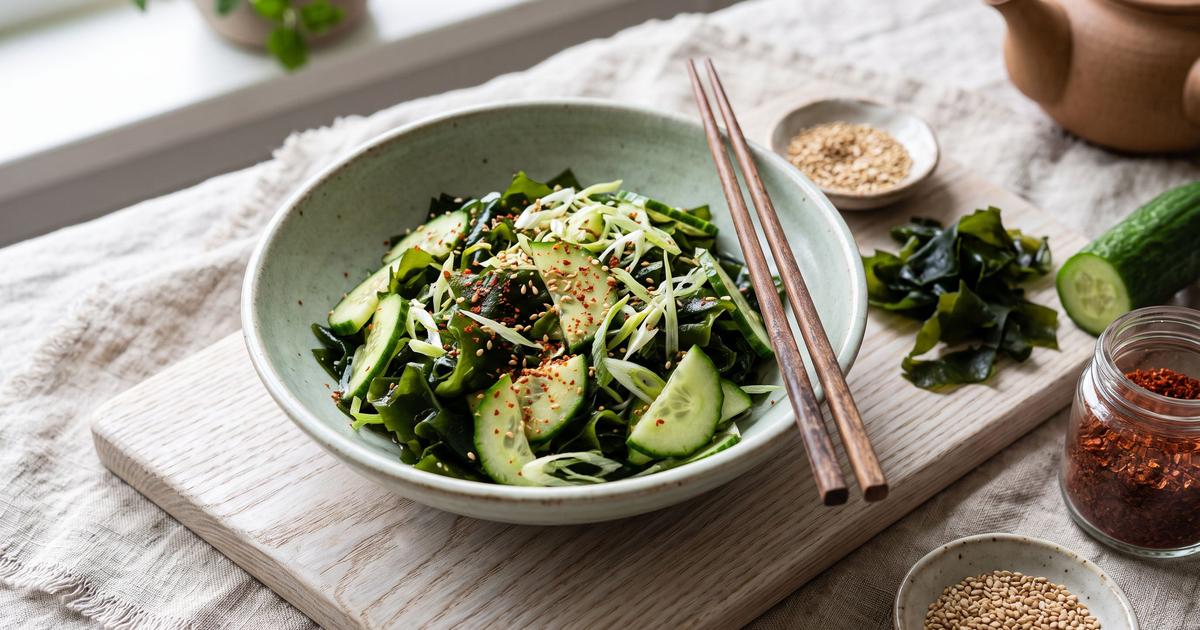
Miyeok is the same sea vegetable that goes into Korea's birthday seaweed soup, but muchim, a cold dressed salad, treats it entirely differently: quick, sharp, and refreshing rather than long-simmered. Rehydrated wakame has a slippery, tender bite that pairs well with crisp cucumber, and the dressing is built on rice vinegar and gochugaru rather than salt. Rinsing the seaweed thoroughly after it soaks is the step that matters most, since it carries its own cure of sea salt; wash that off and the tang of the vinegar comes through clean. It is a cool, make-ahead banchan for a hot day.
Ingredients
- 1/2 oz Wakame, about 15 g dried
- 1 medium Cucumber, cut into thin half-moons
- 2 tbsp unseasoned rice vinegar
- 1 tsp Gochugaru
- 1 clove Garlic, grated
- 1 piece Deglet noor dates, pitted, mashed with 1 tbsp (15 ml) hot water into a paste
- 1 Scallion, sliced thin
- 1 tbsp Sesame seeds, toasted
Method
- Soak the dried wakame in cool water for 10 minutes until it unfurls and swells to several times its size, then drain and rinse it well under running water. Wakame is cured with sea salt, and rinsing after it opens washes most of that away so you are seasoning the salad yourself, not the packet.
- Squeeze the rehydrated wakame in your hands to press out the water, then chop any long ribbons into bite-size pieces. Wet seaweed carries a lot of trapped water that would pool in the bowl and dilute the dressing, so wring it firmly.
- Whisk the rice vinegar, gochugaru, grated garlic, and date paste in a bowl. The vinegar does the work salt usually would in a muchim, and one mashed date softens its edge the way a spoon of sugar traditionally does.
- Toss the wakame and cucumber with the dressing, then fold in the scallion and sesame. Serve cold; it holds well for a day in the fridge, and the flavor settles deeper as it sits, so it is worth making an hour ahead.
Nutrition
Estimated per serving: 40 calories, 2 g protein, 2 g fiber, 130 mg sodium. Computed from USDA FoodData Central reference values for the main ingredients. This is an approximation, not a laboratory measurement. How these are computed.
Cost per serving is estimated from US national-average retail prices for cheap staple forms, using BLS dried-bean prices and USDA produce prices. Prices vary by store and season, so treat it as a guide, not a receipt. How this is computed.