Nokdu-juk, Savory Mung Bean Porridge
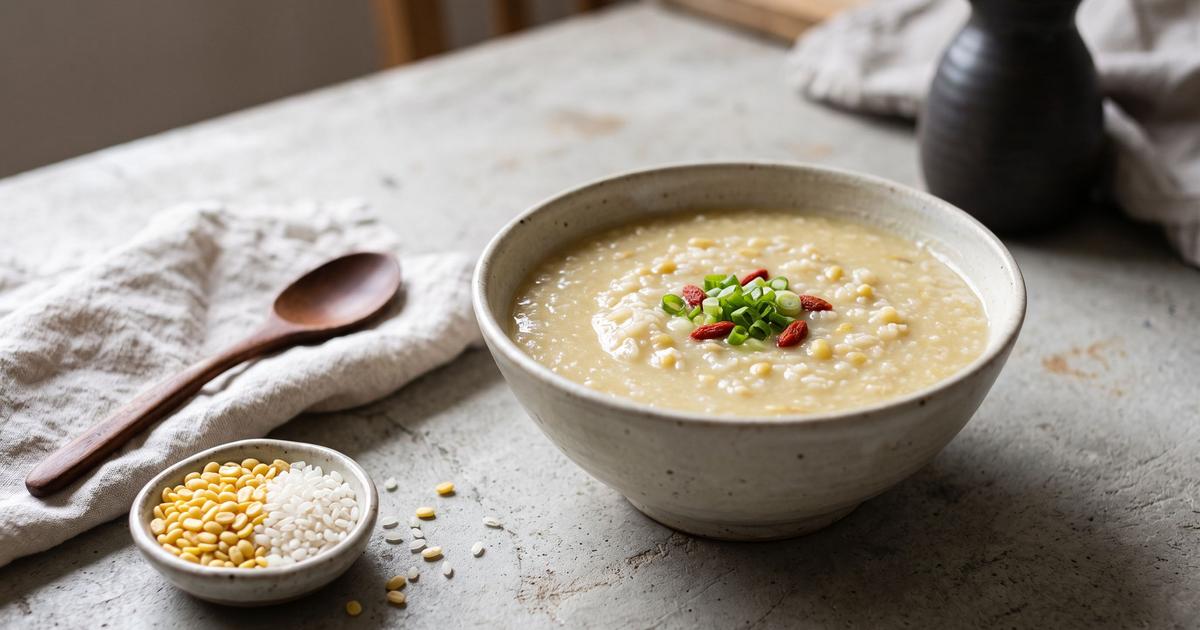
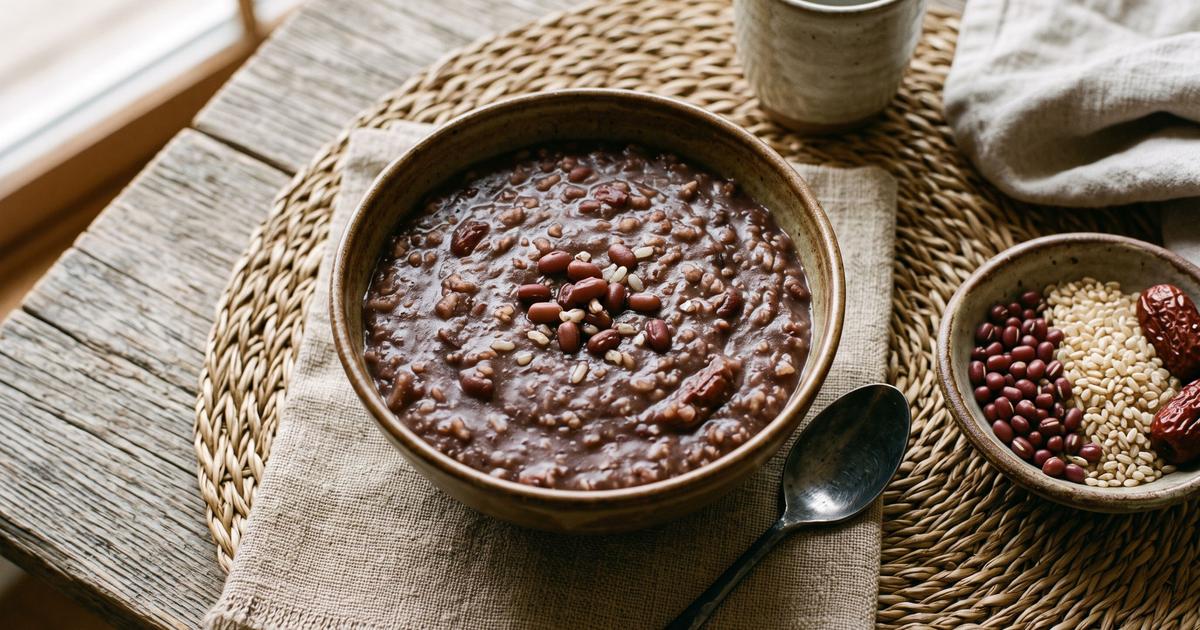
Nokdu-juk is a plain, soothing Korean rice porridge built on skinned mung beans, the kind of food cooked for someone who is unwell or simply wants something gentle to start the day. Its character is texture more than seasoning: the beans and short-grain rice are cooked until they surrender completely, then part-blended so the bowl is silky but not gluey. Skinning the mung beans keeps it pale and clean-tasting, which is the traditional look. Unlike the sweet red-bean patjuk it sits beside on the Korean table, this one is savory and deliberately understated, left unsalted so each person can finish their own bowl with kimchi, sesame, or a small pour of tamari to taste.
Ingredients
- 3/4 cup Mung beans, soaked 2 hours
- 1/4 cup short grain brown rice, soaked with the beans
- 2 pieces Scallions, sliced, for serving
- 1 tbsp Sesame seeds, toasted, for serving
Method
- Soak the mung beans 2 hours, then rub them between your palms under water and float off the loosened green skins. Skinned beans cook into a pale, smooth porridge, while the skins would leave it speckled and a little grassy; pre-split skinned mung beans skip this step entirely.
- Simmer the beans and rice in 5 cups (1.2 L) water, partly covered, for 30 to 35 minutes, stirring now and then, until both are completely soft. Low, patient cooking is what turns beans and grain into porridge, and stirring toward the end keeps the thickening starch from catching on the bottom.
- Blend about half the pot until smooth and stir it back in, or mash it against the side with a spoon. Pureeing part of it gives the signature silk while the rest keeps some body; an immersion blender is easiest here.
- Loosen with hot water to a pourable, spoon-coating texture and warm through. Juk thickens fast as it sits, so keep it looser than looks right in the pot; it will firm up the moment it hits the bowl.
- Serve plain, topped with scallion and sesame. It is meant to be mild, so season each bowl at the table with a spoon of kimchi or a few drops of tamari rather than salting the whole pot.
Nutrition
Estimated per serving: 190 calories, 10 g protein, 7 g fiber, 20 mg sodium. Computed from USDA FoodData Central reference values for the main ingredients. This is an approximation, not a laboratory measurement. How these are computed.
Cost per serving is estimated from US national-average retail prices for cheap staple forms, using BLS dried-bean prices and USDA produce prices. Prices vary by store and season, so treat it as a guide, not a receipt. How this is computed.