Azuki-gayu, Japanese Red Bean Rice Porridge

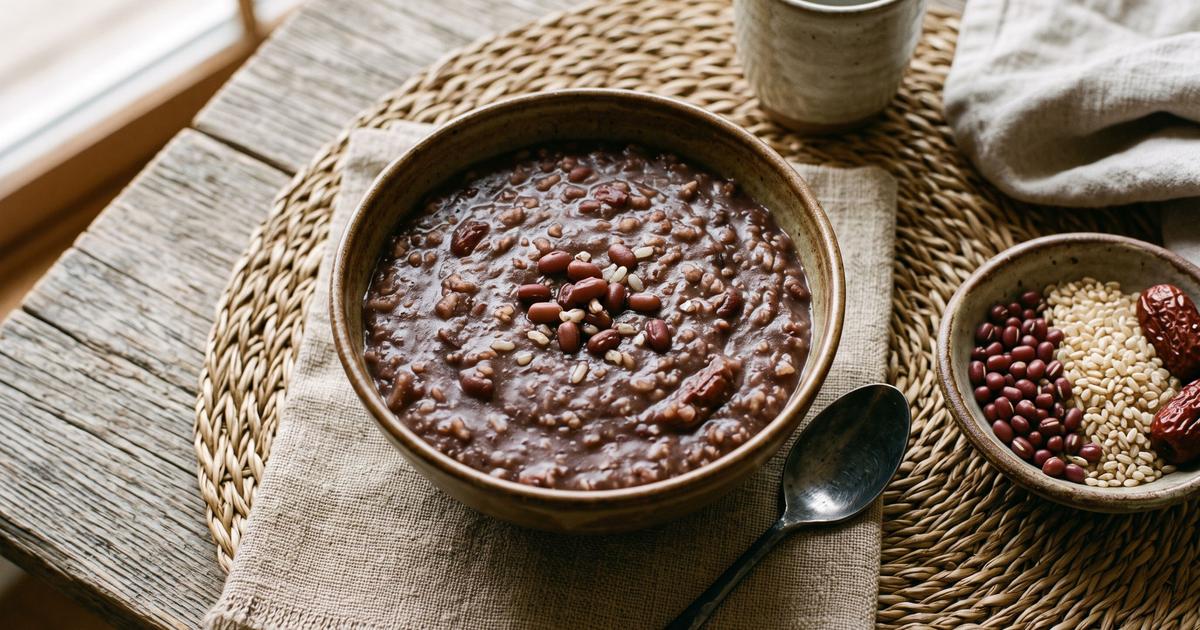
Azuki-gayu is the pink rice porridge eaten in Japan on the fifteenth of January, koshogatsu or little new year, a quiet counterpart to the feasting of the first of the month. Unlike the sweet red bean soups of China and Korea, this one is barely sweetened at all: adzuki beans and short-grain rice simmered together with kombu until soft, letting the beans' own earthy taste tint and flavor the pot. Giving the beans a long head start before the rice goes in is the only thing to get right, since the two cook at wildly different speeds. It is a plain, warming breakfast, and it reheats through the week with a splash of water.
Ingredients
- 1/3 cup Adzuki beans, rinsed
- 3/4 cup short grain brown rice, rinsed
- 1 piece Kombu, 2-inch (5 cm) square
Method
- Simmer the adzuki beans with the kombu and 3 cups (720 ml) water for about 40 minutes, until the beans are nearly tender. The beans need a long head start, because rice cooks in a fraction of the time and would blow apart to paste before the beans ever softened.
- Add the rice and 3 more cups (720 ml) water and simmer, partly covered, stirring now and then, for about 30 minutes. Frequent stirring pulls starch off the rice and thickens the pot, which is what turns rice and water into porridge rather than soup.
- Cook until the grains have burst and the porridge is soft and loose; it will keep thickening as it cools, so pull it off while it still pours. Fish out the softened kombu, or chop it fine and stir it back in for its minerals.
- Serve warm in bowls, plain. The porridge is savory-neutral and only faintly sweet, so the earthy adzuki carries it; a little water loosens leftovers when you reheat them.
Nutrition
Estimated per serving: 180 calories, 7 g protein, 6 g fiber, 30 mg sodium. Computed from USDA FoodData Central reference values for the main ingredients. This is an approximation, not a laboratory measurement. How these are computed.
Cost per serving is estimated from US national-average retail prices for cheap staple forms, using BLS dried-bean prices and USDA produce prices. Prices vary by store and season, so treat it as a guide, not a receipt. How this is computed.