Nanakusa-gayu, Seven-Herb Rice Porridge
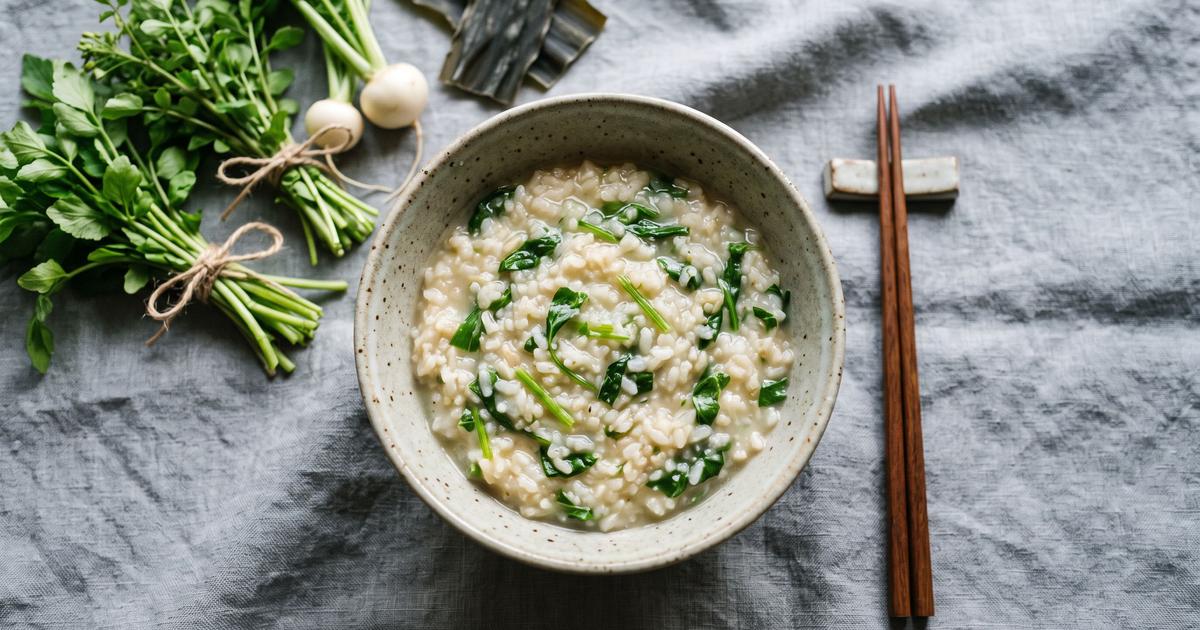
Nanakusa-gayu is eaten on the seventh morning of January in Japan, a plain rice porridge studded with the seven herbs of spring, meant to settle a stomach worn out by holiday feasting. The traditional seven are wild and seasonal; here a mix of turnip and its greens, daikon, watercress, spinach, and mustard greens stands in for them and keeps the peppery, grassy spirit of the original. There is no salt and no dashi made from fish, only a square of kombu steeped slowly to give the broth its savory floor. It is deliberately quiet food, the kind you make when you want a reset.
Ingredients
- 3/4 cup short grain brown rice
- 1 piece Kombu, 4-inch (10 cm) square
- 1 small Turnips, diced, with greens
- 3 inches Daikon radish, grated
- 1 cup Watercress, chopped
- 1 cup Spinach, chopped
- 1 cup Mustard greens, chopped
Method
- Soak the kombu in 6 cups (1420 ml) cold water for 10 minutes, then set the pot over low heat and bring it slowly toward a simmer. Pull the kombu out just before the water boils, since boiling it turns the broth bitter and slippery. This gentle kelp broth is the only seasoning the porridge gets.
- Rinse the short-grain rice and add it to the kombu broth with the diced turnip. Simmer, partly covered, for about 40 minutes, stirring occasionally, until the grains bloom open and the porridge turns soft and thick.
- Grate the daikon and chop the greens while the rice cooks. Keeping the tender greens raw until the end preserves their color and their faint pepperiness, which is the character of the dish.
- When the rice is soft, stir in the grated daikon and the turnip greens first, as they need a minute or two, then fold in the watercress, spinach, and mustard greens and cook just until they wilt, about a minute.
- The porridge is meant to be plain and soothing, so resist dressing it up. The kombu gives a quiet savory depth in place of salt, and the seven greens do the rest. Ladle it out hot and eat it slowly.
Nutrition
Estimated per serving: 180 calories, 5 g protein, 4 g fiber, 45 mg sodium. Computed from USDA FoodData Central reference values for the main ingredients. This is an approximation, not a laboratory measurement. How these are computed.
Cost per serving is estimated from US national-average retail prices for cheap staple forms, using BLS dried-bean prices and USDA produce prices. Prices vary by store and season, so treat it as a guide, not a receipt. How this is computed.