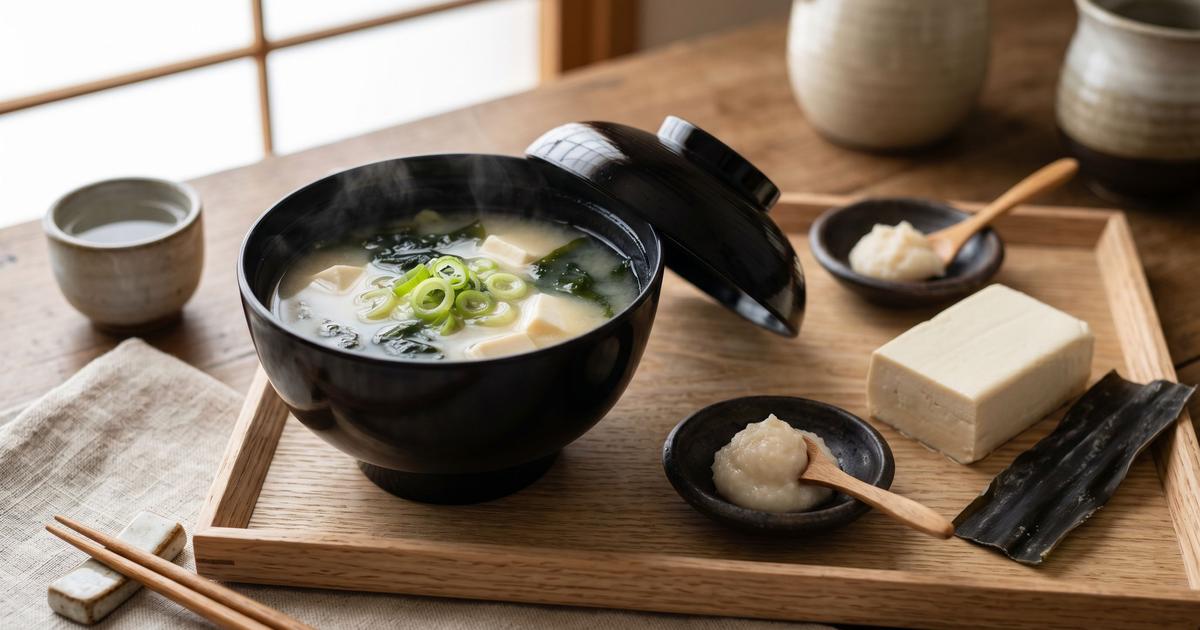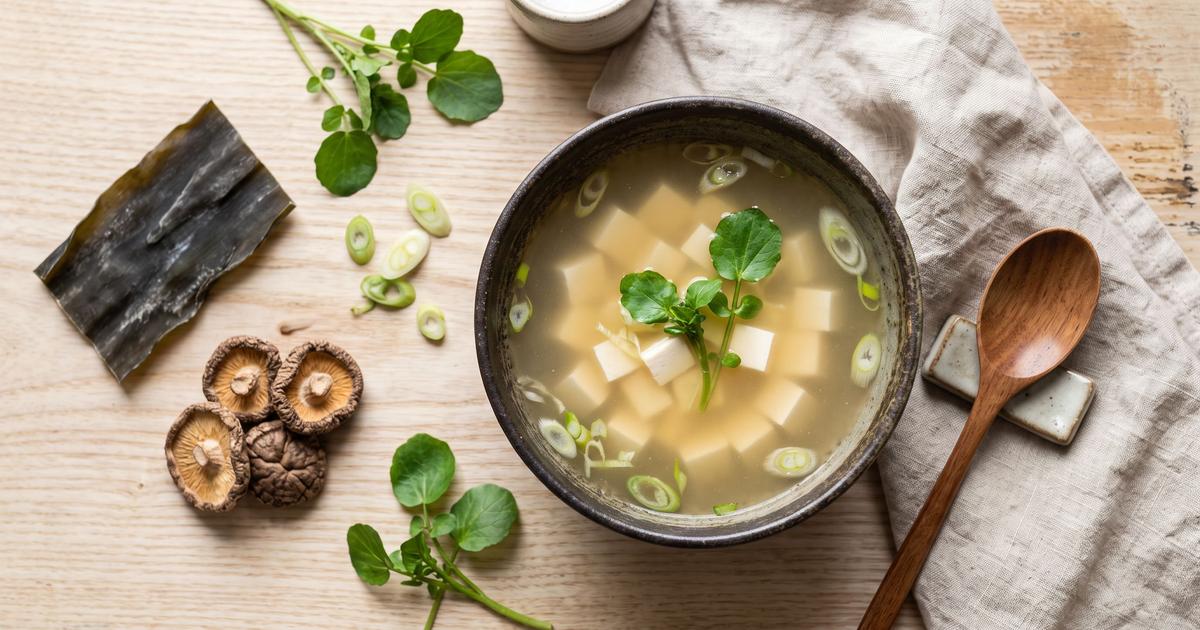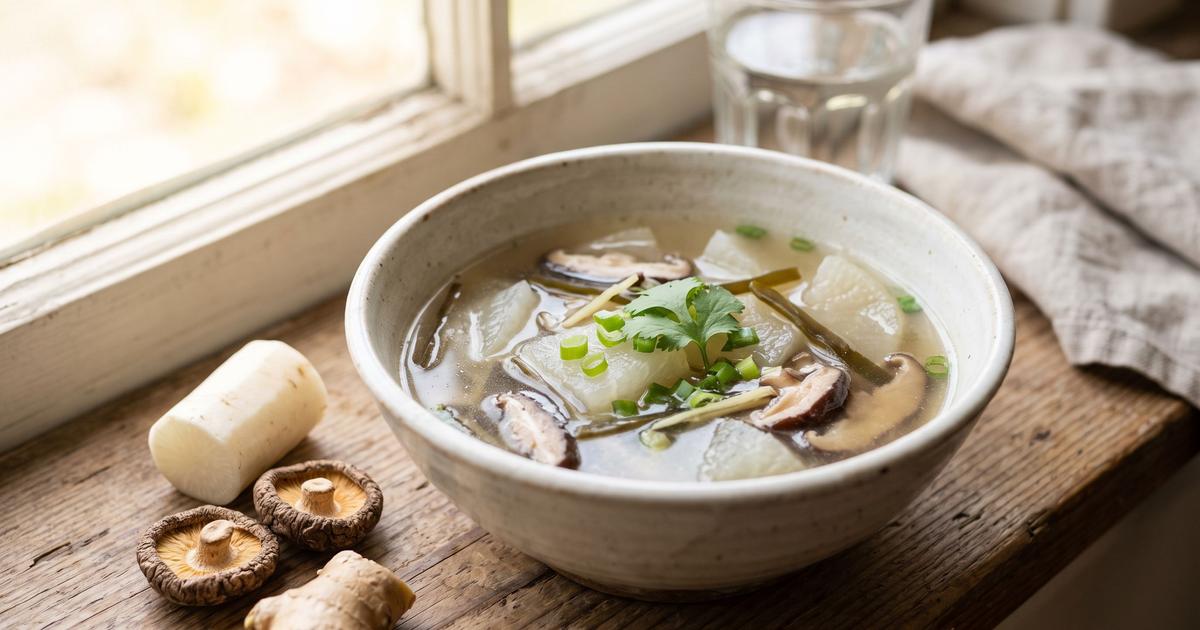
Kenchinjiru
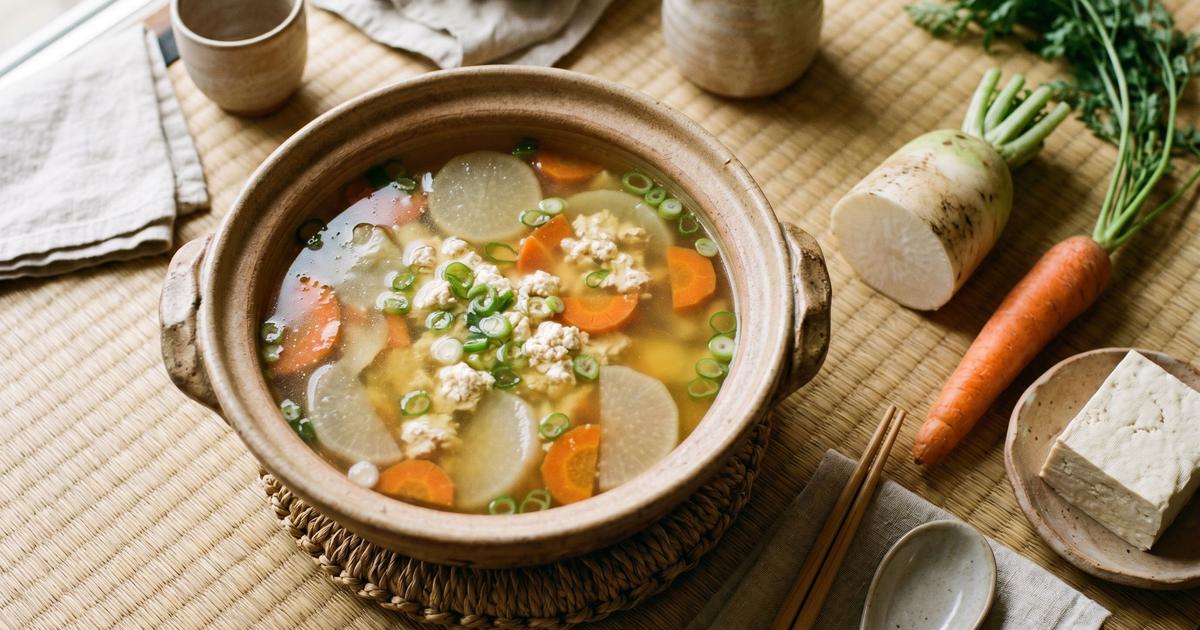
Kenchinjiru began in Zen temple kitchens, already meat-free by rule, built from nothing but vegetables, tofu, and dashi. The traditional recipe still browns the crumbled tofu and root vegetables in oil before the broth goes in, for a deeper, nuttier finish. Here the dry pot does that work instead: tofu crumbled by hand and left alone in a hot pan toasts the same way frying would, and the vegetables added right after pick up the same fond once the dashi hits it. What comes out is a clear, savory broth that owes its depth to a hot pan and patience, not fat.
Ingredients
- 1 piece Kombu, 4 inch
- 4 Dried shiitakes
- 12 oz Firm tofu, drained, crumbled by hand into rough walnut-sized pieces
- 1 lb Daikon radish, peeled, cut into quarter-rounds
- 2 Carrots, cut into thick half-moons
- 2 Turnips, peeled, cut into wedges
- 2 tbsp Low-sodium tamari
- 2 Scallions, thinly sliced
For no added salt, leave out the tamari. Kombu and the vegetables' own sweetness carry the broth; finish with a little grated ginger.
Method
- Combine the kombu and dried shiitake in a pot with 6 cups (1.4 L) water and let them soak for 20 minutes. This is a cold-brew dashi: the kombu gives up its glutamate slowly, and rushing it clouds the broth.
- Set the pot over low heat and warm it gently for about 10 minutes, pulling the kombu out just before the water boils. Boiling it turns the broth slick and bitter. Lift out the shiitake, slice them thin, and set both the mushrooms and the dashi aside.
- Wipe the pot dry and set it over medium-high heat. Crumble the tofu into it by hand and let the pieces sit undisturbed for 3 to 4 minutes. This is the step that replaces the traditional oil saute: a hot dry pot browns the tofu's surface and drives off its water, building the same toasted, nutty base oil would, with none of the fat.
- Add the daikon, carrots, and turnips to the dry pot and stir for 2 minutes, until the vegetables squeak against the metal and the pan smells toasted. This is the moment a traditional kenchinjiru would add oil; the browned bits stuck to the pot do that job instead once the dashi hits them.
- Pour in the dashi, scraping up the browned bits on the bottom of the pot since they carry most of the flavor, and add the sliced shiitake. Bring to a gentle simmer, cover, and cook for 18 to 20 minutes, until a knife slides through the daikon with no resistance.
- Stir in half the tamari and taste. Root vegetables vary in sweetness batch to batch, so add the rest only if the broth still tastes flat. Simmer 2 more minutes uncovered to concentrate it slightly.
- Ladle into bowls and top with the scallions. Kenchinjiru is traditionally spooned over rice; a bowl of short-grain brown rice alongside does the same job here.
Nutrition
Estimated per serving: 120 calories, 8 g protein, 4 g fiber, 350 mg sodium. Computed from USDA FoodData Central reference values for the main ingredients. This is an approximation, not a laboratory measurement. How these are computed.
Cost per serving is estimated from US national-average retail prices for cheap staple forms, using BLS dried-bean prices and USDA produce prices. Prices vary by store and season, so treat it as a guide, not a receipt. How this is computed.