Hijiki-Style Simmered Vegetables
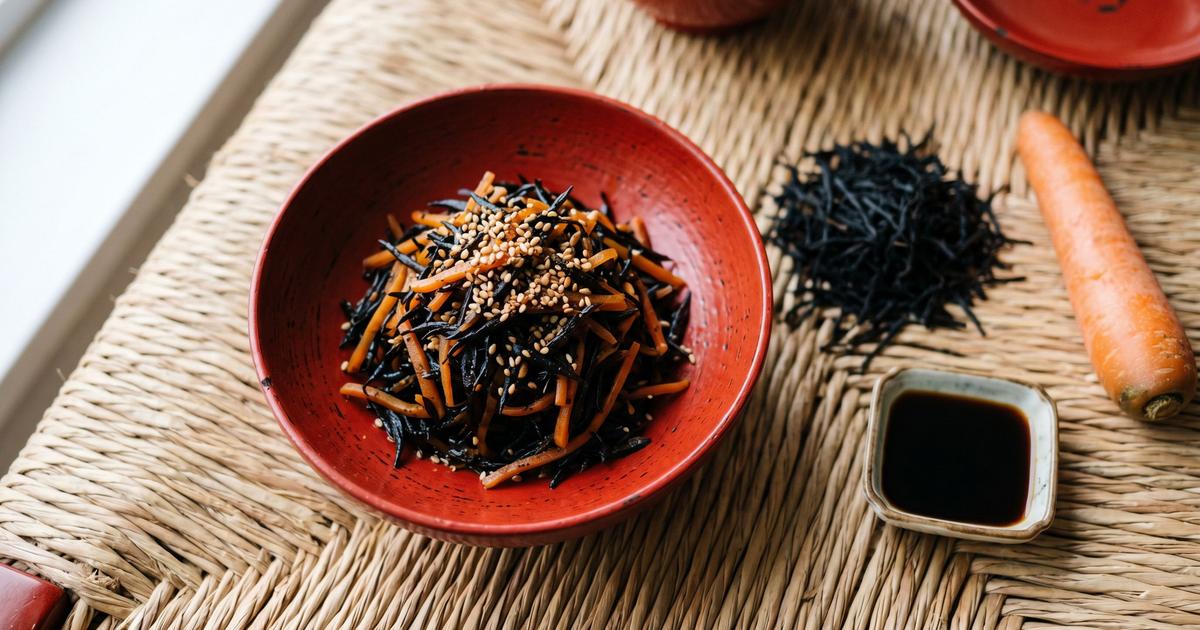
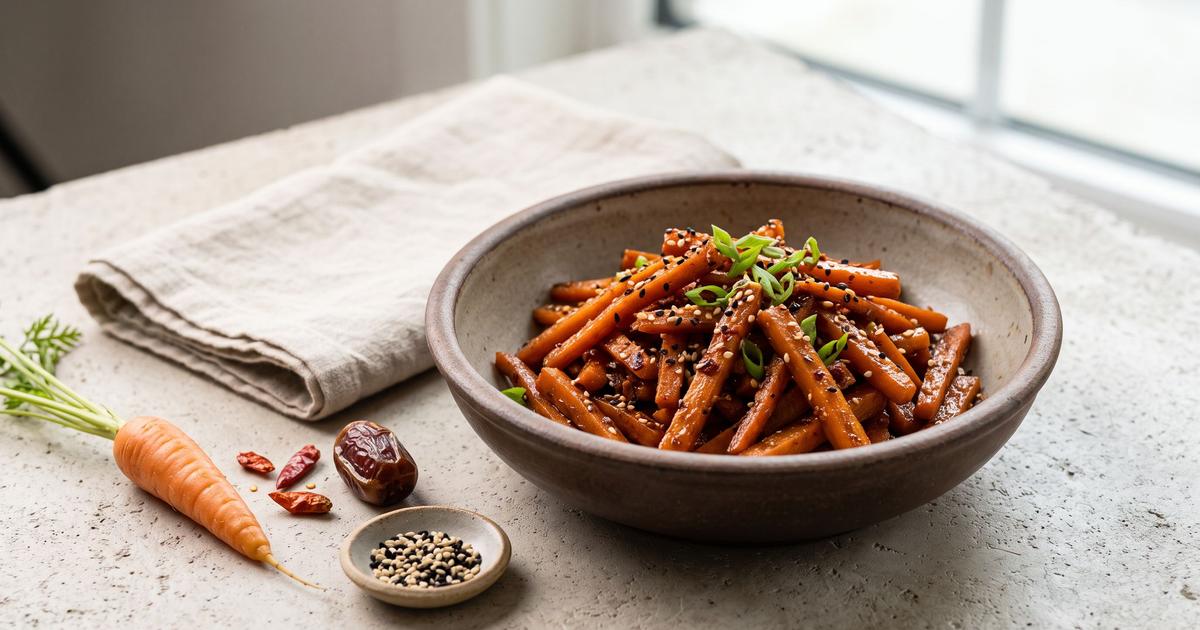
Hijiki no nimono is the everyday version of Japanese simmered vegetables, black seaweed and carrot that turns up in bento boxes and izakaya small-plate menus. Most recipes round out the seaweed's brine with mirin and sugar; here the julienned carrot does that job instead, its own sugars concentrating as the dashi cooks down to a glaze. Hijiki also carries more naturally occurring inorganic arsenic than most other sea vegetables, so agencies including the UK Food Standards Agency suggest treating it as an occasional side rather than a daily one, in rotation with kombu, wakame, and nori.
Ingredients
- 1 piece Kombu, 3 inch
- 1/2 oz Hijiki
- 2 Carrots, julienned
- 2 tbsp Low-sodium tamari
- 1 tbsp Sesame seeds, toasted
For no added salt, leave out the tamari. Kombu or a little dried-shiitake soaking liquid brings the same savory depth without the salt.
Method
- Put the dried hijiki in a bowl and cover with 2 cups (480 ml) cold water. It looks like a small handful dry but soaks up to eight times its size, so give it the full 20 minutes: any less and the center stays tough.
- Meanwhile, put the kombu in a small pot with 1 1/2 cups (360 ml) water and let it sit for 10 minutes, then set the pot over low heat and bring it slowly toward a simmer. Lift out the kombu right before the water boils, the rule for any kombu dashi: past that point the broth turns cloudy and slightly bitter.
- Drain the hijiki in a fine strainer and rinse it once under cold water to wash away any grit caught in the fronds.
- Add the hijiki and julienned carrots to the dashi. Cover and simmer gently for 12 minutes. The carrots are doing the job mirin usually does in this dish: as their sugars cook down into the broth, they round out the seaweed's mineral edge with nothing added.
- Uncover, stir in the tamari, and simmer for 5 to 7 minutes more, stirring occasionally, until most of the liquid has cooked away and what remains clings to the strands as a thin dark glaze. Salting this late keeps the sodium working on the surface instead of soaking all the way through.
- Take the pot off the heat and let it stand for 10 minutes before serving. The strands pull the last of the glaze back in as they cool, and the dish holds well in the fridge for several days, tasting just as good cold.
- Scatter the toasted sesame seeds over the top just before serving, crushing a few between your fingers as you go to release more of their flavor onto the dish.
Nutrition
Estimated per serving: 40 calories, 2 g protein, 3 g fiber, 350 mg sodium. Computed from USDA FoodData Central reference values for the main ingredients. This is an approximation, not a laboratory measurement. How these are computed.
Cost per serving is estimated from US national-average retail prices for cheap staple forms, using BLS dried-bean prices and USDA produce prices. Prices vary by store and season, so treat it as a guide, not a receipt. How this is computed.