Kabocha Simmered in Kombu Dashi
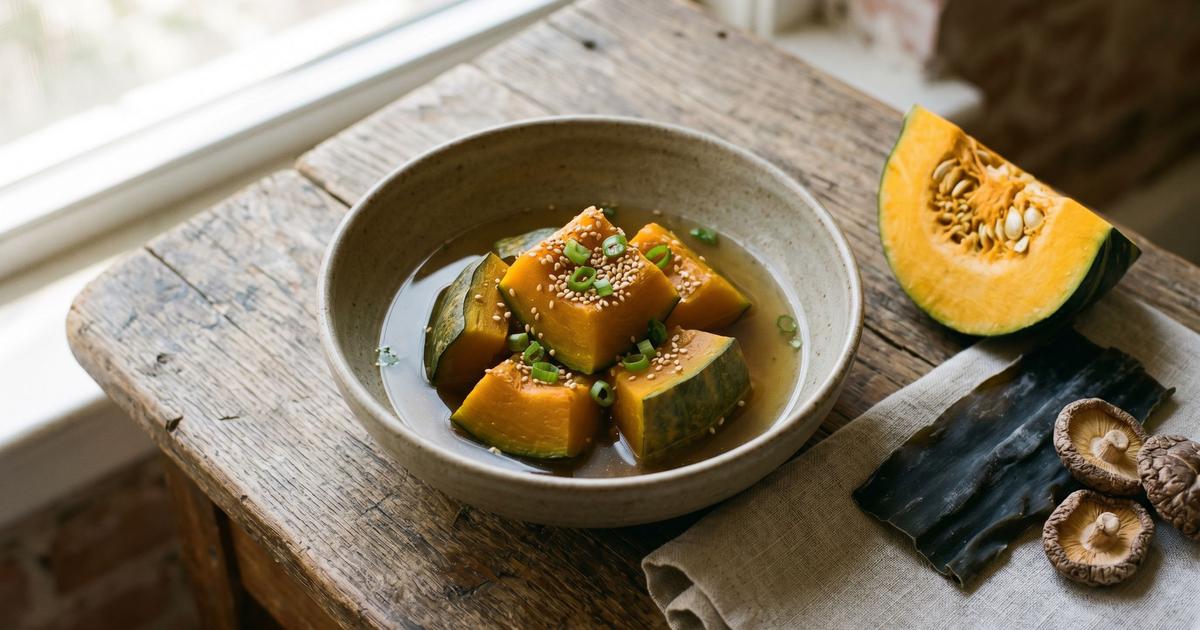
Nimono, the family of gently simmered Japanese dishes, usually sweetens the pot with mirin and sugar. Kabocha does not need it. Cooked in a simple kombu and shiitake dashi, the squash turns silky and sweet on its own, and a little tamari at the end is all the seasoning it wants.
Ingredients
- 1 piece Kombu, 4 inch
- 4 Dried shiitakes
- 1 1/4 lb Kabocha squash, seeded and cut into 2 inch chunks, skin on
- 1 tbsp Ginger, julienned
- 2 tbsp Low-sodium tamari
- 2 Scallions, thinly sliced
- 1 tbsp Sesame seeds, toasted
For no added salt, leave out the tamari. The kombu dashi already carries deep umami; a few drops of rice vinegar at the end keep it lively.
Method
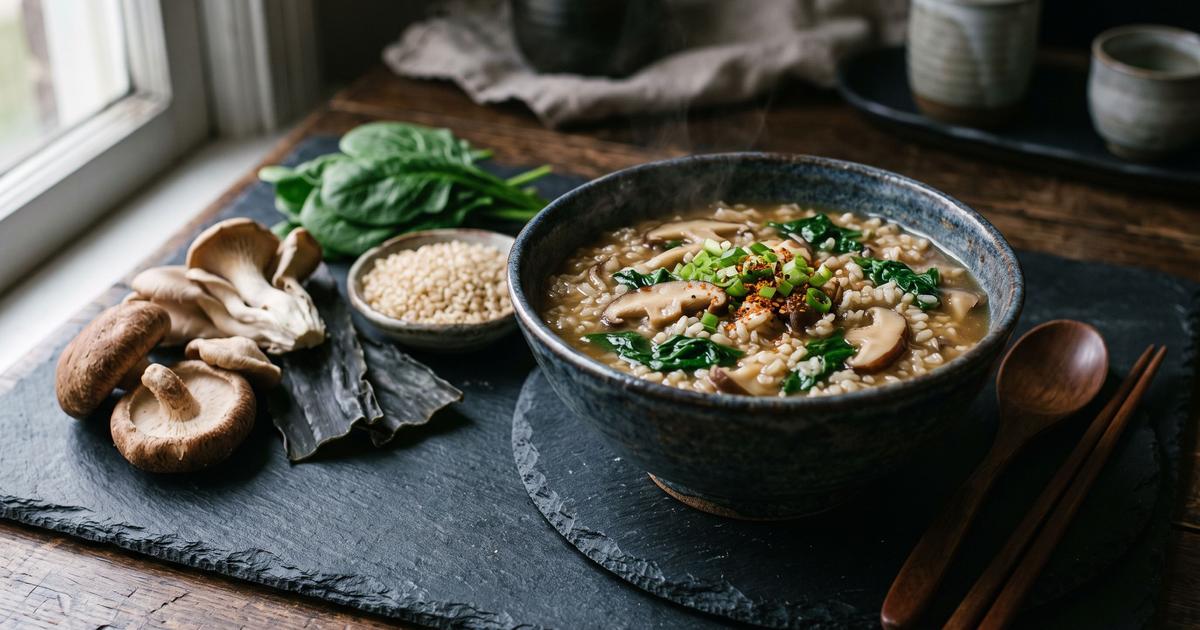
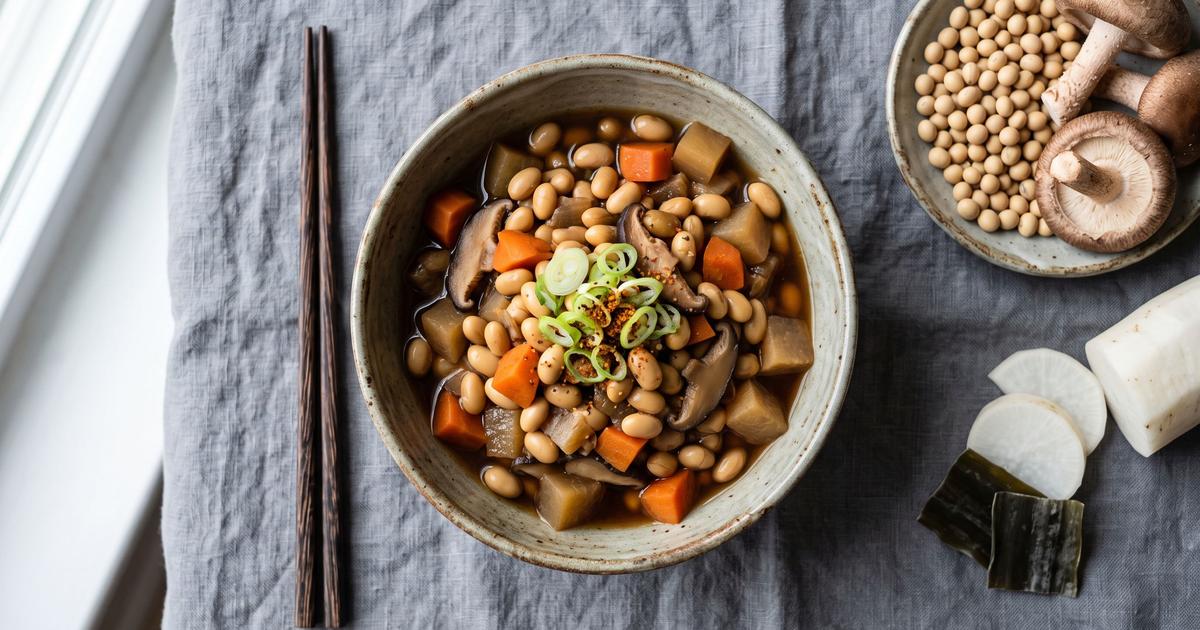
- Make the dashi first. Put the kombu and dried shiitake in a pot with 3 cups (720 ml) water and let them soak for 15 minutes while you cut the squash. Then set the pot over low heat and bring it slowly toward a simmer over about 10 minutes. Pull out the kombu just before it boils, or the broth turns slick and bitter.
- Lift out the softened shiitake, slice them, and return them to the pot. The soaking and simmering water is now a deep, savory stock for free.
- Lay the kabocha in the pot in a single layer, skin side down, so the pieces sit in the dashi. The skin is edible and holds the chunks together, so leave it on.
- Add the ginger and 1 tablespoon of the tamari. Cover and simmer gently for 15 to 18 minutes, until a knife slides into the squash with no resistance.
- Add the last tablespoon of tamari and simmer uncovered for 2 minutes to concentrate the broth. Season late so the squash stays sweet and the salt stays low.
- Let the pot rest off the heat for 10 minutes. Simmered squash tastes better once it settles and drinks the broth back in.
- Serve the squash in shallow bowls with a little broth spooned over, topped with scallions and toasted sesame.
Nutrition
Estimated per serving: 80 calories, 3 g protein, 3 g fiber, 270 mg sodium. Computed from USDA FoodData Central reference values for the main ingredients. This is an approximation, not a laboratory measurement. How these are computed.
Cost per serving is estimated from US national-average retail prices for cheap staple forms, using BLS dried-bean prices and USDA produce prices. Prices vary by store and season, so treat it as a guide, not a receipt. How this is computed.