Kinoko Zosui (Mushroom Rice Soup)
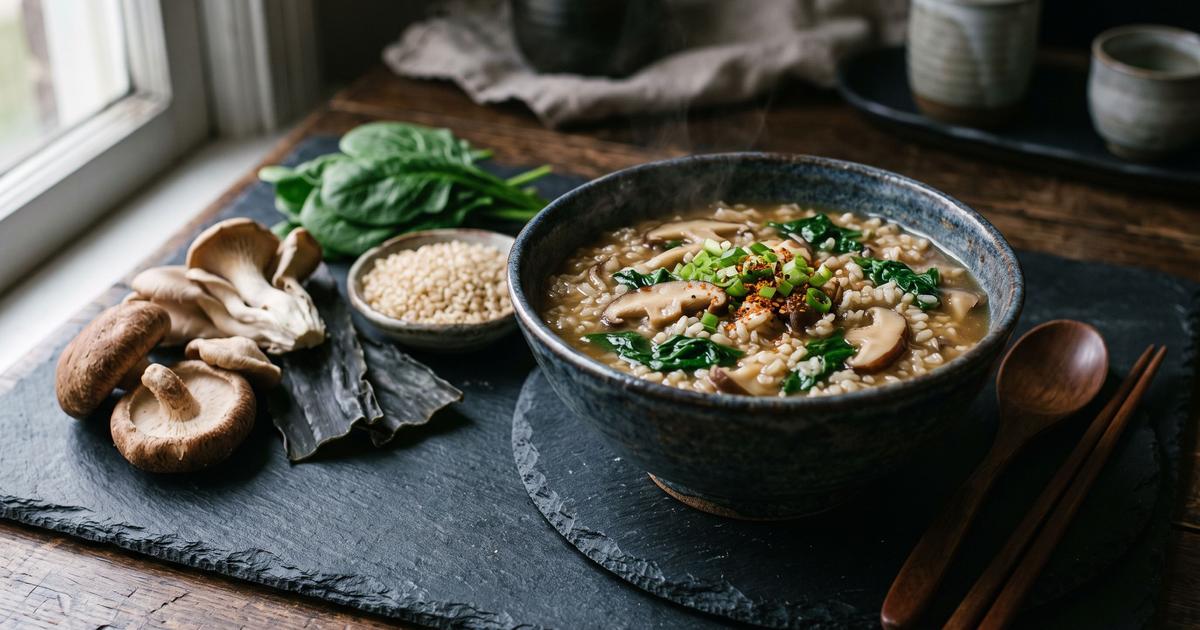
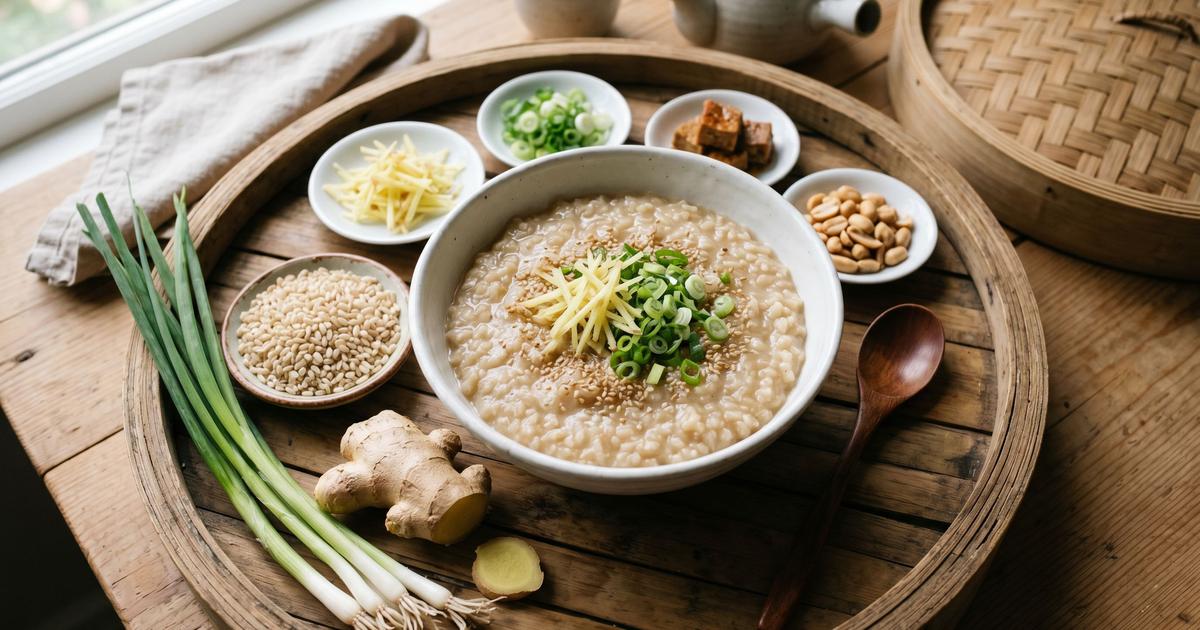
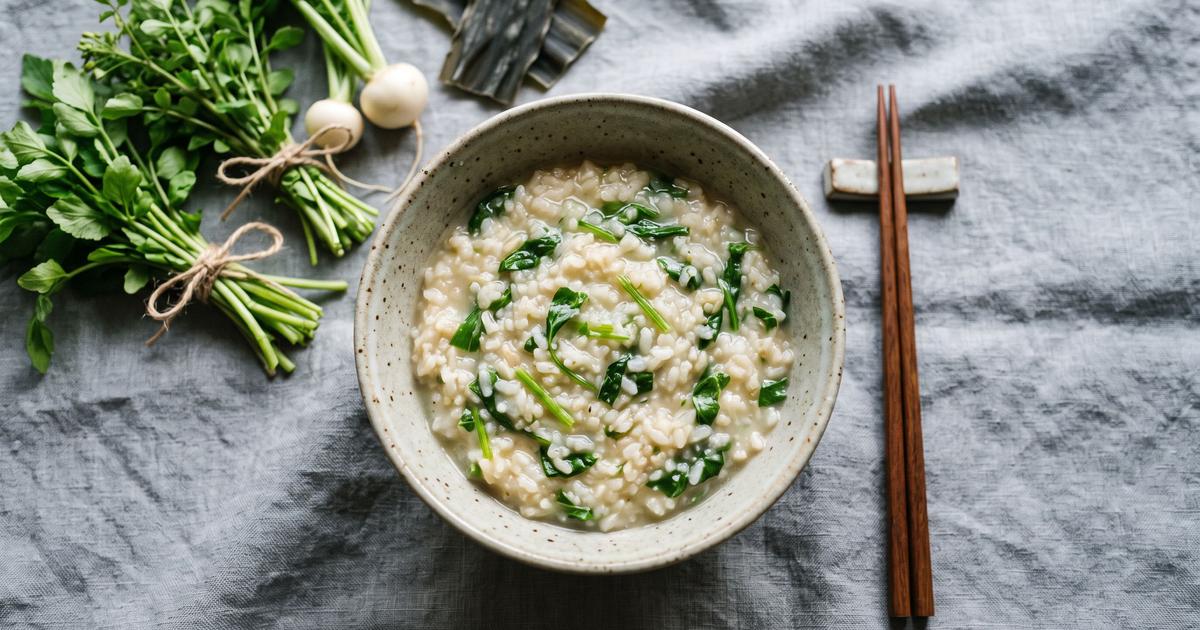
Zosui is the Japanese answer to a pot of leftover rice: cooked grains simmered loose in dashi until they soften into a light, brothy porridge. Where Chinese congee cooks raw rice down for over an hour, zosui starts with rice already cooked, so it comes together in minutes and stays brothier and more distinct, grain by grain. The flavor rests entirely on the dashi, and a cold-water infusion of kombu and dried shiitake yields a stock rich enough in natural glutamate that the bowl needs no salt at all. Crumbled nori at the end adds a final layer of sea depth for anyone who might otherwise miss the soy.
Ingredients
- 1 piece Kombu, a 4-inch (10 cm) strip
- 3 pieces Dried shiitake
- 6 oz Cremini mushrooms, sliced
- 2 cups short grain brown rice, cooked and cooled, ideally day-old
- 2 cups Spinach, roughly chopped
- 1 tbsp Ginger, cut into fine matchsticks
- 3 pieces Scallions, thinly sliced
- 1/4 tsp White pepper
- 1 tbsp Sesame seeds, toasted
- 1 sheet Nori, cut into fine shreds
Method
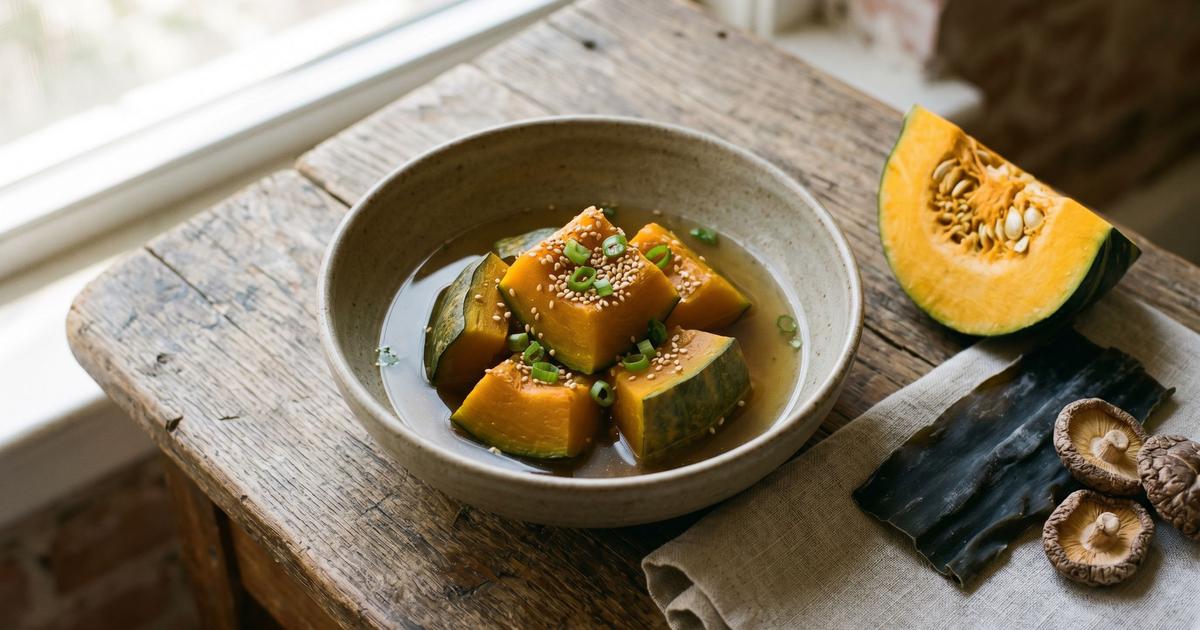
- Put the kombu and dried shiitake in a pot with 6 cups (1.4 L) cold water and let them sit 20 minutes if you have time, then bring the water slowly to a bare simmer. Starting cold and heating gently is how you pull glutamate from the kombu without the slick, bitter edge that boiling it gives.
- Just as the water begins to move, lift out the kombu. Fish out the softened shiitake, slice the caps thin, discard the stems, and return the caps to the pot. This dashi, built from nothing but seaweed and dried mushroom, is the entire seasoning, so it is doing the work salt would.
- Add the fresh cremini and the ginger and simmer 5 minutes, until the mushrooms are tender and their savor has joined the broth.
- Stir in the cooked rice and simmer 5 minutes more, just until the grains loosen and drink up some broth and the soup thickens slightly. Day-old rice holds its shape and turns silky at the edges rather than dissolving into mush.
- Fold in the spinach and cook 1 minute, until it wilts. Off the heat, season with the white pepper.
- Ladle into bowls and finish each with scallions, sesame seeds, and shredded nori. The nori melts a little into the hot broth and deepens the ocean note, standing in for the soy you might otherwise reach for.
Nutrition
Estimated per serving: 180 calories, 6 g protein, 4 g fiber, 90 mg sodium. Computed from USDA FoodData Central reference values for the main ingredients. This is an approximation, not a laboratory measurement. How these are computed.
Cost per serving is estimated from US national-average retail prices for cheap staple forms, using BLS dried-bean prices and USDA produce prices. Prices vary by store and season, so treat it as a guide, not a receipt. How this is computed.