Yasai Kare (Japanese Vegetable Curry)
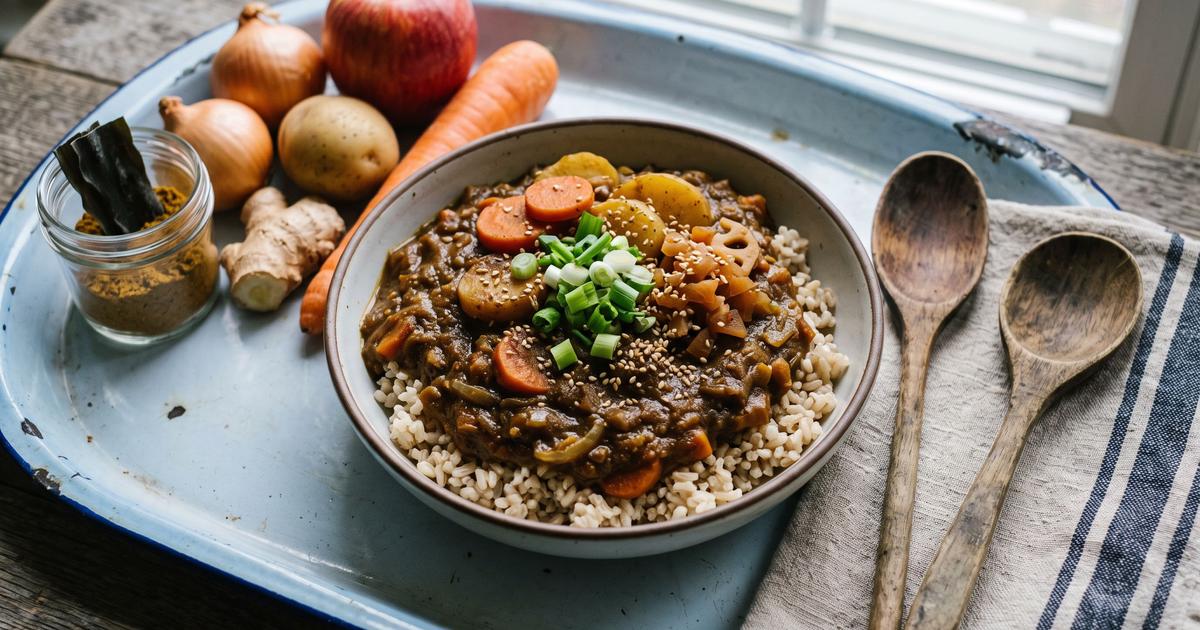
Japanese curry, kare raisu, is a national comfort food, but the boxed roux it usually starts from is mostly wheat flour, palm oil, and sugar pressed into a brick. None of that is doing anything you cannot do better from scratch. The sweetness that defines it comes honestly from onions cooked down slowly and a whole grated apple, a trick Japanese home cooks already use. The thick body comes from a scoop of the curry's own potatoes, blended and stirred back in, rather than a fat-bound roux. A couple of tablespoons of tamari season the entire pot. What is left is a weeknight curry that costs about a dollar a bowl and reheats even better the next day.
Ingredients
- 2 larges Yellow onions, thinly sliced
- 2 mediums Carrots, cut into chunks
- 2 mediums Potatoes, cut into chunks
- 3 cloves Garlic, minced
- 1 tbsp Ginger, grated
- 1 medium Apples, grated
- 2 tbsp Curry powder
- 1 tbsp Tomato paste
- 1 piece Kombu, 4-inch (10 cm)
- 2 1/2 tbsp Low-sodium tamari
- 2 wholes Medjool dates, pitted
- 1/2 cup Frozen peas
- 1 cup short grain brown rice, to serve
Method
- Start the rice: rinse and simmer in 2 cups (475 ml) water, covered, about 35 minutes. It cooks while the curry does, so both finish together.
- Cook the sliced onions in a dry pot over medium heat with splashes of water, scraping, for 12 to 15 minutes, until deeply soft and browned. This slow, jammy onion is the whole base of Japanese curry: it is where the sweetness and depth come from that a store roux gets from fat and sugar.
- Push the onions aside and toast the curry powder and tomato paste in the dry center of the pot for 1 minute, until fragrant. Blooming the spice and paste in dry heat wakes them up; stirred straight into liquid they taste flat and raw.
- Add the garlic, ginger, potatoes, carrots, kombu, grated apple, and 3 cups (710 ml) water. Bring to a simmer, cover, and cook 20 minutes, until the potatoes are tender. The apple and kombu are quiet workers: the apple brings fruity sweetness, the kombu a savory depth that stands in for meat stock.
- Fish out the kombu. Scoop out a cup of potatoes and liquid, blend smooth, and stir it back in. Blended potato is the roux replacement: it thickens the curry to that thick, clinging texture with nothing but starch it already contains.
- Blend the dates with a little of the hot liquid and stir in with the tamari and peas. Simmer 3 minutes more. The tamari carries the salt for the whole pot, so add it at the end and taste before adding more. Serve over the brown rice.
Nutrition
Estimated per serving: 380 calories, 10 g protein, 9 g fiber, 330 mg sodium. Computed from USDA FoodData Central reference values for the main ingredients. This is an approximation, not a laboratory measurement. How these are computed.
Cost per serving is estimated from US national-average retail prices for cheap staple forms, using BLS dried-bean prices and USDA produce prices. Prices vary by store and season, so treat it as a guide, not a receipt. How this is computed.