Miso Ginger Tempeh and Buckwheat Bowl
Miso is the salt in this bowl, which is why it carries a salt badge rather than a salt-free one. There is no way to take it out and keep the dish: the fermented soybean paste is the glaze, the seasoning, and most of the savory depth all at once. What the recipe does instead is use a modest amount and lean on ginger, garlic, and vinegar to make it go further.
Dates in place of mirin is the other substitution worth knowing. Mirin is a sweetened rice wine, mostly added sugar, and it exists in a glaze to balance salt and help it cling. Minced dates do both, add fiber rather than removing it, and thicken the glaze slightly as their pectin loosens in the pan.
Buckwheat is not wheat and contains no gluten. It is a seed, it cooks in a quarter of the time brown rice needs, and toasting it dry before the water goes in is the difference between a nutty grain and a bland one. The narrow window between firm and mushy is real, so treat the timer seriously.
Tempeh is the most expensive ingredient here and the reason this bowl costs more per serving than the others on the site. It is also the most protein-dense whole soy food in the store, at roughly twice the protein of the same weight of tofu, which is what earns it the place.
Ingredients
- 1 cup Buckwheat groats
- 8 oz Tempeh, cut into 1/2-inch cubes
- 1 1/2 tbsp White miso
- 2 Deglet noor dates, pitted and finely minced
- 1 tbsp Ginger, grated
- 2 cloves Garlic, grated
- 3 tbsp unseasoned rice vinegar, divided
- 12 oz Napa cabbage, sliced crosswise into ribbons
- 1 Carrot, cut into matchsticks
- 3 Scallions, thinly sliced, greens and whites separated
- 1 tbsp Sesame seeds, toasted
Method
- Steam the tempeh cubes over an inch of simmering water for 10 minutes. This is the step people skip and then wonder why tempeh tastes bitter. Steaming opens the cake so it absorbs the glaze, and it drives off the sharp compounds the culture leaves behind.
- Meanwhile, toast the buckwheat groats in a dry pot over medium heat, stirring, 3 to 4 minutes, until they smell like toasted bread. Add 1 3/4 cups (420 ml) water, bring to a boil, then cover and cook at the barest simmer 12 to 15 minutes. Buckwheat goes from pleasantly firm to porridge in about two minutes, so start checking at 12. Off the heat, leave it covered 5 minutes and fluff with a fork.
- Toss the napa cabbage and carrot matchsticks with 2 tablespoons of the rice vinegar and the scallion whites. Leave them to sit while everything else cooks. Napa wilts fast in acid and comes out somewhere between raw and pickled, which is the contrast the warm half of the bowl needs.
- Mash the minced dates with the miso, ginger, garlic, the remaining tablespoon of vinegar, and 2 tablespoons water into a loose paste. The dates replace mirin: both bring sugar, but dates bring fiber and a little more caramel along with it. Mince them fine or they stay in lumps.
- Heat a nonstick or well-seasoned skillet over medium-high with 2 tablespoons water. Add the steamed tempeh in one layer and let it sit undisturbed 3 minutes so it browns where it touches the pan. Turn and repeat, adding a splash of water only if the pan goes dry before the tempeh colors.
- Drop the heat to medium-low and pour in the miso glaze. Toss for 60 to 90 seconds until it coats every cube and thickens. Keep the heat low: miso is a live ferment and its flavor turns harsh and one-note if you boil it.
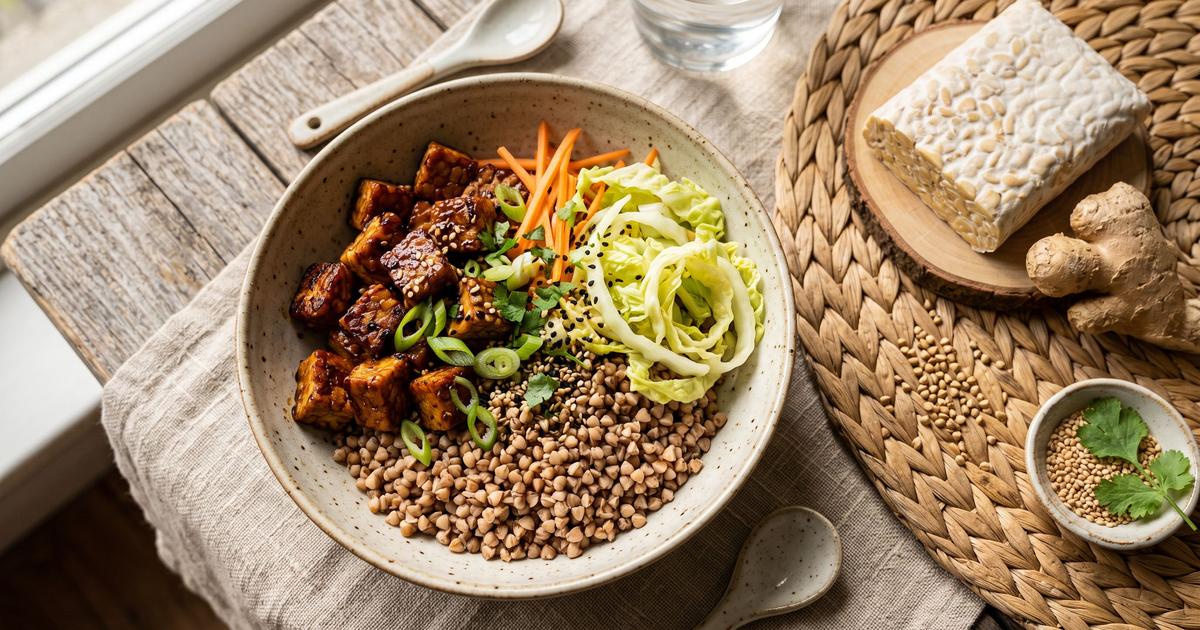
- Divide the buckwheat among four bowls. Top with the glazed tempeh and the drained cabbage and carrot. Finish with the scallion greens and toasted sesame seeds.
Nutrition
Estimated per serving: 340 calories, 20 g protein, 12 g fiber, 260 mg sodium. Computed from USDA FoodData Central reference values for the main ingredients. This is an approximation, not a laboratory measurement. How these are computed.
Cost per serving is estimated from US national-average retail prices for cheap staple forms, using BLS dried-bean prices and USDA produce prices. Prices vary by store and season, so treat it as a guide, not a receipt. How this is computed.