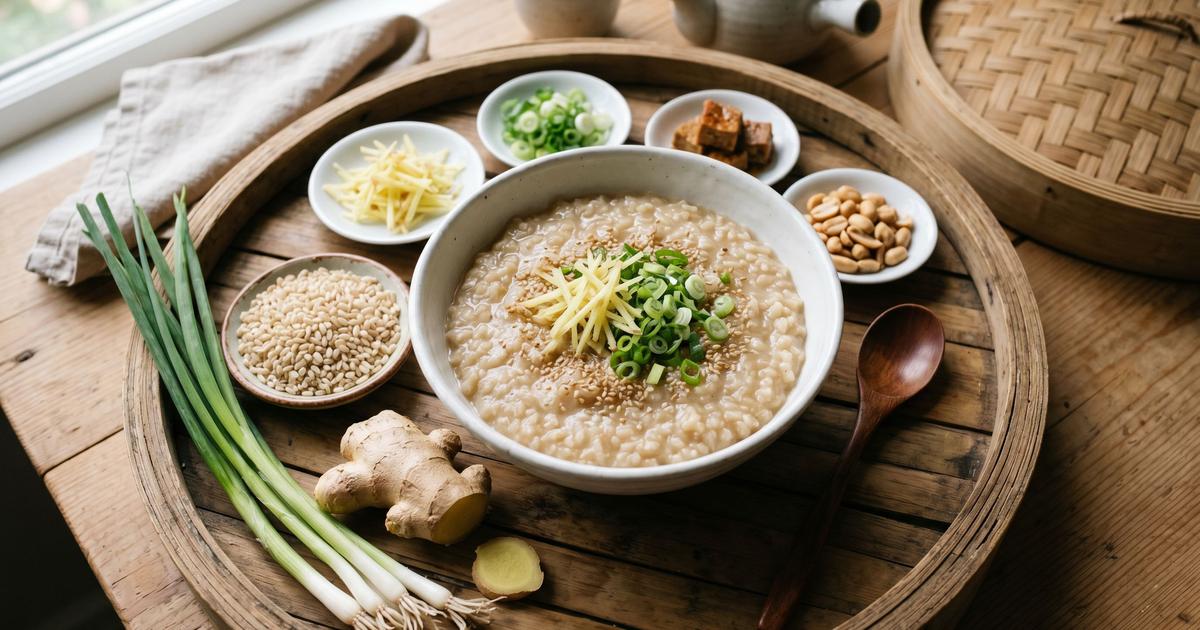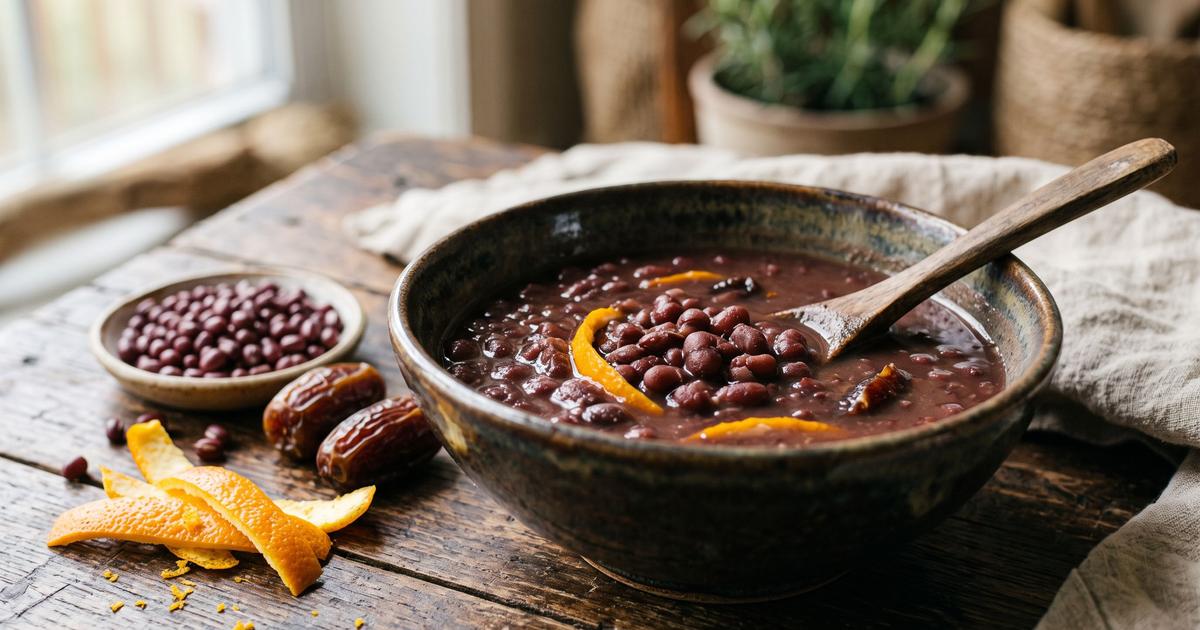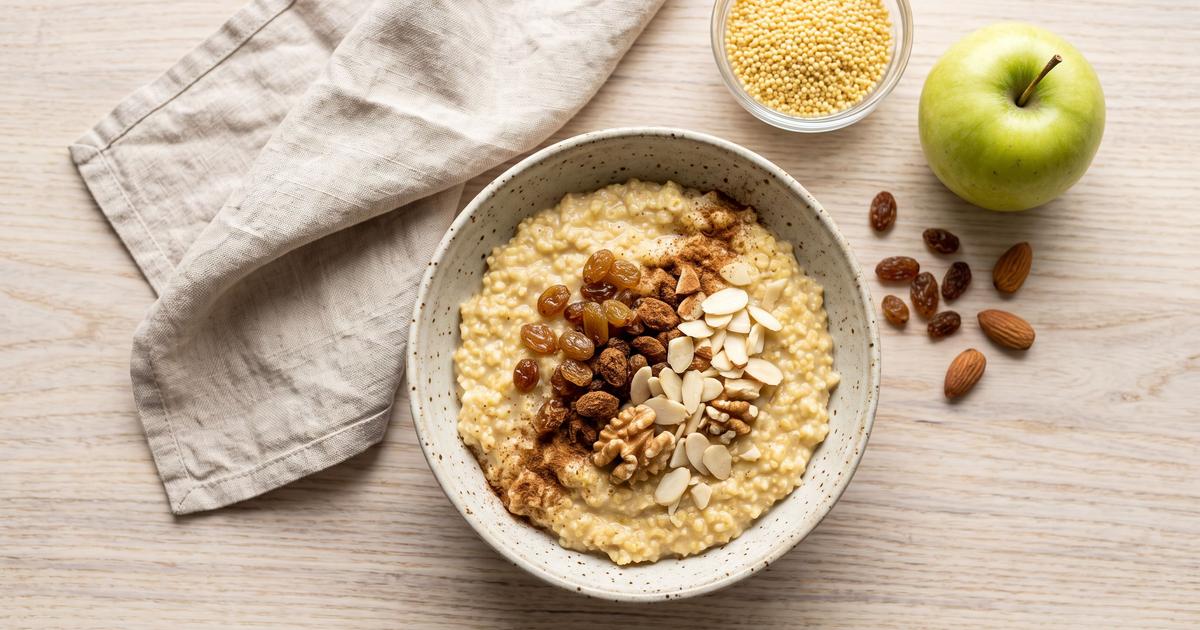
Laba Zhou, Eight-Treasure Porridge
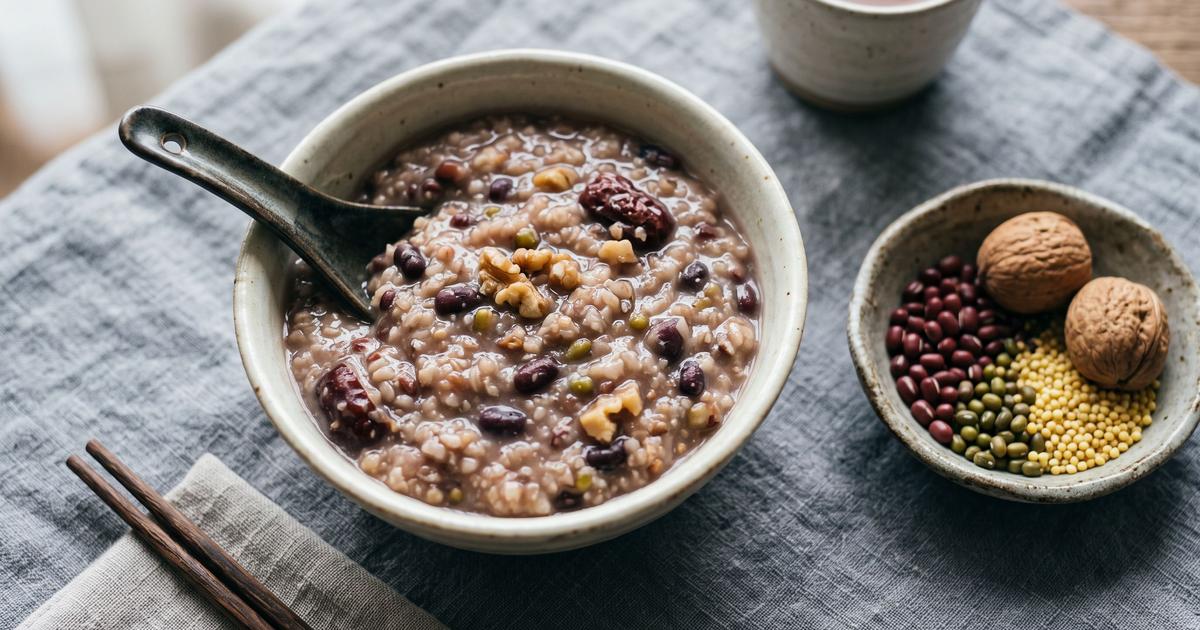
Laba zhou is the porridge cooked for the Laba festival, on the eighth day of the twelfth lunar month, and the name eight treasures points to its open-ended list of grains, beans, nuts, and dried fruit. Every household uses what it has, which makes it a natural way to clear the pantry into one warming pot. The version here leans on short-grain rice for creaminess, adzuki and mung beans for body, and Medjool dates and raisins for a sweetness that builds as everything breaks down. There is no added sugar and no salt; the long, slow simmer does all the work. Cook a big batch on the weekend and reheat it through the week.
Ingredients
- 1/2 cup short grain brown rice
- 1/3 cup Adzuki beans, soaked overnight
- 1/3 cup Mung beans, soaked overnight
- 1/4 cup Millet
- 1/4 cup Peanuts, raw, soaked overnight with the beans
- 5 pieces Medjool dates, pitted and torn
- 1/4 cup Raisins
- 1/3 cup Walnuts, chopped
- 1 stick cassia cinnamon
Method
- Drain the soaked adzuki beans, mung beans, and peanuts, add them to a large pot with 8 cups (1.9 L) water and the cinnamon, and simmer 40 minutes until the adzuki are tender to the tooth. Beans take far longer than grains, so they get a head start; adding them together would leave crunch in the finished bowl.
- Stir in the short-grain rice and millet with another 2 cups (475 ml) water and simmer 35 to 40 minutes, stirring often as it thickens. Short-grain rice sheds its starch when you stir it, and that starch is what turns a pot of separate grains into one creamy porridge with no dairy.
- Add the torn dates and raisins in the last 10 minutes and cook until the dates dissolve into threads. Simmered this long the dates melt into the porridge and sweeten the whole pot, which is why this dish has never needed sugar.
- Stir in the walnuts off the heat and serve hot. The porridge sets firm as it cools, so loosen leftovers with a splash of water when you reheat; it keeps 4 days and freezes well.
Nutrition
Estimated per serving: 270 calories, 9 g protein, 8 g fiber, 20 mg sodium. Computed from USDA FoodData Central reference values for the main ingredients. This is an approximation, not a laboratory measurement. How these are computed.
Cost per serving is estimated from US national-average retail prices for cheap staple forms, using BLS dried-bean prices and USDA produce prices. Prices vary by store and season, so treat it as a guide, not a receipt. How this is computed.