Hong Dou Tang (Sweet Red Bean Soup)
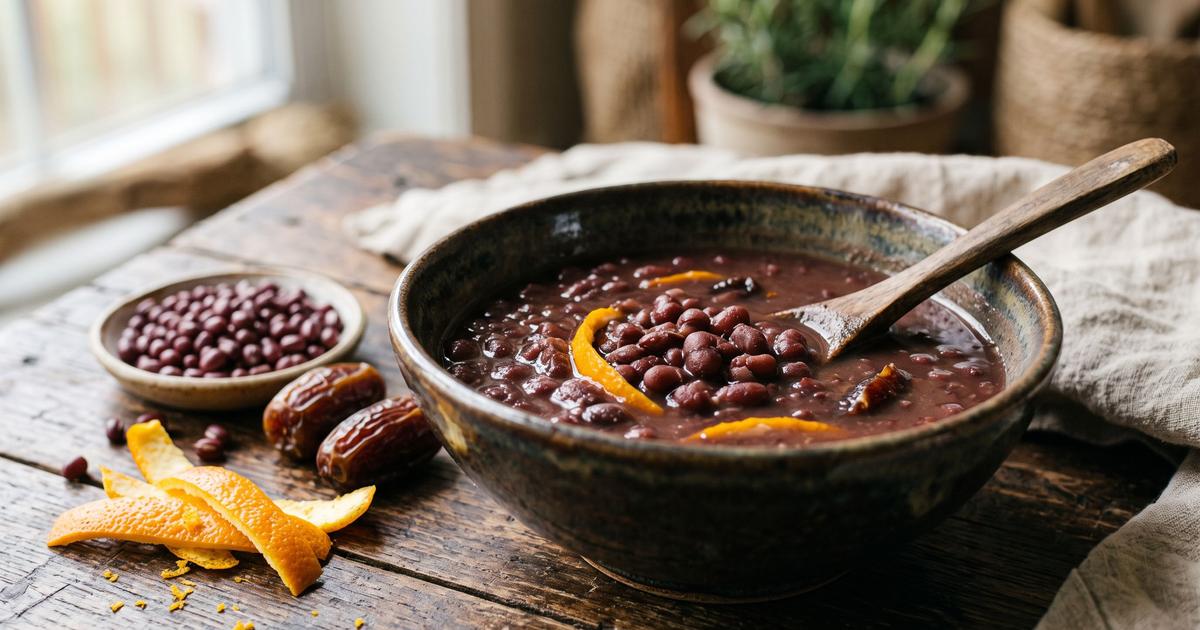
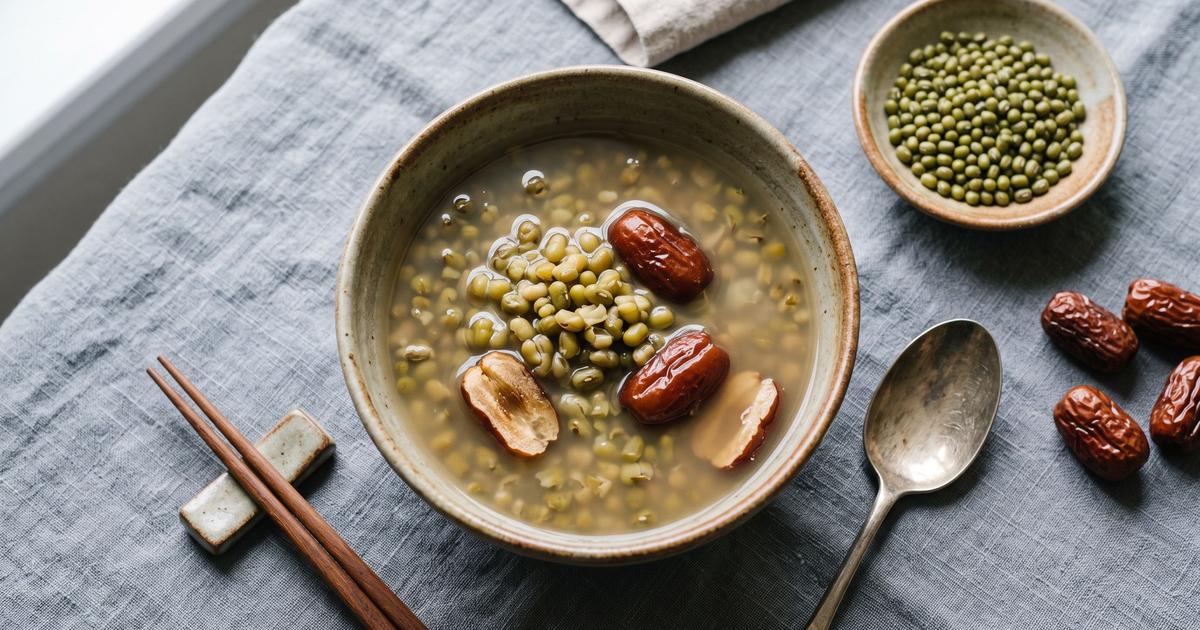
Hong dou tang is the everyday sweet soup of Cantonese home kitchens, a pot of red beans cooked down with rock sugar and dried tangerine peel and eaten warm or cold as dessert. Adzuki beans are naturally, faintly sweet on their own, which is why they take so well to this treatment and why the sugar was never doing all the work. Dates blended into the hot bean liquid replace it cleanly, adding their own caramel note, and fresh orange peel stands in for the dried tangerine. What you get is a dessert that is mostly fiber and plant protein, the kind of thing that reads as a treat and eats like a small meal.
Ingredients
- 1 cup Adzuki beans, soaked overnight
- 6 wholes Medjool dates, pitted
- 1 whole Oranges, peel in wide strips, plus segments to serve
Method
- Drain the soaked adzuki beans and add them to a pot with 6 cups (1.4 L) water. Soaking overnight cuts the cook time by a third and helps the beans break down evenly, which is the texture the whole dish is after.
- Bring to a hard boil for 5 minutes, then lower to a steady simmer, partly covered, for about 50 minutes. Adzuki beans go from firm to collapsing quickly at the end, so start checking at 45 minutes: you want most of them soft enough to crush against the side of the pot.
- While the beans cook, blend the pitted dates with 0.5 cup (120 ml) of the hot bean liquid into a smooth paste. Blending rather than dropping the dates in whole spreads the sweetness through every spoonful instead of leaving sweet pockets.
- Stir the date paste and the strips of orange peel into the soup and simmer 15 minutes more. Add the peel late: its oils are volatile, and a short simmer perfumes the pot where a long one turns the pith bitter.
- Crush a ladle of the beans against the pot and stir it back in to thicken the broth, then fish out the orange peel. This is how the soup gets its body, from mashed bean rather than starch or cream.
- Serve warm in cold weather or chilled in summer, with a few fresh orange segments on top. The dates carry all the sweetness, so taste before serving and blend in one more if your beans ran starchy.
Nutrition
Estimated per serving: 220 calories, 9 g protein, 9 g fiber, 15 mg sodium. Computed from USDA FoodData Central reference values for the main ingredients. This is an approximation, not a laboratory measurement. How these are computed.
Cost per serving is estimated from US national-average retail prices for cheap staple forms, using BLS dried-bean prices and USDA produce prices. Prices vary by store and season, so treat it as a guide, not a receipt. How this is computed.