Zhi Ma Hu, Black Sesame Soup
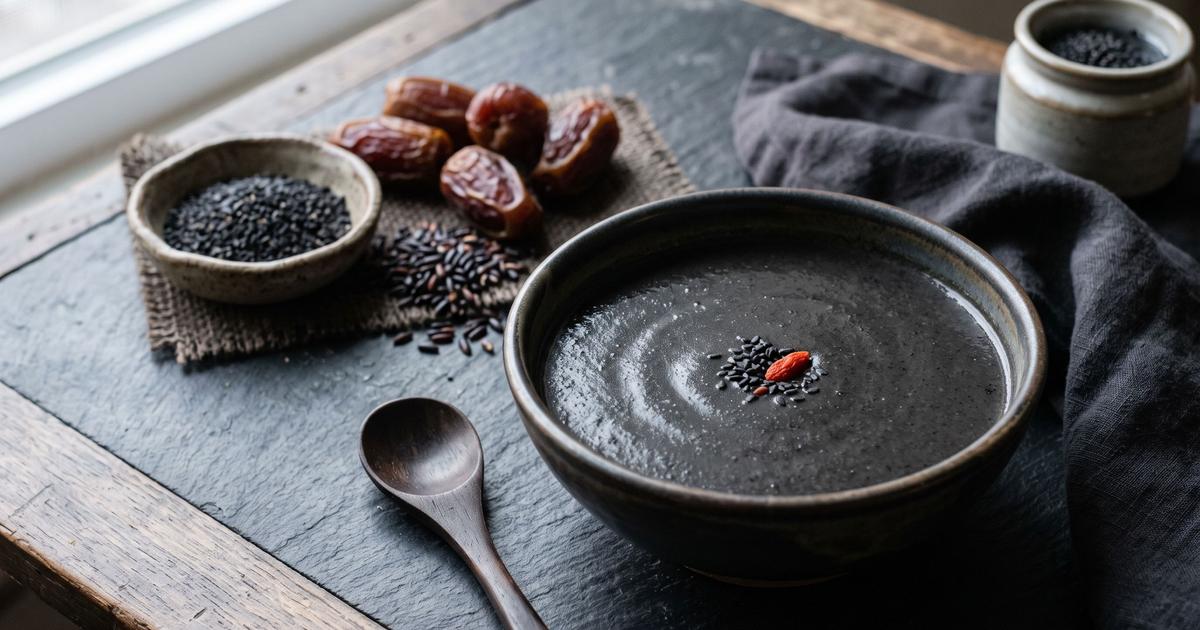
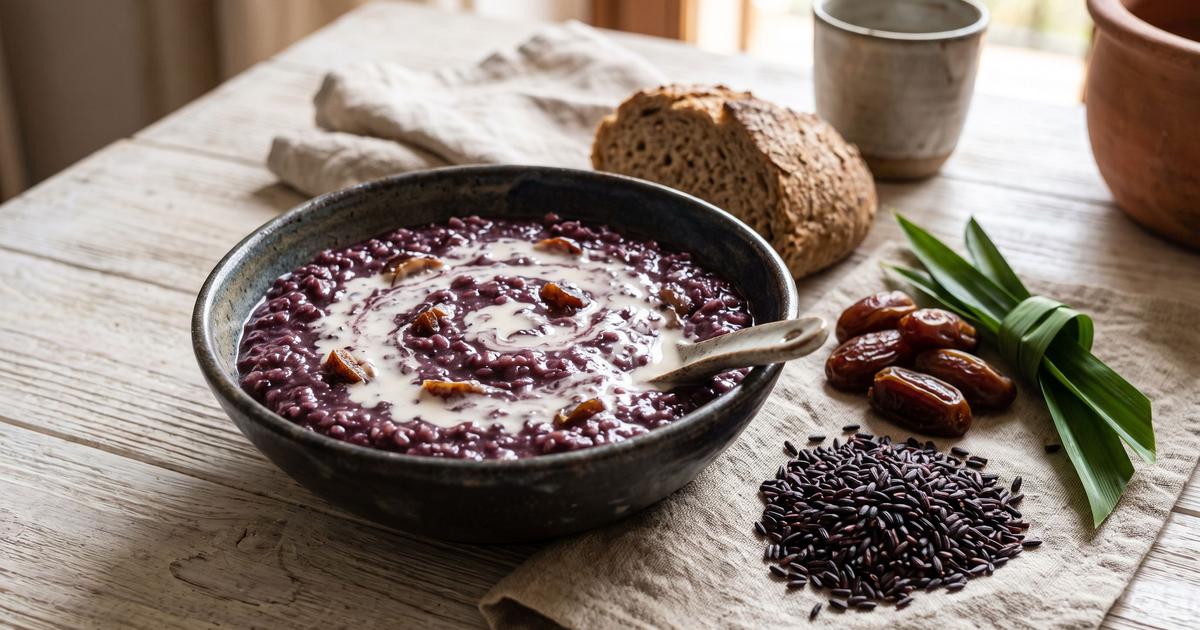
Zhi ma hu is a Cantonese sweet soup, a bowl of ground black sesame cooked with a little rice until it thickens into something between a drink and a pudding. The technique is old and plain: toasted seeds and soaked rice are blended with water, then simmered while you whisk, and the rice starch is what pulls the whole thing into a silky body with no thickener added. Dates stand in for the rock sugar it is usually built on. Black sesame gives the classic color and the deepest flavor, but toasted white seeds work if that is what the pantry holds.
Ingredients
- 1/2 cup Sesame seeds, black if you have them, toasted
- 1/4 cup short grain brown rice, soaked in water 2 hours, then drained
- 3 pieces Medjool dates, pitted
- 1 cup Unsweetened soy milk
Method
- Soak the rice in water for 2 hours, then drain it. Soaking softens the bran so the grain blends silky and gives up the starch that thickens the soup later.
- Toast the sesame in a dry pan over medium heat until the seeds pop and smell nutty, about 4 minutes. Toasting is what turns raw seeds into deep sesame flavor, so do not rush it, and stir constantly since they scorch fast.
- Blend the sesame, drained rice, dates, soy milk, and 2 cups (480 ml) water on high until completely smooth, about 2 minutes. A long blend breaks the seed hulls open so the finished soup is silky rather than gritty.
- Pour the mixture into a saucepan and simmer gently, whisking the whole time, for 8 to 10 minutes, until it thickens to a pourable cream. The rice starch sets the body as it heats, and constant whisking keeps it from catching and scorching on the bottom.
- Thin with a little water to the thickness you like and serve warm. It keeps three days refrigerated and thickens as it sits, so loosen it with water when you reheat.
Nutrition
Estimated per serving: 220 calories, 7 g protein, 4 g fiber, 30 mg sodium. Computed from USDA FoodData Central reference values for the main ingredients. This is an approximation, not a laboratory measurement. How these are computed.
Cost per serving is estimated from US national-average retail prices for cheap staple forms, using BLS dried-bean prices and USDA produce prices. Prices vary by store and season, so treat it as a guide, not a receipt. How this is computed.