Xing Ren Cha, Sweet Almond Cream
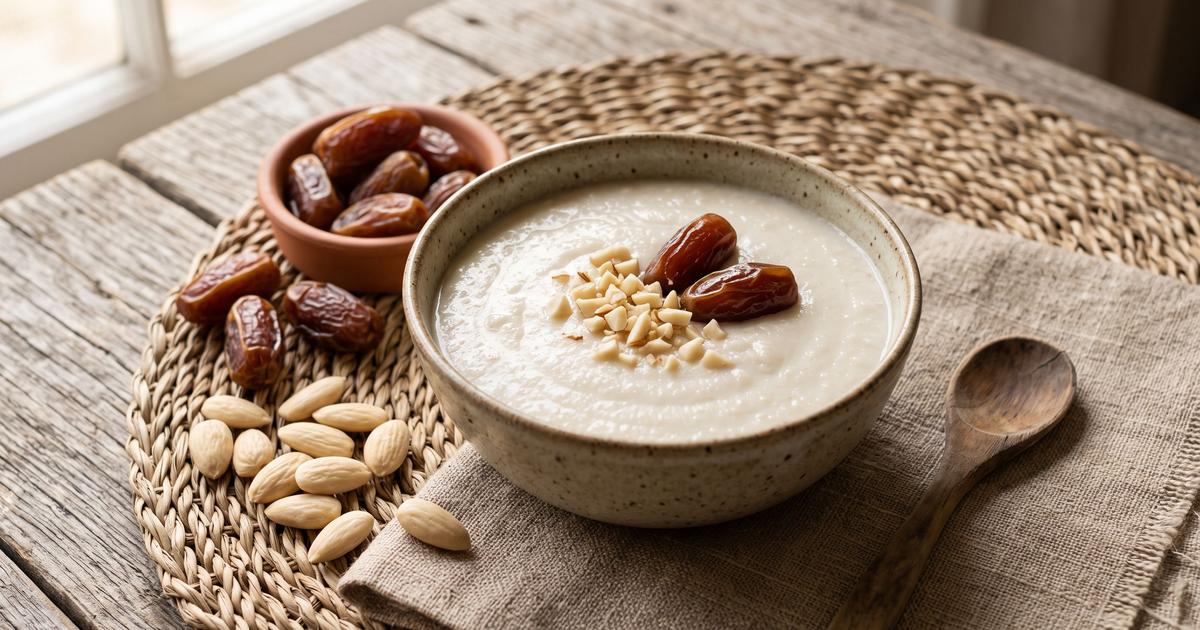
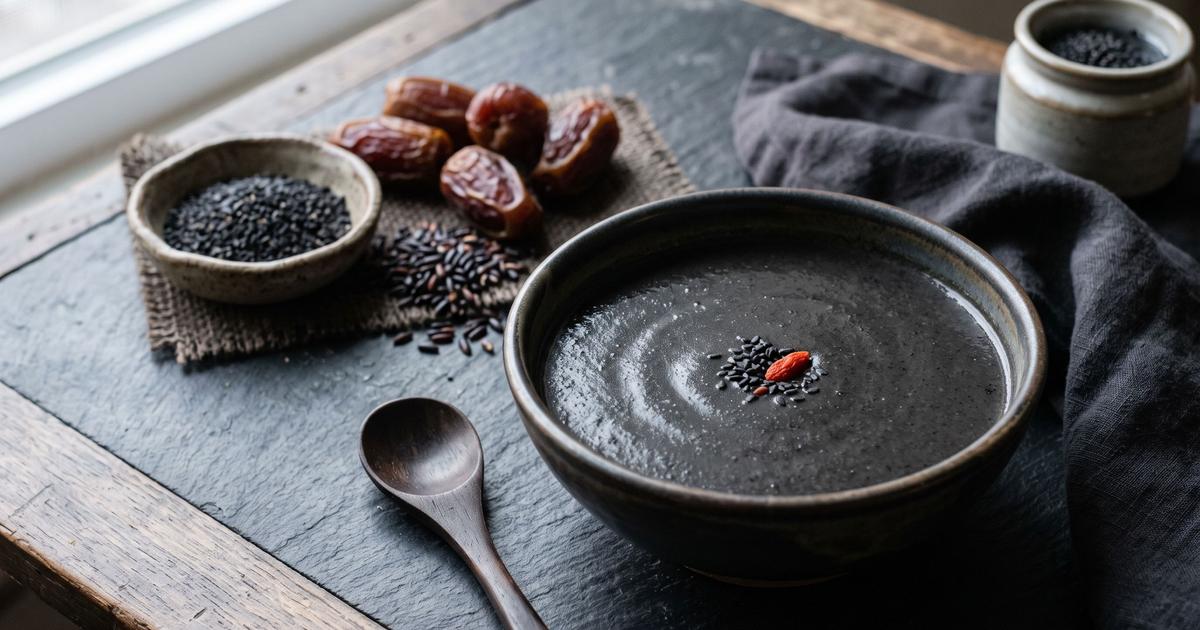
Xing ren cha, literally almond tea, is a warm sweet cream served in small bowls across Northern China and Cantonese dessert houses, the pale cousin of black sesame soup. It is built from almonds ground with a little rice, which thickens the cream and gives it body without any starch or dairy. The usual sweetener is rock sugar; here soft dates blend straight into the base and disappear, leaving sweetness with the fiber still attached. The one thing that matters is the blend: soak the almonds well and run the machine long enough that the mixture turns to genuine cream, then simmer it slowly so the rice starch sets it to a spoon-coating gloss.
Ingredients
- 3/4 cup Almonds, soaked several hours or overnight, then drained
- 2 tbsp short grain brown rice, soaked with the almonds
- 3 pieces Medjool dates, pitted
- 2 cups Unsweetened soy milk
- 1 pinch cassia cinnamon, for dusting
Method
- Soak the almonds and rice together for several hours or overnight, then drain. Soaking softens both so they can blend down completely, which is the entire texture of the dish; skip it and the cream stays gritty no matter how long you run the blender.
- Blend the almonds, rice, and dates with 1 cup (240 ml) water for a full 2 minutes, until very smooth. A long blend is what breaks the almond into a cream and pulls the sweetness out of the dates, so no sugar is needed.
- For a glassy texture, strain the blend through a fine sieve or a nut-milk bag, pressing hard. Traditional almond cream is strained silky-smooth; leaving it unstrained keeps more fiber and is entirely fine, just a shade rougher.
- Pour the blend into a pot with the soy milk and bring to a gentle simmer over medium-low heat, stirring constantly, for 8 to 10 minutes until it thickens to a pourable cream. The rice starch does the thickening as it heats, and constant stirring keeps it from catching and scorching on the bottom.
- Serve warm in small bowls with a dusting of cinnamon. The dates carry all the sweetness, so taste before you reach for anything else.
Nutrition
Estimated per serving: 180 calories, 6 g protein, 3 g fiber, 30 mg sodium. Computed from USDA FoodData Central reference values for the main ingredients. This is an approximation, not a laboratory measurement. How these are computed.
Cost per serving is estimated from US national-average retail prices for cheap staple forms, using BLS dried-bean prices and USDA produce prices. Prices vary by store and season, so treat it as a guide, not a receipt. How this is computed.