Fan Shu Tang Shui, Ginger Sweet Potato Soup
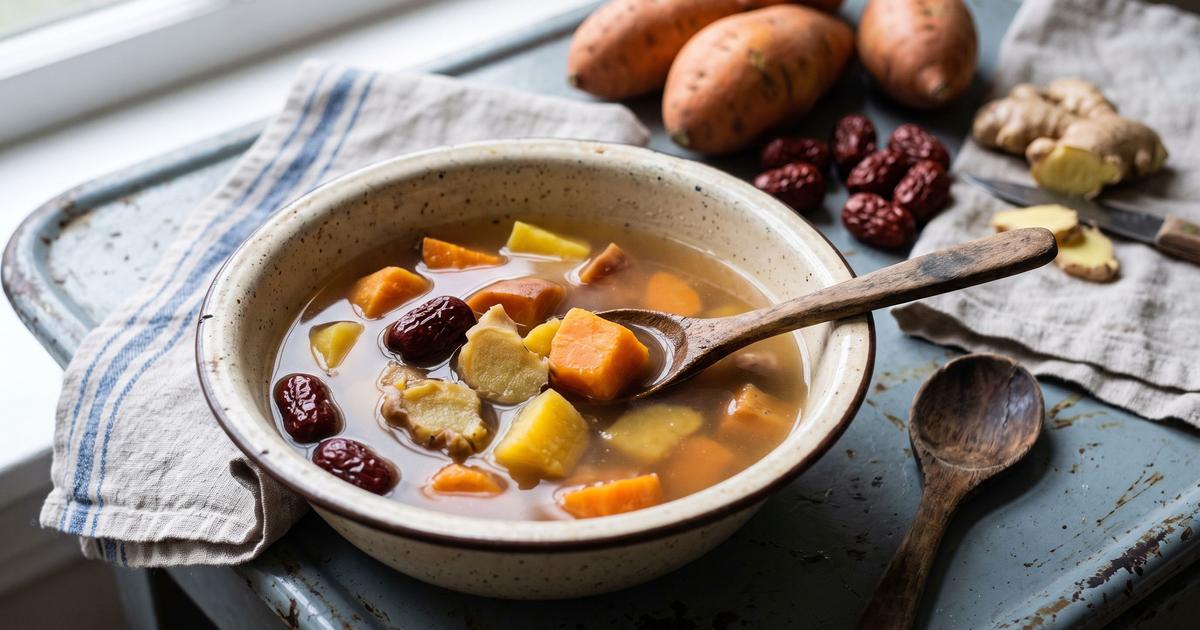
Tang shui, meaning sugar water, is the broad Cantonese family of sweet soups eaten as a light dessert, and this sweet potato version is among the most homely. It is barely a recipe: sweet potato, ginger, and water, simmered until the broth turns fragrant and gold. The sweetness that would normally come from rock sugar comes from a few melted dates instead, and the ginger keeps it from being cloying. Serve it warm at the end of a meal, or keep a jar in the fridge to drink cold. Either way it is close to free to make and asks for nothing but a pot and time.
Ingredients
- 1 1/2 lb Sweet potatoes, peeled, cut in 1.5-inch (4 cm) chunks
- 2 tbsp Ginger, sliced and smashed
- 4 Medjool dates, pitted and halved
Method
- Smash the ginger slices with the flat of a knife before they go in. Bruising the ginger opens the fibers so it gives up its warmth into the water rather than staying locked in the slice.
- Bring 5 cups (1185 ml) water to a boil with the smashed ginger and the halved dates. Simmer for 10 minutes first, so the ginger heat and the date sweetness build into the broth before the sweet potato goes in.
- Add the sweet potato chunks and simmer gently for 20 to 25 minutes, until they are tender to a fork but still holding their shape. A hard boil breaks them apart and clouds the soup, so keep it at a lazy bubble.
- The dates dissolve almost completely and sweeten the whole pot, which is why no sugar is needed. Chinese versions use slab sugar here, but a few dates do the same job and bring fiber with them.
- Serve hot in bowls with plenty of the ginger broth, which is half the point. In cold weather it warms from the inside, and it is just as good chilled from the fridge the next day.
Nutrition
Estimated per serving: 180 calories, 3 g protein, 6 g fiber, 30 mg sodium. Computed from USDA FoodData Central reference values for the main ingredients. This is an approximation, not a laboratory measurement. How these are computed.
Cost per serving is estimated from US national-average retail prices for cheap staple forms, using BLS dried-bean prices and USDA produce prices. Prices vary by store and season, so treat it as a guide, not a receipt. How this is computed.