Lü Dou Tang, Chinese Mung Bean Cooling Soup
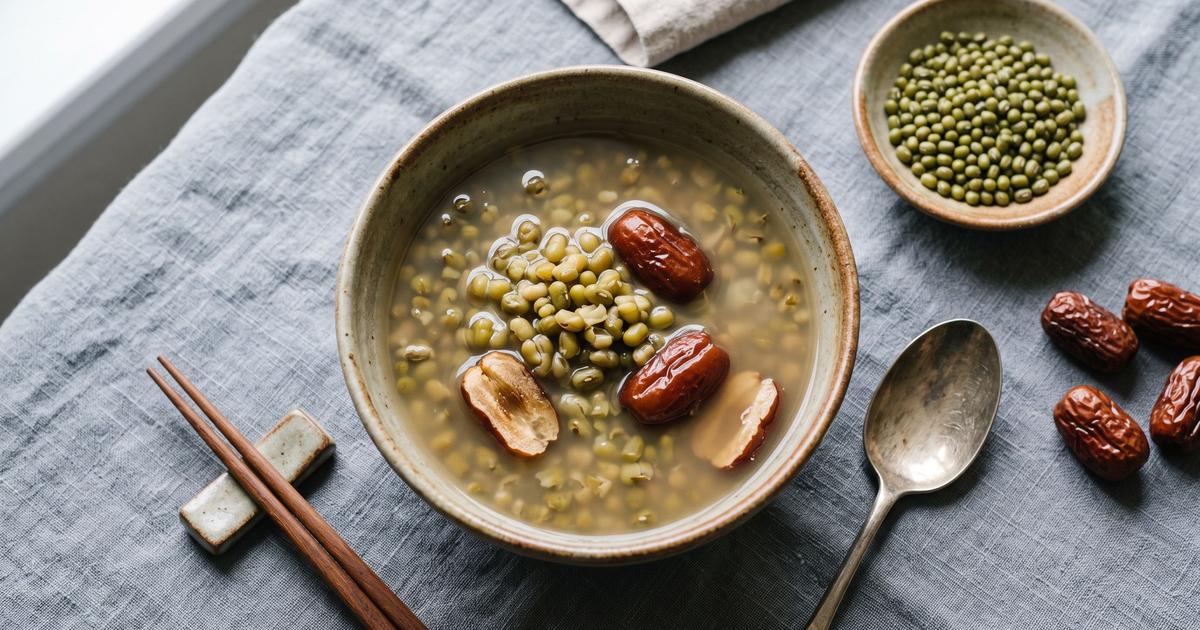
Lü dou tang, green bean soup, is what many Chinese households reach for in the heat of summer, valued as a cooling food in traditional practice and simply as a refreshing drink-soup in fact. Whole mung beans are simmered in a lot of water until their skins split, and the result can be thin and clear or thick and porridge-like depending on how long you cook it. This is the thin version, sweetened with dates rather than the rock sugar usually stirred in, with an optional square of kombu for minerals and a rounder taste. Serve it warm on a cool evening, or chilled over ice when the afternoon is at its worst.
Ingredients
- 1 cup Mung beans, rinsed
- 3 pieces Medjool dates, pitted, torn
- 1 piece Kombu, 2-inch (5 cm) square, optional
Method
- Bring the mung beans, kombu, and 7 cups (1.7 L) water to a boil, then lower to a gentle simmer. Starting in cold water and heating slowly lets the beans cook evenly before their skins burst.
- Simmer uncovered for about 35 minutes, until the beans are tender and their green skins have just split but the beans still hold together. Stopping here keeps the soup thin and the broth pale, the light version made for cooling off; simmer another 20 minutes if you want it cloudy and thick.
- Add the torn dates and cook 10 minutes more, stirring now and then, until they soften and dissolve their sweetness into the broth. Adding them late means they sweeten the liquid without falling apart earlier and clouding it.
- Fish out the kombu. Serve warm, or chill it and pour over ice, which is how it is drunk through a Chinese summer. It keeps 4 days in the fridge and thickens as it sits, so loosen it with a little water when you reheat.
Nutrition
Estimated per serving: 150 calories, 8 g protein, 6 g fiber, 15 mg sodium. Computed from USDA FoodData Central reference values for the main ingredients. This is an approximation, not a laboratory measurement. How these are computed.
Cost per serving is estimated from US national-average retail prices for cheap staple forms, using BLS dried-bean prices and USDA produce prices. Prices vary by store and season, so treat it as a guide, not a receipt. How this is computed.