Liangban Muer (Cold Wood Ear Salad)
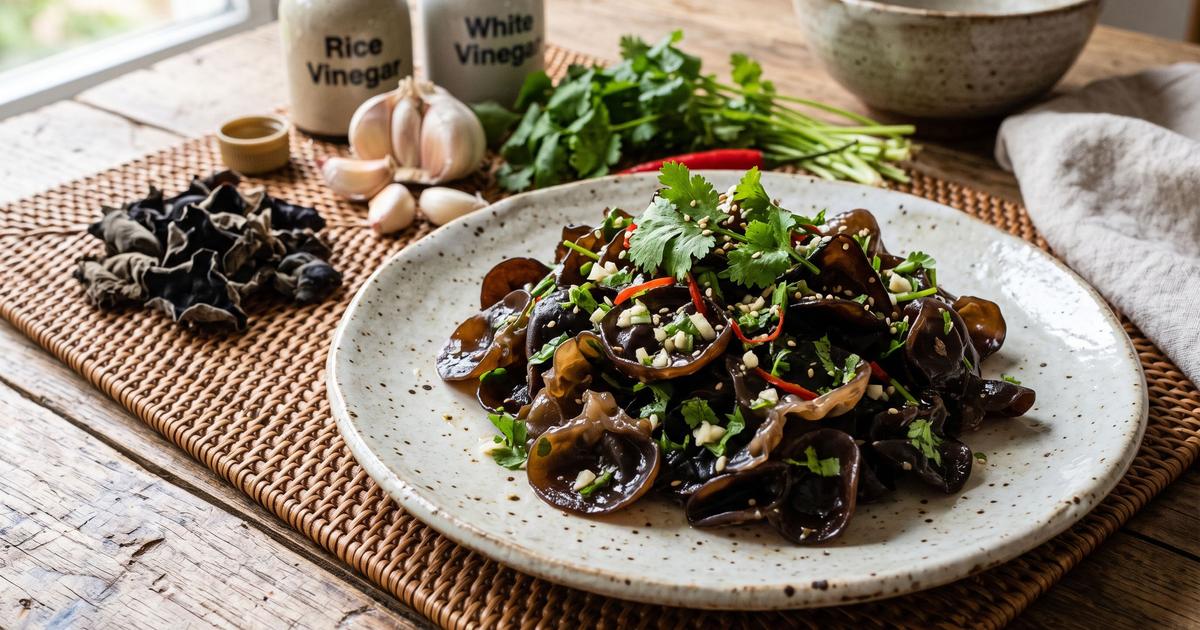
Wood ear is prized for texture more than flavor, a cool cartilage-crisp snap that Chinese cooks build cold dishes around. Liangban, meaning cold-tossed, is a whole category of banquet and home salads dressed at the last minute with vinegar, garlic, and sesame. Because wood ear is nearly all fiber and water, it carries almost no calories and takes a sharp dressing without wilting, so a bowl can sit out through a meal and stay crunchy. A minced date replaces the pinch of sugar these dressings usually hide, and the two vinegars do the seasoning, which is why the salad needs no salt to taste complete.
Ingredients
- 1 oz Wood ear mushrooms, dried
- 1 medium Carrots, julienned
- 3 cloves Garlic, minced
- 1 tsp Ginger, grated
- 1 1/2 tbsp Chinese black vinegar
- 1 tbsp unseasoned rice vinegar
- 1 whole Medjool dates, pitted, minced fine
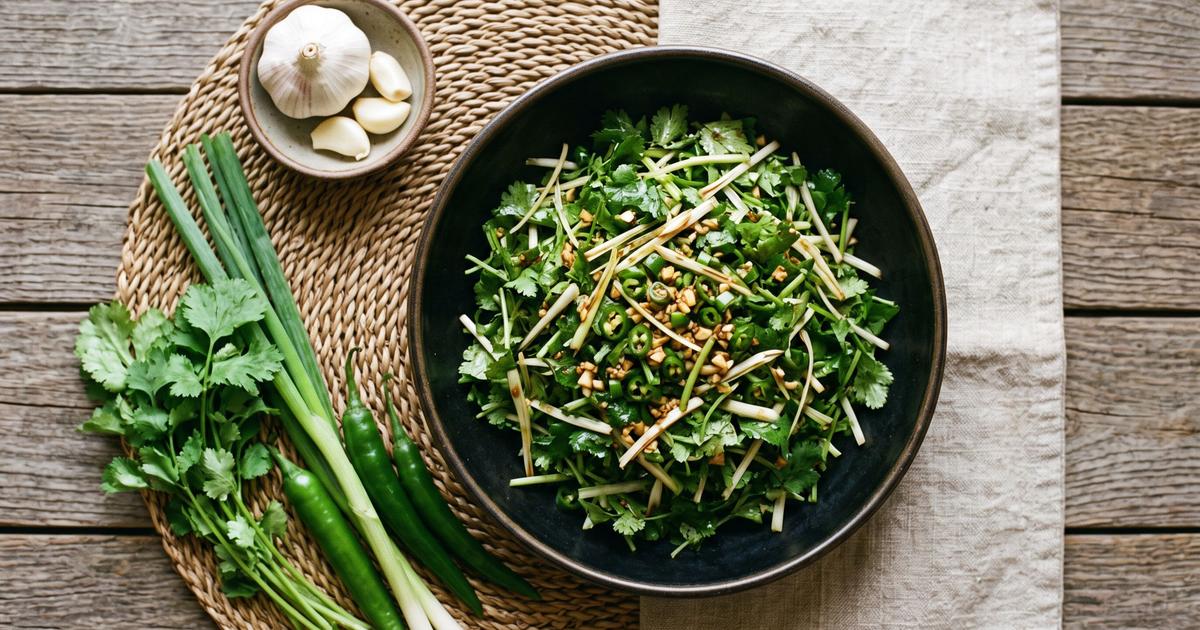
- 2 wholes Scallions, sliced
- 3 tbsp Cilantro, chopped
- 1 tbsp Sesame seeds, toasted
- 1/2 tsp Red pepper flakes
Method
- Cover the dried wood ear with hot water and soak 20 minutes, until it swells to several times its size and turns supple. It expands dramatically, so an ounce is plenty; a whole bowl of dried pieces would overflow the pot once hydrated.
- Trim off any hard knobs where the fungus grew, then tear the wood ear into bite-size pieces. Those knobs never soften, so cutting them out now saves a gritty bite later.
- Blanch the wood ear in boiling water for 90 seconds, add the carrot for the last 15 seconds, then drain and shock both under cold water. The quick blanch takes the raw edge off while keeping the signature snap; the cold shock stops the cooking before anything goes limp.
- Whisk the garlic, ginger, both vinegars, and the minced date into a dressing. Two vinegars is deliberate: black vinegar brings malty depth, unseasoned rice vinegar brings clean brightness, and together they season the salad where salt otherwise would.
- Toss the drained wood ear and carrot with the dressing, scallions, cilantro, sesame, and pepper flakes. Serve cold. It holds its crunch for hours, which makes it a make-ahead dish that only improves as it sits in the dressing.
Nutrition
Estimated per serving: 60 calories, 2 g protein, 5 g fiber, 15 mg sodium. Computed from USDA FoodData Central reference values for the main ingredients. This is an approximation, not a laboratory measurement. How these are computed.
Cost per serving is estimated from US national-average retail prices for cheap staple forms, using BLS dried-bean prices and USDA produce prices. Prices vary by store and season, so treat it as a guide, not a receipt. How this is computed.