Liangban Bocai, Chinese Cold Spinach with Sesame
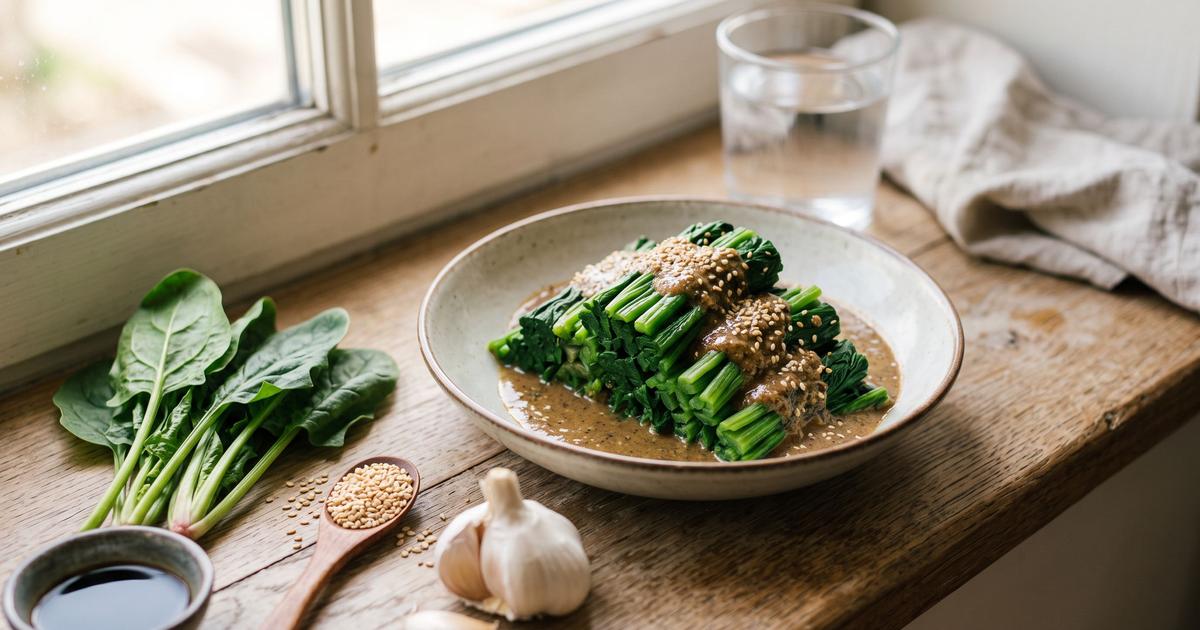
Liangban means dressed cold, and bocai is spinach: this is one of the plainest and most common cold dishes on a northern Chinese table, served as a starter or a foil to richer food. The spinach is blanched, wrung dry, and dressed in a sesame sauce that leans savory and sour rather than sweet, which sets it apart from the Japanese goma-ae and the Korean namul made from the same leaf. Tahini stands in for Chinese sesame paste, black vinegar brings the malty sourness, and raw garlic keeps it sharp. A mashed date replaces the pinch of sugar. Squeeze the spinach as dry as your hands allow.
Ingredients
- 10 oz Spinach, about 285 g mature spinach, washed
- 2 tbsp Tahini
- 1 tbsp Chinese black vinegar
- 2 tsp Low-sodium tamari
- 2 cloves Garlic, grated
- 1 piece Medjool dates, pitted, mashed with 2 tbsp (30 ml) hot water into a paste
- 1 tsp Sesame seeds, toasted
Method
- Blanch the spinach in boiling water for 30 seconds, just until it wilts, then lift it straight into a bowl of cold water. A fast blanch fixes the green color and shrinks the leaves so the dressing coats them evenly instead of sliding off raw ones.
- Gather the cooled spinach and squeeze it hard into a tight ball, wringing out as much water as you can, then slice the ball crosswise into a few thick logs. Squeezing dry is the whole trick: wet spinach dilutes the sauce and turns the dish watery on the plate.
- Whisk the tahini with the vinegar, tamari, date paste, and garlic. It will seize and stiffen first, then loosen into a pourable sauce as the water works in, so keep whisking and add a teaspoon more water if it needs it.
- Stand the spinach logs on a plate, spoon the sauce over, and top with sesame. Serve cold or at room temperature; it holds a day in the fridge, and the flavor deepens as the garlic mellows into the sauce.
Nutrition
Estimated per serving: 80 calories, 4 g protein, 3 g fiber, 150 mg sodium. Computed from USDA FoodData Central reference values for the main ingredients. This is an approximation, not a laboratory measurement. How these are computed.
Cost per serving is estimated from US national-average retail prices for cheap staple forms, using BLS dried-bean prices and USDA produce prices. Prices vary by store and season, so treat it as a guide, not a receipt. How this is computed.