Cold Celery and Peanut Salad
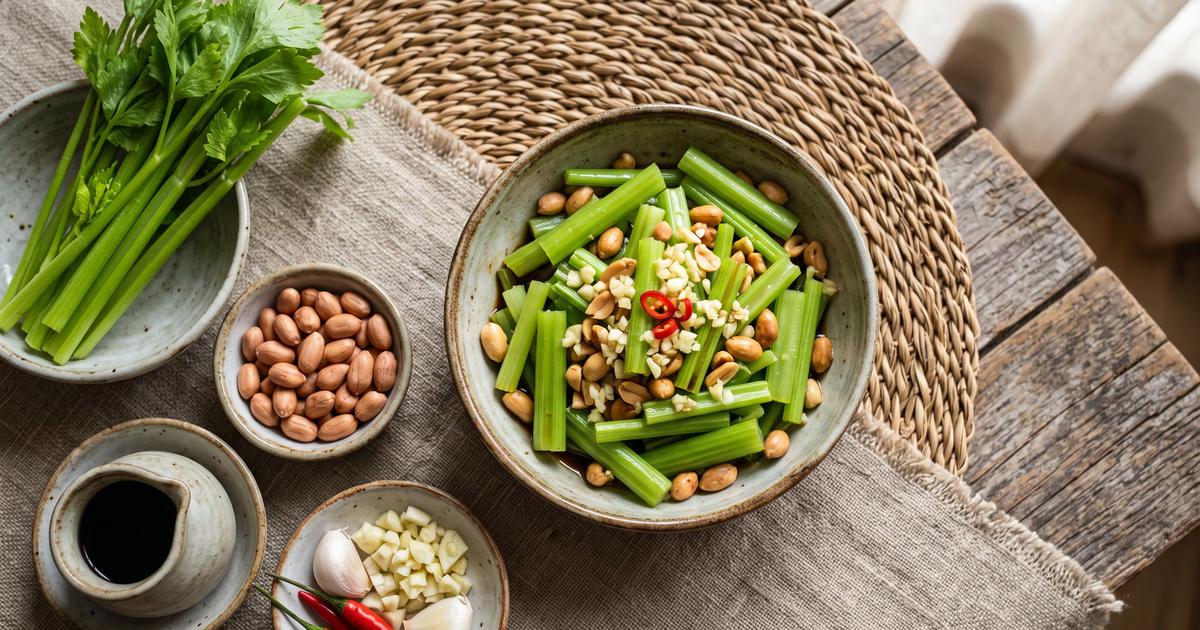
Qincai ban huasheng is a cold plate from the Chinese home table, celery and peanuts dressed and set out to sit. The celery here is Chinese celery in spirit, thin and aromatic, but a bias-cut of ordinary celery blanched for under a minute does the same job: it keeps the snap while shedding the raw bite. The peanuts are toasted dry rather than fried, and the dressing leans on malty black vinegar and grated garlic in place of the usual splash of soy, so the dish carries itself with no added salt. Toss the peanuts in at the last minute, since they turn soft once the dressing reaches them.
Ingredients
- 6 stalks Celery, cut on a sharp bias into 1-inch (2.5 cm) pieces, about 4 cups
- 1/2 cup Peanuts, raw
- 2 cloves Garlic, grated to a paste
- 1 1/2 tbsp unseasoned rice vinegar
- 1 tsp Chinese black vinegar
- 1 piece Deglet noor dates, pitted, mashed with 1 tbsp (15 ml) hot water into a paste
- 1 tbsp Sesame seeds, toasted
- 1/8 tsp White pepper
- 1/4 cup Cilantro, chopped
Method
- Toast the peanuts in a dry pan over medium heat until they are golden and smell roasted, about 6 minutes, then tip them out to cool. Dry-toasting builds the deep flavor that frying usually adds, and cooling firms them so they stay crunchy against the wet celery.
- Bring a pot of water to a boil and blanch the celery for 45 to 60 seconds, then lift it straight into a bowl of ice water. A fast blanch sets the green color and tames the raw grassy edge while keeping the snap, and the ice bath stops the cooking before the celery goes limp.
- Drain the celery well and pat it dry. Surface water thins the dressing into a puddle at the bottom of the bowl, so get the celery as dry as you can first.
- Whisk the garlic, rice vinegar, black vinegar, date paste, and white pepper together. Black vinegar is malty and low in acid, so one mashed date rounds it the way a spoon of sugar would, with fruit instead.
- Toss the celery with the dressing, then fold in the peanuts, sesame, and cilantro just before serving. Peanuts soften within the hour once the dressing touches them, so they go in last.
Nutrition
Estimated per serving: 140 calories, 6 g protein, 3 g fiber, 35 mg sodium. Computed from USDA FoodData Central reference values for the main ingredients. This is an approximation, not a laboratory measurement. How these are computed.
Cost per serving is estimated from US national-average retail prices for cheap staple forms, using BLS dried-bean prices and USDA produce prices. Prices vary by store and season, so treat it as a guide, not a receipt. How this is computed.