Laohu Cai, Northeastern Tiger Salad
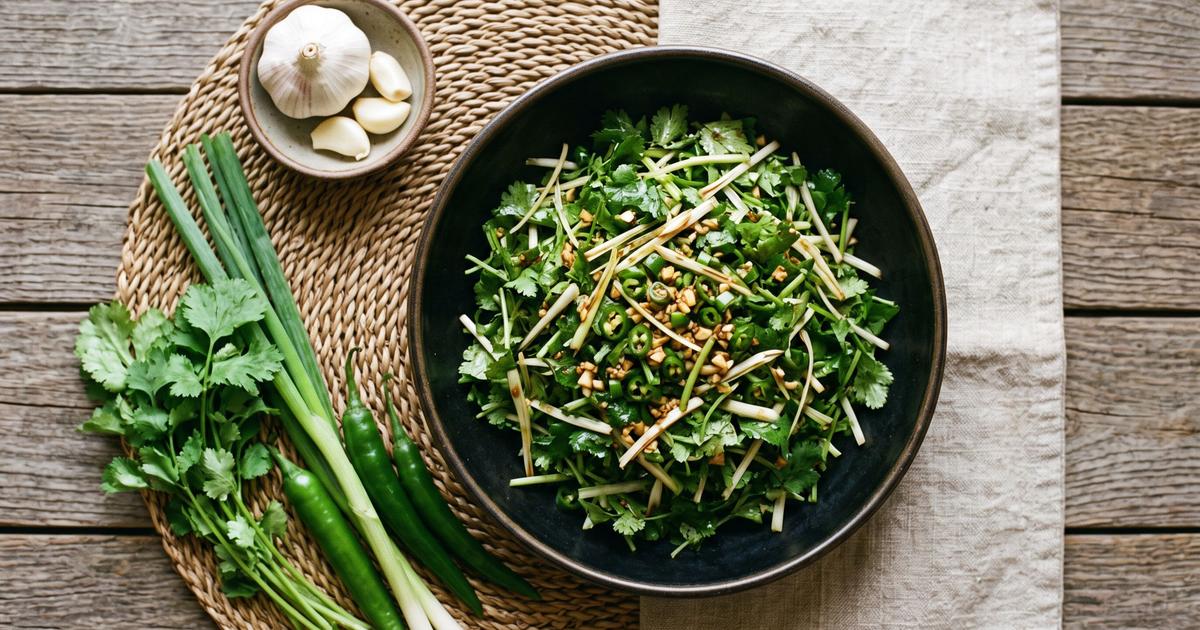
Laohu cai, tiger salad, is a cold starter from Dongbei, the Chinese Northeast, built almost entirely from things eaten raw: fresh cilantro, scallion, and a long green chile, cut into ragged matchsticks that pile up like stripes. It sits somewhere between a salad and a condiment, sharp enough to cut through a heavy meal. The usual dressing leans on soy sauce and a little sugar. Here Chinese black vinegar brings the savory depth, a grated clove of garlic brings the punch, and one mashed date balances the acid, so the plate carries itself on aroma and crunch with no oil and no added salt.
Ingredients
- 2 cups Cilantro, cut into 2-inch (5 cm) lengths, stems included
- 4 Scallions, cut into 2-inch (5 cm) lengths, then slivered lengthwise
- 1 Serrano, seeded and slivered, or 2 for real heat
- 1 medium Cucumber, julienned
- 2 cloves Garlic, grated to a paste
- 2 tbsp Chinese black vinegar
- 1 tbsp unseasoned rice vinegar
- 1 piece Deglet noor dates, pitted, mashed with 1 tbsp (15 ml) hot water into a paste
- 1 tbsp Sesame seeds, toasted
Method
- Cut the cilantro, scallions, and chile into matchstick lengths so they tangle together rather than lie flat. This dish is named for its stripes, and the point is that every forkful pulls up herb, allium, and heat at once instead of one at a time.
- Julienne the cucumber and blot the strips dry with a towel. Cucumber sheds water fast, and a wet salad dilutes a dressing that carries no salt to spare, so drying the strips keeps the vinegar sharp.
- Whisk the garlic, black vinegar, rice vinegar, and date paste in the serving bowl. Black vinegar is malty and low in bite, so a single mashed date rounds it the way a spoon of sugar would in the classic version, without adding any.
- Add the herbs, chile, and cucumber and toss just to coat, then scatter the sesame over the top. Raw greens go limp within the hour once dressed, so mix this at the table and eat it right away while the stems still snap.
Nutrition
Estimated per serving: 45 calories, 2 g protein, 3 g fiber, 25 mg sodium. Computed from USDA FoodData Central reference values for the main ingredients. This is an approximation, not a laboratory measurement. How these are computed.
Cost per serving is estimated from US national-average retail prices for cheap staple forms, using BLS dried-bean prices and USDA produce prices. Prices vary by store and season, so treat it as a guide, not a receipt. How this is computed.