Xiaomi Zhou, Pumpkin and Millet Porridge
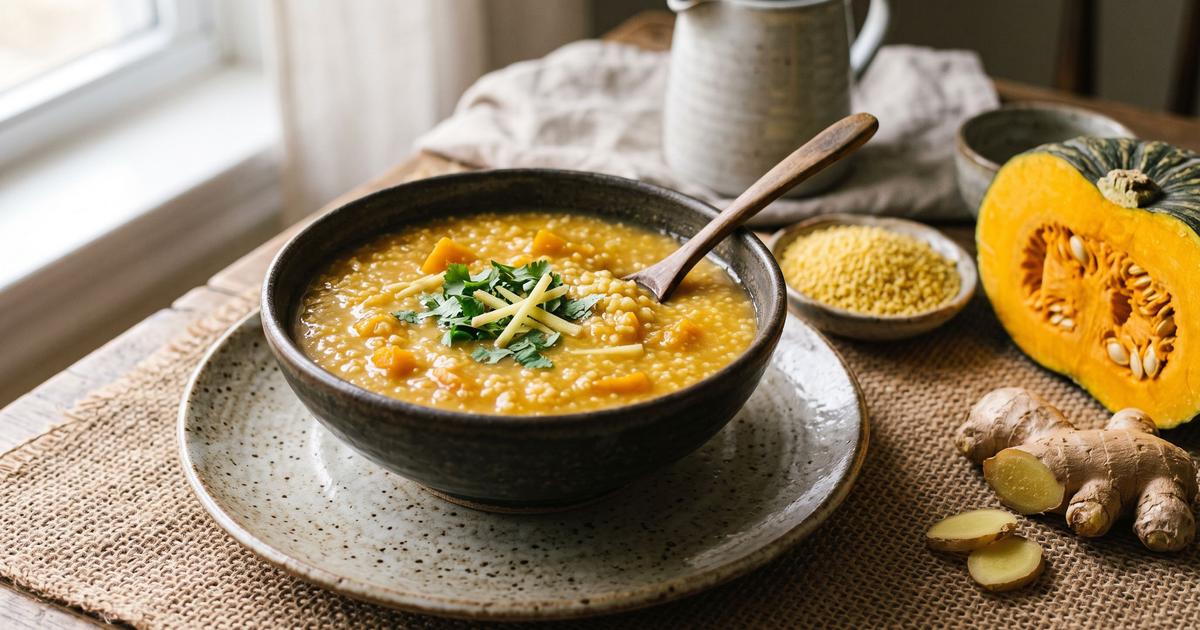
Millet porridge is the quiet workhorse breakfast of northern China, gentler and cheaper than a pot of rice congee and a different grain entirely. Cooked long enough, the tiny golden seeds burst and turn a plain pot creamy with no dairy in sight. Kabocha melts into it and makes it sweet, ginger keeps it warming, and a handful of raisins is all the extra sweetness it needs. It asks almost nothing of you once it is on the stove, so it is the kind of thing to start while you get ready and come back to twenty minutes later.
Ingredients
- 1 cup Millet
- 2 cups Kabocha squash, peeled, cut in 1-inch (2.5 cm) cubes
- 3 slices Ginger, coins, skin on
- 2 tbsp Raisins
Method
- Rinse the millet in a fine sieve under cold water until the water runs clear, rubbing the grains between your fingers. Millet carries a natural bitterness in its coating, and a good rinse washes it away.
- Bring 6 cups (1420 ml) water to a boil with the ginger coins. Add the rinsed millet and the kabocha, lower to a gentle simmer, and cook uncovered for about 35 minutes, stirring now and then so the grain does not stick to the bottom.
- As it cooks, the millet blooms open and the squash falls apart. Break the softest cubes against the side of the pot with your spoon so they melt into the porridge and thicken it. This is where the color turns deep gold and the whole pot tastes sweet.
- Stir in the raisins in the last 5 minutes so they plump but do not dissolve. They are the only added sweetness, and the squash does most of that work on its own.
- The porridge should fall thickly from the spoon but still pour. Loosen it with hot water if it has set up too far, then ladle it out hot. Fish out the ginger coins or leave them for whoever wants the bite.
Nutrition
Estimated per serving: 230 calories, 6 g protein, 6 g fiber, 15 mg sodium. Computed from USDA FoodData Central reference values for the main ingredients. This is an approximation, not a laboratory measurement. How these are computed.
Cost per serving is estimated from US national-average retail prices for cheap staple forms, using BLS dried-bean prices and USDA produce prices. Prices vary by store and season, so treat it as a guide, not a receipt. How this is computed.