Gomoku Mame, Simmered Soybeans and Vegetables
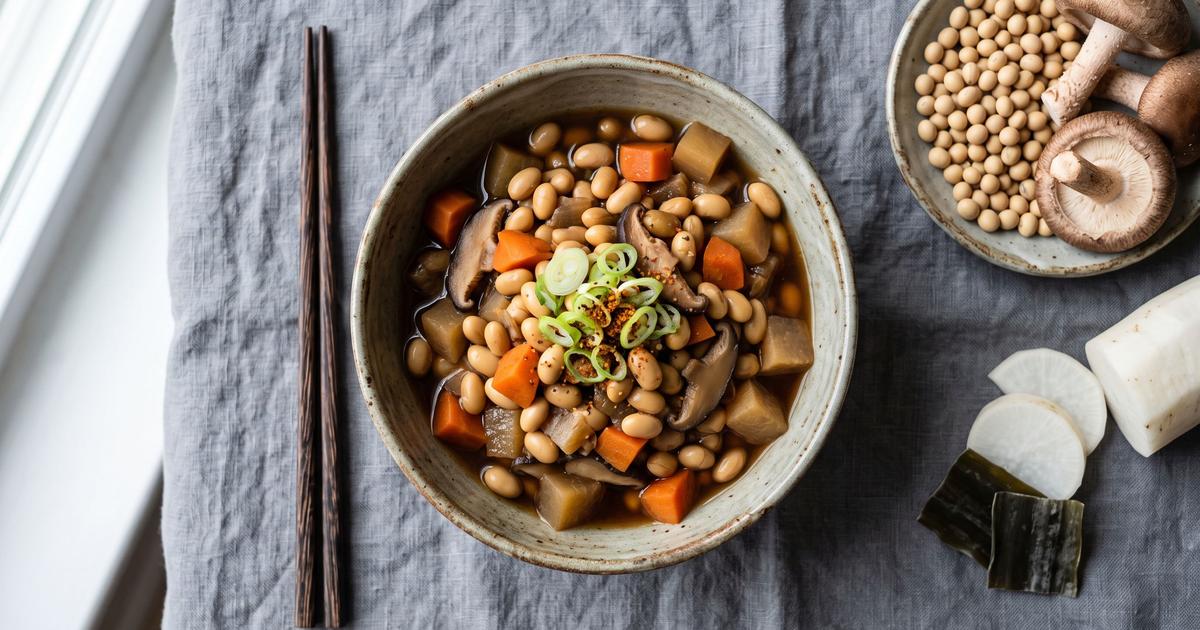
Gomoku mame is a homely, deeply savory Japanese side of soybeans simmered small with an equal cast of diced vegetables, the kind of dish cooked in a big pot and eaten a little at a time across the week. Traditionally it uses dried soybeans soaked overnight; shelled edamame stands in here and cooks far faster while giving the same protein-rich bite. Dried shiitake and kombu build the dashi, tamari carries the salt in a measured way, and a mashed date replaces the sugar and mirin that usually round out a nimono. Cut everything to the size of the beans, reduce the liquid to a glaze, and let it rest a day before serving.
Ingredients
- 1 1/2 cups Edamame, shelled, thawed if frozen
- 1 medium Carrots, cut into small dice
- 4 oz Daikon radish, about 115 g, cut into small dice
- 3 pieces Dried shiitake, rehydrated, soaking liquid reserved
- 1 piece Kombu, 3-inch (8 cm) square, diced small
- 1 tbsp Low-sodium tamari
- 1 piece Deglet noor dates, pitted, mashed with 2 tbsp (30 ml) hot water into a paste
- 1 tsp Ginger, grated
Method
- Soak the dried shiitake in warm water until soft, reserve the liquid, and dice the caps. Then cut the carrot, daikon, and rehydrated shiitake to roughly the size of the soybeans. Gomoku means five ingredients cut alike, and matching the sizes lets everything cook at the same rate and gives the dish its neat, pebbled look.
- Combine the edamame, carrot, daikon, shiitake, and diced kombu in a pot with the reserved soaking liquid topped up to 1.5 cups (355 ml) water, and simmer 20 minutes until the vegetables are tender. The shiitake liquid and the kombu build the savory dashi that carries this dish with no meat and no stock cube.
- Add the tamari, date paste, and ginger, and continue simmering uncovered until the liquid reduces to a shiny glaze coating the beans, about 10 minutes. The point is to reduce, not to drown, so the flavor concentrates onto the ingredients as the water cooks away; the date stands in for the usual sugar.
- Let it cool in the pot before serving. Like most nimono it tastes better the next day once the seasoning has soaked in, and it keeps 4 days in the fridge, which makes it a natural to cook in a batch for lunches.
Nutrition
Estimated per serving: 150 calories, 10 g protein, 6 g fiber, 230 mg sodium. Computed from USDA FoodData Central reference values for the main ingredients. This is an approximation, not a laboratory measurement. How these are computed.
Cost per serving is estimated from US national-average retail prices for cheap staple forms, using BLS dried-bean prices and USDA produce prices. Prices vary by store and season, so treat it as a guide, not a receipt. How this is computed.