Nasu no Nibitashi, Eggplant Steeped in Dashi
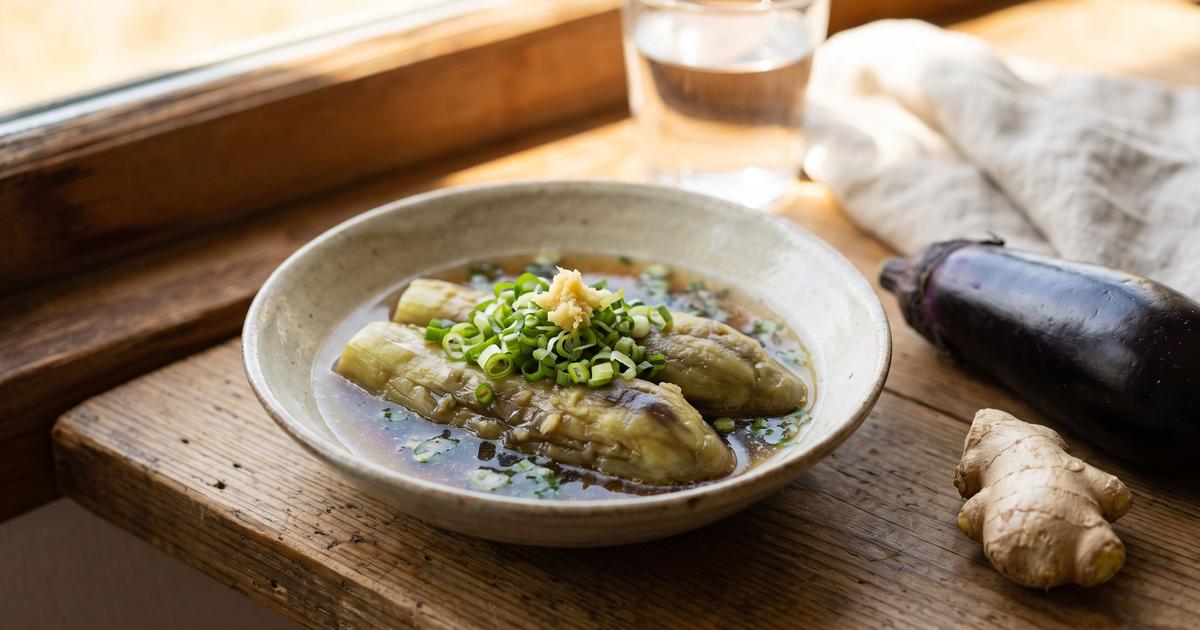
Nibitashi is the Japanese method of cooking a vegetable, then steeping it in seasoned dashi so it drinks up the broth as it cools. Eggplant is a natural for it: a sponge that turns silky when steamed and takes on flavor better than almost anything else. The dashi is a quick kombu stock, coaxed from kelp in cold water and gentle heat so it stays clean rather than slick. Weight the eggplant under the broth as it chills, since it floats, and serve it cold with grated ginger and scallion. It tastes most of the broth after a night in the refrigerator.
Ingredients
- 1 1/2 lb Eggplant, cut into wedges
- 1 piece Kombu, a 4-inch (10 cm) square
- 1 tbsp Low-sodium tamari
- 1 tbsp Ginger, grated
- 2 pieces Scallions, thinly sliced
- 1 tsp unseasoned rice vinegar
Method
- Soak the kombu in 2 cups (480 ml) cold water for 20 minutes, then heat it almost to a boil and pull the kombu out. Cold-steeping and then gentle heat draw the glutamate from the kelp for a clean dashi, where a hard boil would turn the broth slick and bitter.
- Steam the eggplant wedges over the dashi, or in a steamer basket, for 8 to 10 minutes, until they are fully collapsed and translucent. Eggplant is a sponge, and steaming instead of frying lets it go silky without drinking any oil.
- Warm the dashi with the tamari and rice vinegar, slide in the hot eggplant, and press a small lid or plate down onto it so it stays under the broth. Eggplant floats, so weighting it down is how it soaks up flavor all the way through.
- Cool it, then chill at least 1 hour. Serve cold, topped with the ginger and scallion. Nibitashi tastes of the broth it absorbs, and it drinks up the most as it cools, so overnight is even better.
Nutrition
Estimated per serving: 80 calories, 3 g protein, 4 g fiber, 180 mg sodium. Computed from USDA FoodData Central reference values for the main ingredients. This is an approximation, not a laboratory measurement. How these are computed.
Cost per serving is estimated from US national-average retail prices for cheap staple forms, using BLS dried-bean prices and USDA produce prices. Prices vary by store and season, so treat it as a guide, not a receipt. How this is computed.