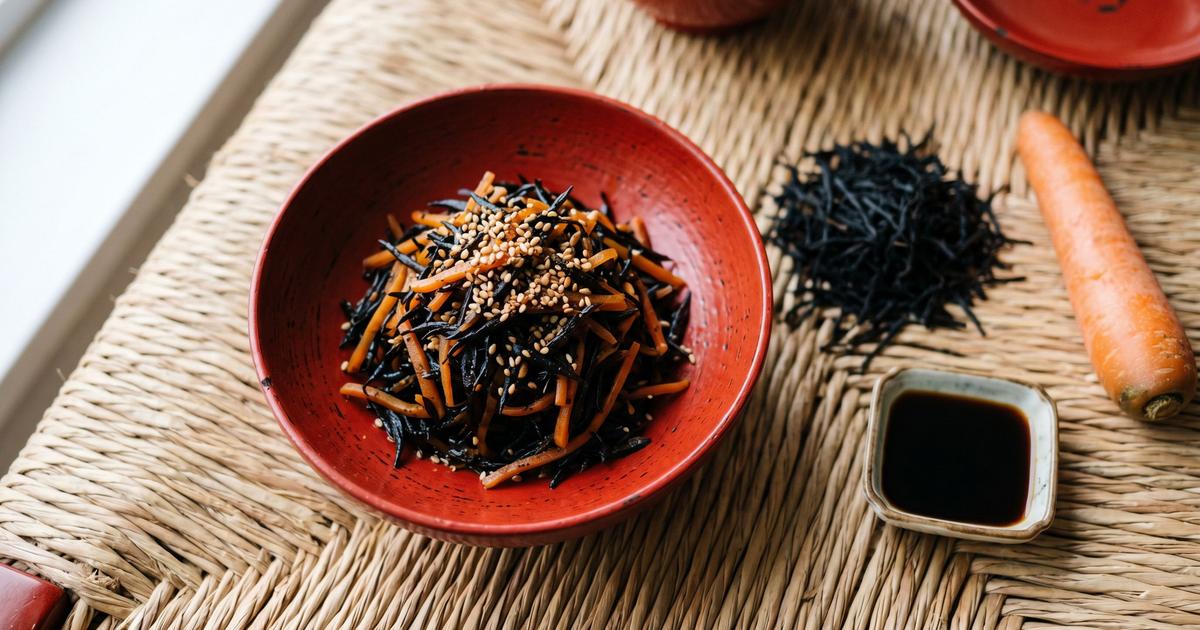
Ninjin Kinpira (Carrot Kinpira)
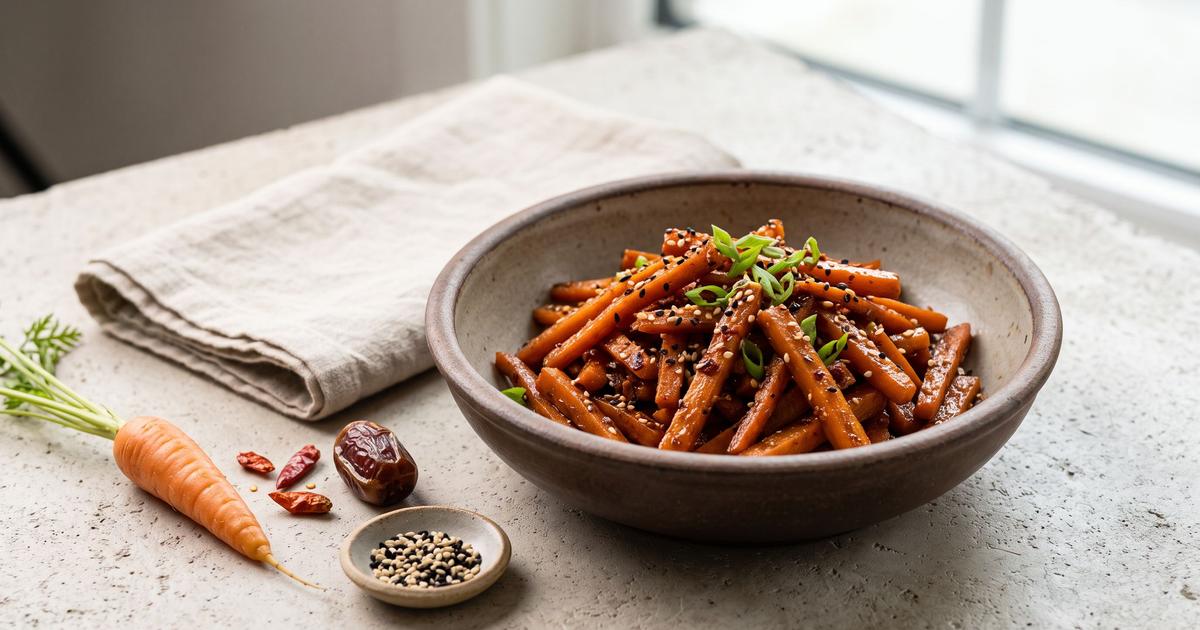
Kinpira is a Japanese cooking style, sauteed then simmered in soy and mirin, most often used on burdock root, and just as good on carrots. The dish lives on the contrast between a firm bite and a sweet-savory glaze, so the carrots are cut thick and cooked hot and fast to keep their backbone. In place of the usual oil, a hot near-dry pan browns the edges and deepens the carrot's own sugar; in place of mirin and sugar, a single mashed date does the sweetening. The tamari cooks down to a clinging glaze, which is why a small amount seasons the whole batch.
Ingredients
- 1 lb Carrots, cut into thin matchsticks (about 4 cups)
- 1 1/2 tbsp Low-sodium tamari
- 1 piece Deglet noor dates, pitted, mashed with 2 tbsp (30 ml) hot water into a paste
- 1 tsp unseasoned rice vinegar
- 1/2 tsp Red pepper flakes
- 1 tbsp Sesame seeds, toasted
Method
- Cut the carrots into matchsticks of even thickness, so they finish cooking at the same time. Kinpira is defined by its texture, a firm, deliberate chew, so aim for pieces with some substance rather than a fine julienne.
- Set a wide pan over medium-high heat and add the carrots with 3 tablespoons (45 ml) water. Toss almost constantly for 4 to 5 minutes, letting the water cook off and adding a splash more if the pan runs dry, until the carrots are crisp-tender and their edges start to catch and brown. Cooking them in a near-dry hot pan mimics the traditional oil stir-fry and concentrates their sweetness.
- Add the red pepper flakes and toss for 30 seconds to wake them up in the heat.
- Pour in the tamari and date paste and keep tossing, 1 to 2 minutes, until the liquid has all but disappeared and coats the carrots in a sticky glaze. Cooking the sauce down onto the carrots is what turns a spoon and a half of tamari into a full-flavored coating instead of a wet pan.
- Off the heat, add the rice vinegar and sesame seeds and toss once more. Serve warm or cold. Kinpira keeps in the fridge for four days and is a standard lunchbox side, so it is worth doubling.
Nutrition
Estimated per serving: 70 calories, 2 g protein, 3 g fiber, 250 mg sodium. Computed from USDA FoodData Central reference values for the main ingredients. This is an approximation, not a laboratory measurement. How these are computed.
Cost per serving is estimated from US national-average retail prices for cheap staple forms, using BLS dried-bean prices and USDA produce prices. Prices vary by store and season, so treat it as a guide, not a receipt. How this is computed.