Tofu no Misozuke, Miso-Cured Tofu Spread
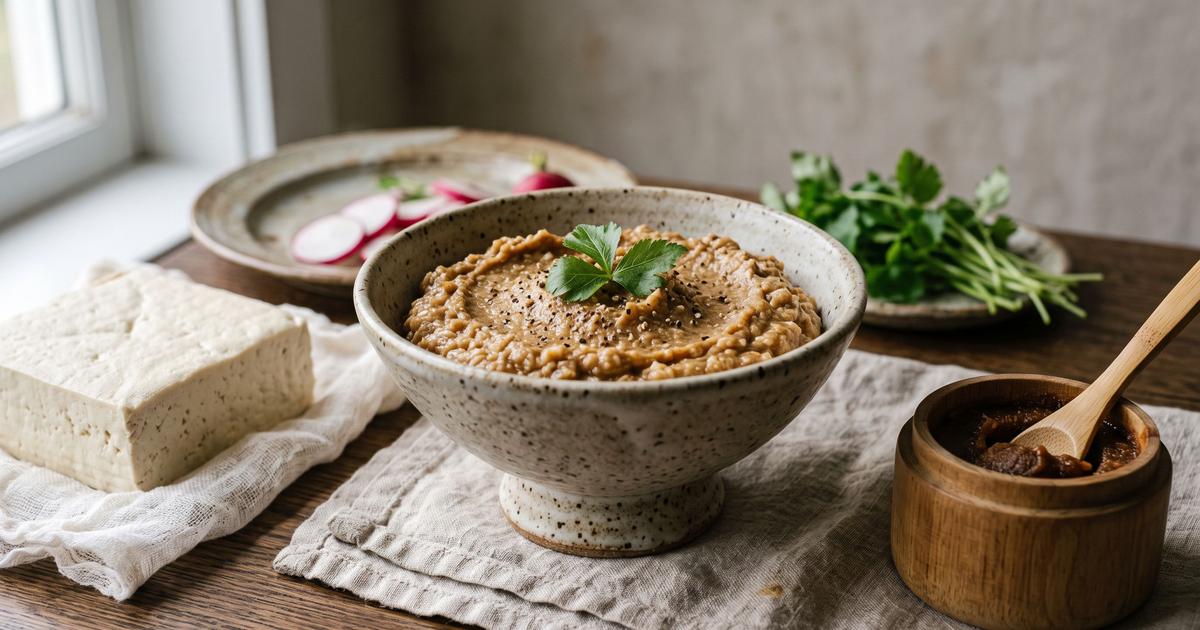
Tofu no misozuke is an old Japanese preserving trick that turns a plain block of tofu into something startlingly like cheese. Buried in miso for a few days, the tofu loses water and takes on the salt, tang, and funk of the paste, firming into a dense spread you use by the spoonful. The pressing matters most: a dry block cures, a wet one dissolves. The miso you scrape off is not wasted, it goes straight into a pot of soup. Because the cure concentrates the miso's salt, this is seasoning as much as food, spread thin on cucumber or crackers rather than eaten by the scoop.
Ingredients
- 14 oz Firm tofu, one block, pressed very well and patted fully dry
- 1/2 cup White miso
- 1 tsp Low-sodium tamari, optional
Method
- Press the tofu hard for at least 30 minutes under a weighted plate, pouring off the water, until the block is dense and dry. Driving out the moisture is what lets the miso pull inward and firm the tofu, and a wet block would just dilute the cure into slush.
- Spread half the miso in a small container, lay the tofu on it, and pack the rest of the miso over the top and sides so the block is fully buried; wrapping it in a layer of cheesecloth first makes it easier to lift out later. Cover and refrigerate 2 to 4 days.
- The salt and live enzymes in the miso draw out moisture and ferment the surface over those days, turning bland tofu tangy, dense, and faintly funky, close to a soft cheese. Longer means stronger, so taste at day two.
- Scrape off and save the miso for a soup, then mash the tofu smooth with a few drops of tamari if it needs rounding out. Spread it thin on cucumber rounds or use it as a dip; it is potent and salty, so a little covers a lot, and it keeps 4 days once mashed.
Nutrition
Estimated per serving: 45 calories, 4 g protein, 1 g fiber, 180 mg sodium. Computed from USDA FoodData Central reference values for the main ingredients. This is an approximation, not a laboratory measurement. How these are computed.
Cost per serving is estimated from US national-average retail prices for cheap staple forms, using BLS dried-bean prices and USDA produce prices. Prices vary by store and season, so treat it as a guide, not a receipt. How this is computed.