Zunda Dip (Smashed Edamame with Shiso)
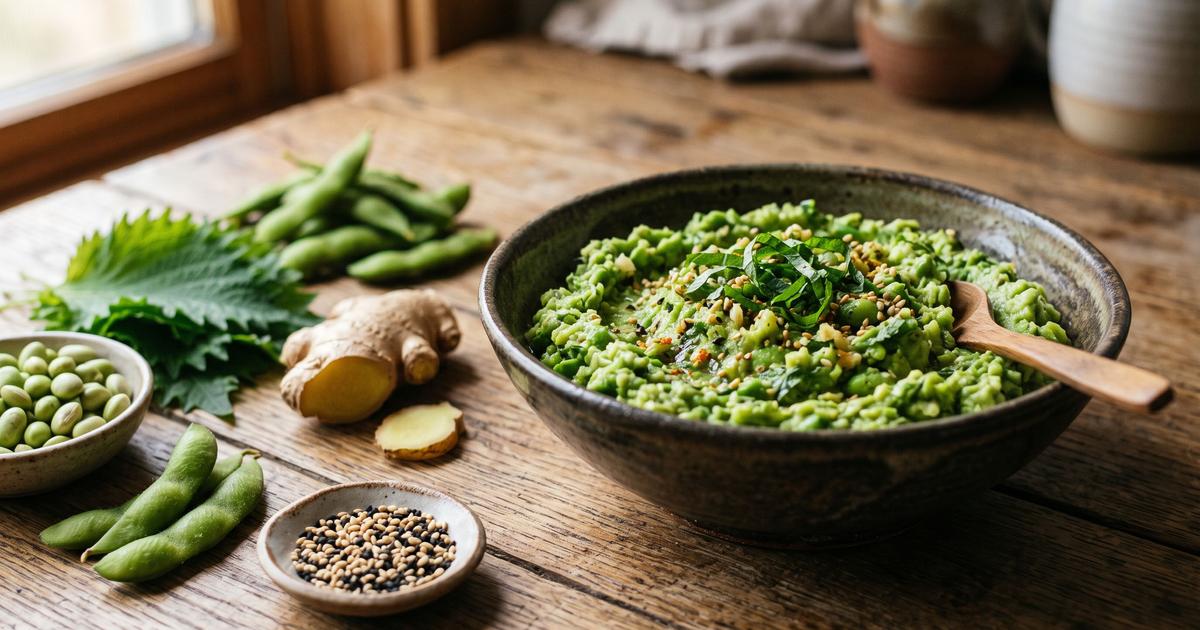
Zunda, from the Tohoku region in Japan's north, is a paste of young green soybeans mashed with sugar and traditionally spread on mochi as a sweet. This pulls the idea toward the savory: the same vivid smashed edamame, but pointed at a bowl of raw vegetables instead of a dessert plate. Shiso, that mint-basil-anise leaf with no real substitute, and a little ginger and rice vinegar keep it bright, while a single date leaves just a trace of zunda's characteristic sweetness. Because edamame is a complete plant protein, a bowl of this does the work of a hummus with a fraction of the calories and a color no chickpea can match.
Ingredients
- 2 cups Edamame, shelled, from frozen
- 6 leafs Shiso
- 1 tsp Ginger, grated
- 1 tbsp unseasoned rice vinegar
- 1 whole Medjool dates, pitted
- 1 tbsp Sesame seeds, toasted
- 1 whole Scallions, sliced
Method
- Boil the shelled edamame 4 minutes, then drain and cool under cold water. The cold rinse locks in the bright green color that would dull if the beans sat hot, and it makes them easier to smash.
- Set aside a few whole beans, then pulse the rest with the shiso, ginger, vinegar, and date in a food processor to a coarse paste. Zunda is smashed, not pureed, so stop while it is still textured; the beans' own starch makes it creamy without any oil.
- Loosen with a tablespoon or two of water to a scoopable spread. The dip firms as it sits, so keep it a touch looser than you think you want.
- Fold in the reserved whole beans, sesame, and scallion. The whole beans give the spread its bite, and the single date is a nod to the faint sweetness that defines a true zunda, without the sugar that usually delivers it.
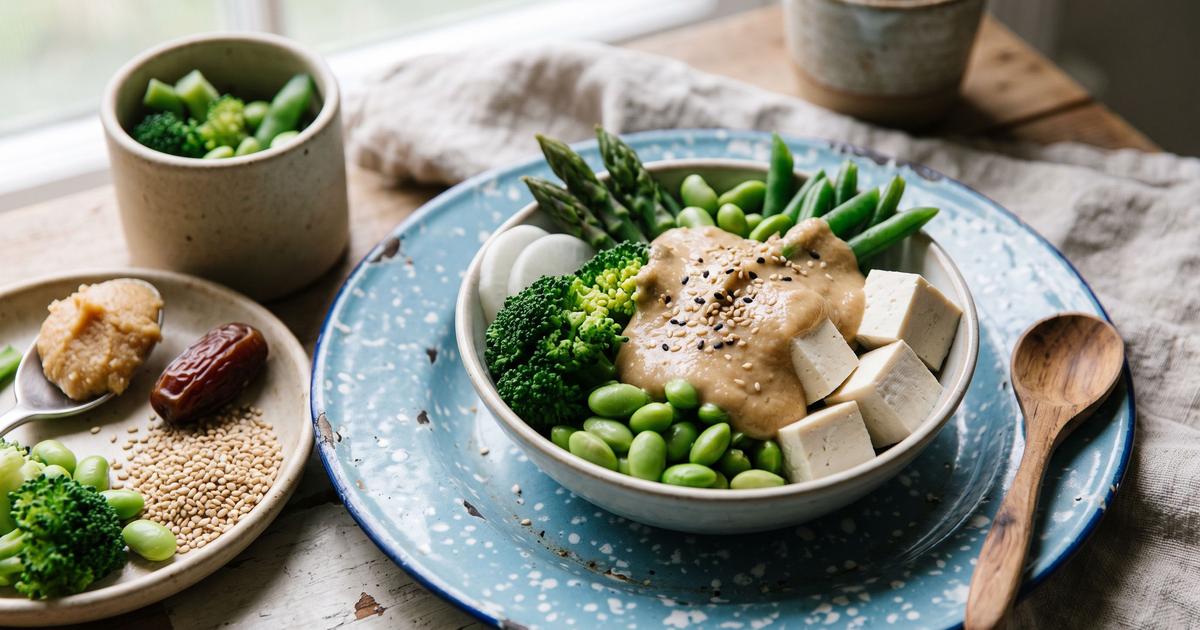
- Serve cold with raw vegetables or spread on toasted whole grain. Edamame is a complete protein, so this stands in for a bean dip with a fresher, greener flavor, and it needs no salt: the shiso and ginger carry it.
Nutrition
Estimated per serving: 90 calories, 7 g protein, 4 g fiber, 10 mg sodium. Computed from USDA FoodData Central reference values for the main ingredients. This is an approximation, not a laboratory measurement. How these are computed.
Cost per serving is estimated from US national-average retail prices for cheap staple forms, using BLS dried-bean prices and USDA produce prices. Prices vary by store and season, so treat it as a guide, not a receipt. How this is computed.