Sunomono (Cucumber and Wakame)
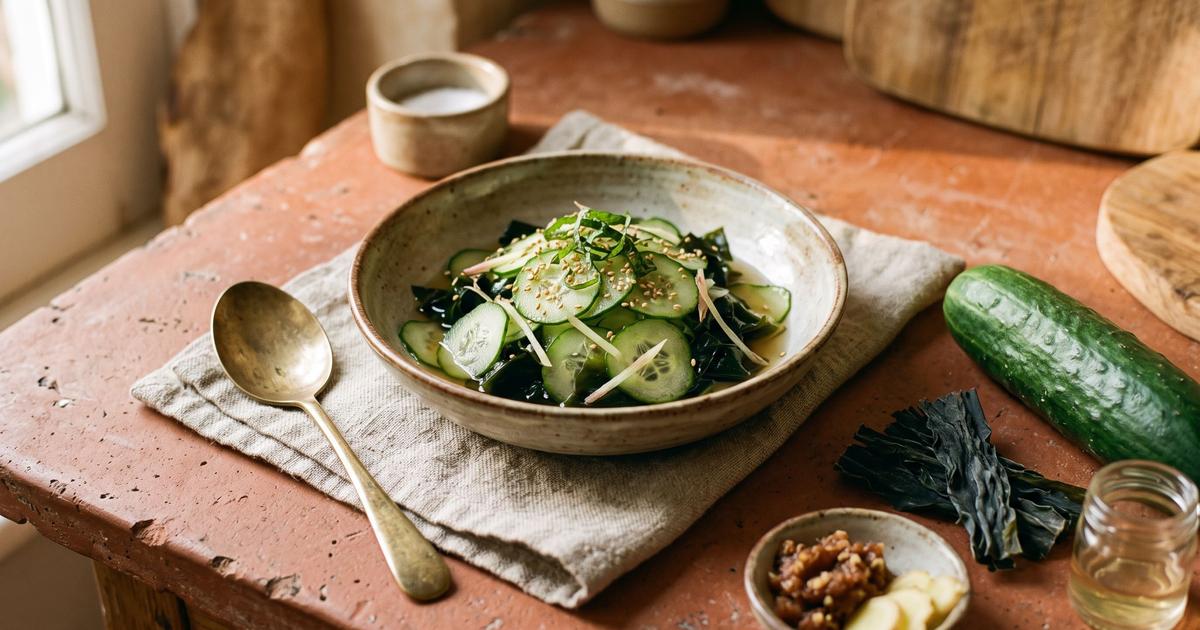
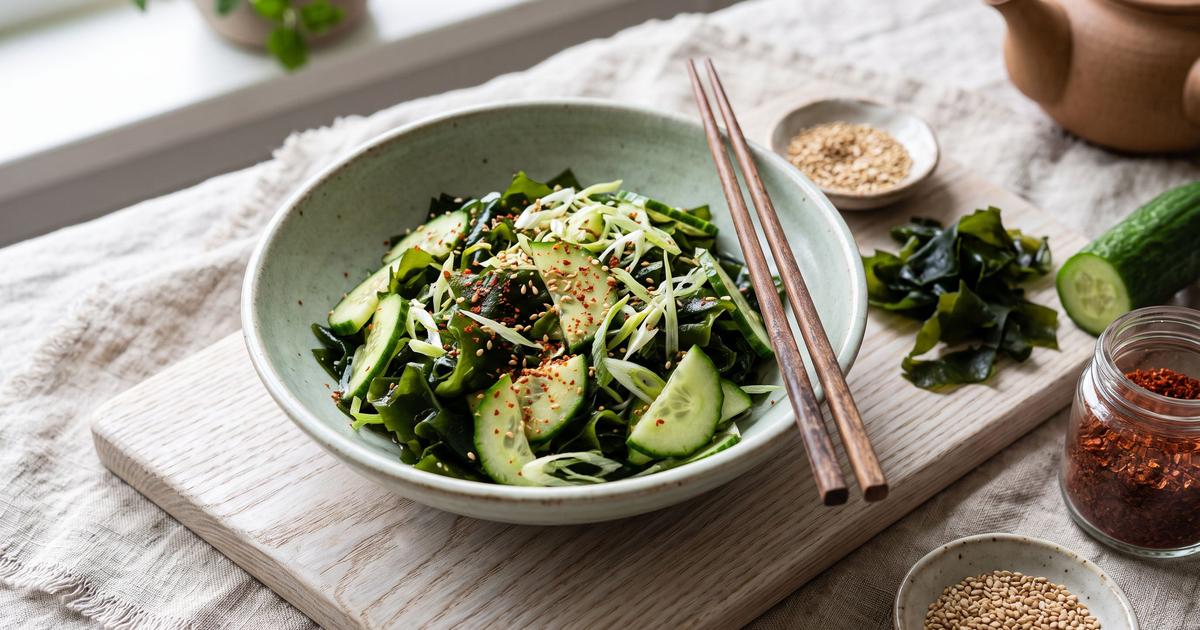
Sunomono, literally vinegared things, is the small, cooling salad that resets the palate on a Japanese table. It is built on unseasoned rice vinegar, which is milder and rounder than Western vinegars, balanced with a touch of sweetness and often a whisper of soy. This version leaves the soy out entirely and lets the wakame, which carries its own gentle brine, supply the savory note, while a mashed date replaces the sugar. The only real technique is the slicing: the thinner the cucumber, the more delicate and the more Japanese the result.
Ingredients
- 2 mediums Cucumber, about 1 lb (450g), sliced paper-thin
- 1/4 oz Wakame, dried (about 1/2 cup once soaked)
- 3 tbsp unseasoned rice vinegar
- 1 piece Deglet noor dates, pitted, mashed with 1 tbsp (15 ml) hot water into a paste
- 1 tsp Ginger, grated
- 1 tbsp Sesame seeds, toasted
Method
- Soak the wakame in cool water for 10 minutes, until it swells and softens, then drain and squeeze it dry. It expands dramatically, so a small pinch of dried seaweed is all you need.
- Slice the cucumbers as thin as you can, ideally on a mandoline. Sunomono is prized for its delicacy, and near-transparent slices take on the dressing instantly. Pile them in a colander and press gently to shed some water, without salting, so the dressing stays sharp.
- Whisk the rice vinegar, date paste, and ginger in a bowl. Traditional sunomono balances the vinegar with sugar; the date does that job while keeping the dressing to whole-food sweetness.
- Add the cucumber and squeezed wakame and toss to coat. Chill 10 minutes to let the flavors settle. The salad is meant to be served cold and brisk, straight from the fridge.
- Toss once more, lift the salad out of the liquid that has gathered, and serve in small bowls with the toasted sesame seeds scattered over. The pooled dressing stays behind, so each bite is seasoned but not swimming.
Nutrition
Estimated per serving: 35 calories, 2 g protein, 2 g fiber, 120 mg sodium. Computed from USDA FoodData Central reference values for the main ingredients. This is an approximation, not a laboratory measurement. How these are computed.
Cost per serving is estimated from US national-average retail prices for cheap staple forms, using BLS dried-bean prices and USDA produce prices. Prices vary by store and season, so treat it as a guide, not a receipt. How this is computed.