Horenso no Ohitashi, Spinach Steeped in Dashi
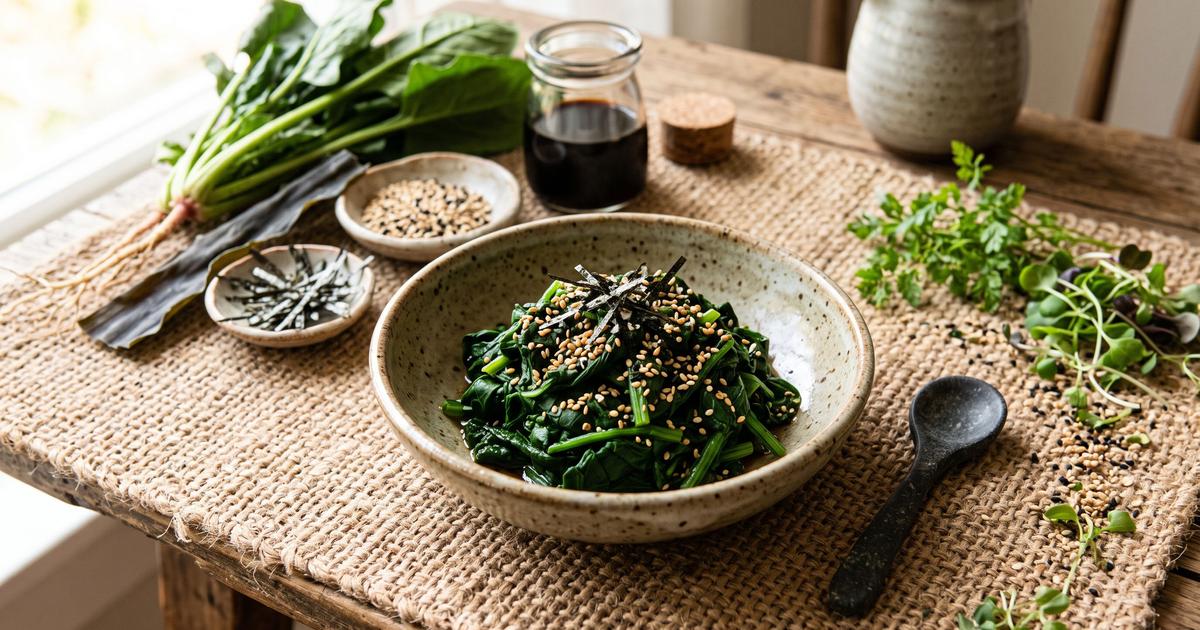
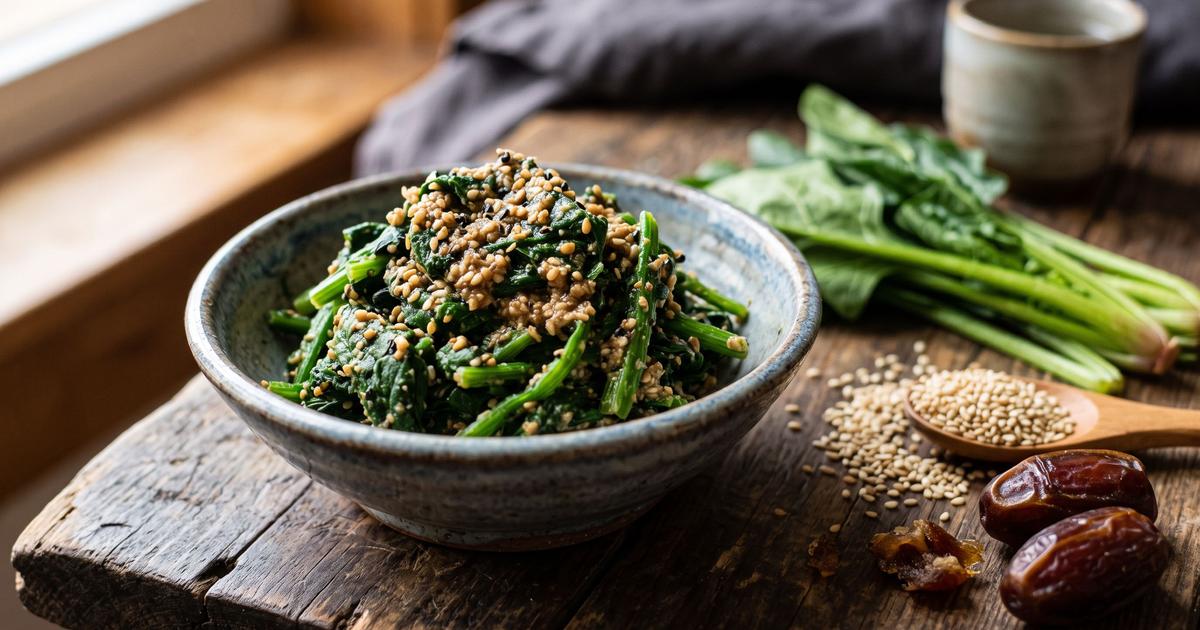
Ohitashi is one of the quietest dishes in the Japanese repertoire and one of the most instructive: a vegetable blanched, squeezed, and left to steep in seasoned dashi until it tastes gently of the broth all the way through. Spinach is the classic. Where goma-ae coats the same leaf in a thick sweet sesame dressing, ohitashi does the opposite, letting the spinach soak up a light kombu dashi sharpened with only a tablespoon of tamari. Squeezing the blanched spinach as dry as you can is what lets it drink the broth back in. Serve it cold, with a spoonful of the steeping liquid, sesame, and a few threads of nori.
Ingredients
- 1 piece Kombu, 3-inch (7.5 cm) square
- 12 oz Spinach, about 340 g, roots trimmed, kept in bunches
- 1 tbsp Low-sodium tamari
- 1 tsp Sesame seeds, toasted
- 1/2 sheet Nori, cut into thin strips, optional
Method
- Steep the kombu in 1.5 cups (360 ml) warm water for 20 minutes to make a quick dashi; if you heat it, pull it out just before a boil. Kombu gives up its glutamate slowly into gentle heat, but a hard boil turns the broth cloudy and faintly slimy, so keep it under a simmer.
- Blanch the spinach in boiling water 30 to 45 seconds, just to wilt, then plunge it into ice water. Shocking it cold stops the cooking at once and locks in the green, so the leaves stay bright rather than drab.
- Gather the spinach and squeeze it firmly dry, then cut the bundle into 1.5-inch (4 cm) lengths. A dry bundle drinks up the dashi in the next step, where a wet one would only water it down.
- Stir the tamari into the kombu dashi, submerge the squeezed spinach, and let it steep at least 15 minutes, or chill it for a few hours. Ohitashi means steeped, and that is the whole idea: the spinach absorbs the seasoned broth from within rather than wearing a dressing on top. Serve cold with a little of the dashi, topped with sesame and nori.
Nutrition
Estimated per serving: 50 calories, 4 g protein, 3 g fiber, 160 mg sodium. Computed from USDA FoodData Central reference values for the main ingredients. This is an approximation, not a laboratory measurement. How these are computed.
Cost per serving is estimated from US national-average retail prices for cheap staple forms, using BLS dried-bean prices and USDA produce prices. Prices vary by store and season, so treat it as a guide, not a receipt. How this is computed.