Shira-ae, Tofu-Sesame Dressed Vegetables
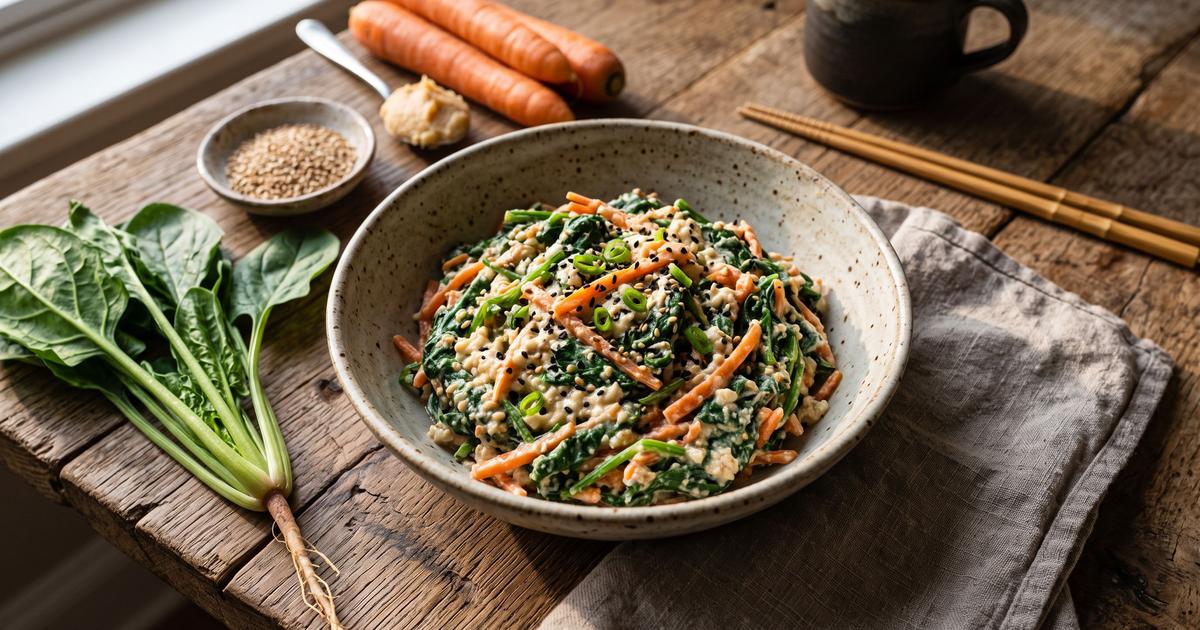
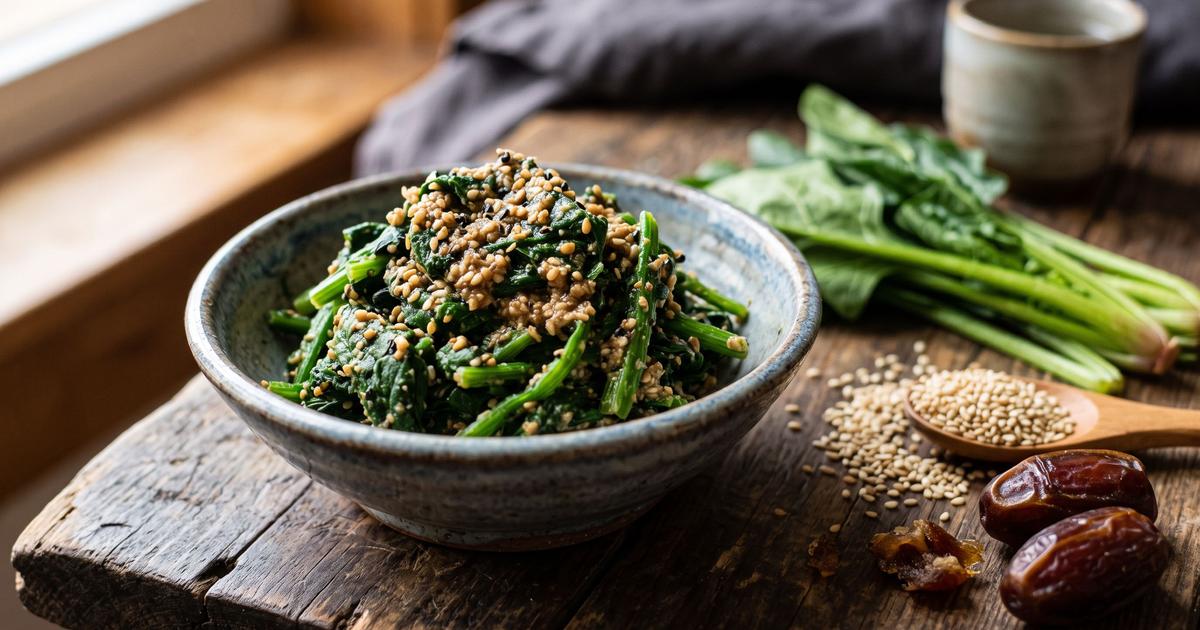
Shira-ae, white dressing, is a quiet classic of the Japanese table: blanched vegetables folded into a soft, pale purée of mashed tofu and ground sesame. It reads as a salad but eats richer than one, and the dressing is what sets it apart from the simpler goma-ae, where sesame alone does the work. Pressed and parboiled tofu gives it body, tahini and toasted sesame give it a nutty depth with no oil, and a small measure of white miso, used sparingly, carries the salt. Squeezing every vegetable dry is the step that makes or breaks it. Serve it cool, and dress it close to the time you plan to eat.
Ingredients
- 8 oz Firm tofu, about 225 g, pressed
- 1 tbsp Tahini
- 2 tsp White miso
- 1 piece Deglet noor dates, pitted, mashed with 1 tbsp (15 ml) hot water into a paste
- 8 oz Spinach, about 225 g, whole leaves
- 1 medium Carrots, julienned
- 1 tbsp Sesame seeds, toasted, then ground
Method
- Press the tofu, then drop it into simmering water for 2 minutes and drain it well in a sieve. Parboiling drives out the water still held inside the tofu, and a dressing made from wet tofu turns thin and weeps liquid onto the plate later.
- Blanch the spinach 30 seconds, shock it in cold water, and squeeze it dry in a firm ball, then blanch the julienned carrot 1 minute. Both must be wrung out hard, because the whole dish rests on a thick dressing clinging to dry vegetables, not sliding off wet ones.
- Grind the toasted sesame in a mortar, then mash in the drained tofu, tahini, white miso, and date paste until the mixture is smooth and creamy. This pale dressing is the heart of shira-ae; the ground sesame and tahini give it richness that would otherwise come from oil.
- Loosen the squeezed spinach into strands, fold it and the carrot through the dressing, and serve at cool room temperature. Dress it within a few hours of eating so the vegetables stay bright; two teaspoons of miso salt the whole bowl, so keep it measured.
Nutrition
Estimated per serving: 110 calories, 8 g protein, 4 g fiber, 170 mg sodium. Computed from USDA FoodData Central reference values for the main ingredients. This is an approximation, not a laboratory measurement. How these are computed.
Cost per serving is estimated from US national-average retail prices for cheap staple forms, using BLS dried-bean prices and USDA produce prices. Prices vary by store and season, so treat it as a guide, not a receipt. How this is computed.