Kohaku Namasu, Daikon and Carrot in Sweet Vinegar
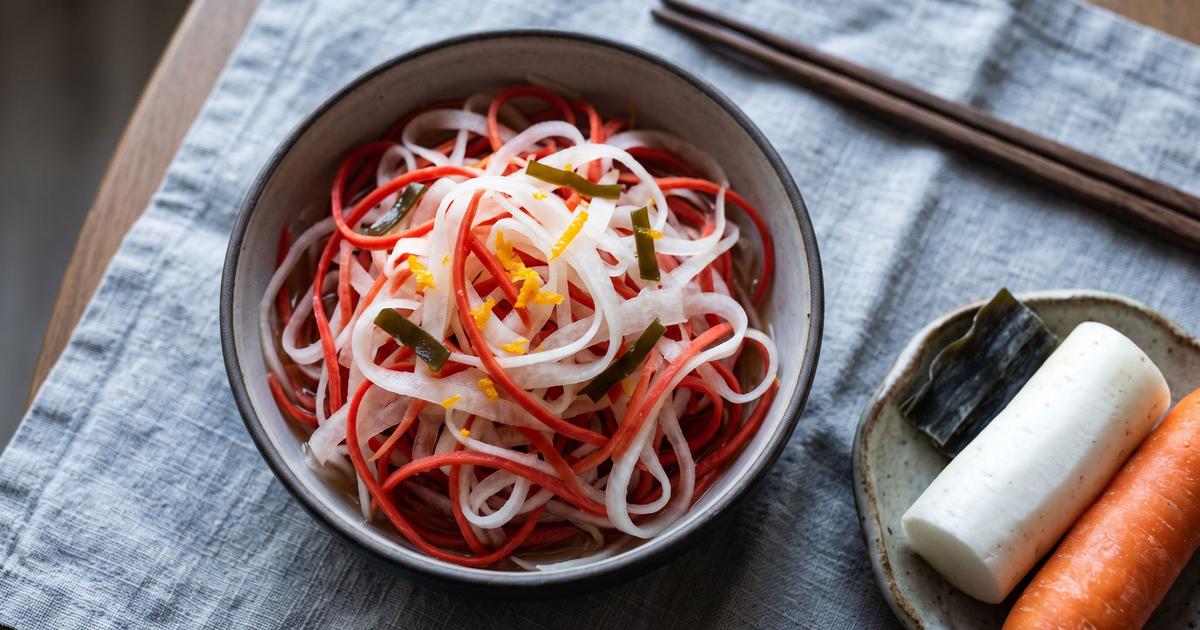
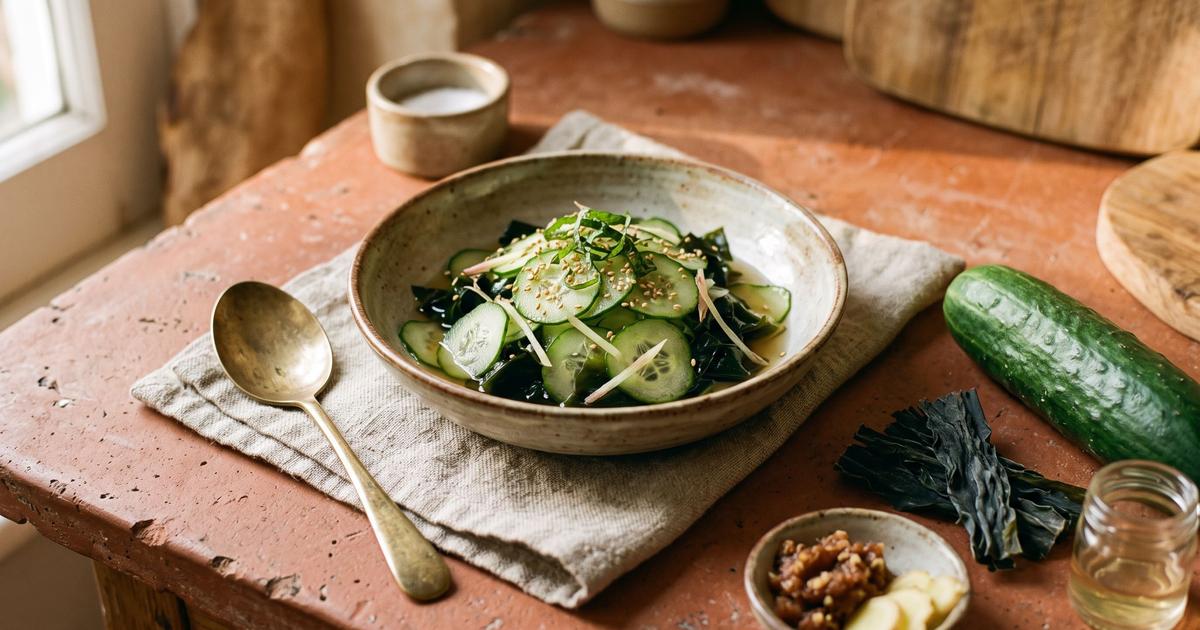
Namasu is the bright, sweet-sour vegetable salad that appears at Japanese celebrations, above all at New Year, where its red and white ribbons stand for good fortune. It is essentially a quick fresh pickle: daikon and carrot cut into fine threads, wilted, and steeped in seasoned rice vinegar until they turn tender and glassy. The traditional version salts the vegetables to draw out water; pressing them with a little vinegar does the same job and keeps the dish salt-free. A mashed date replaces the sugar, a thread of kombu adds depth, and orange zest fills in for yuzu. Give it time in the fridge, and it only gets better.
Ingredients
- 12 oz Daikon radish, about 340 g, cut into fine matchsticks
- 1 medium Carrots, cut into fine matchsticks
- 1/4 cup unseasoned rice vinegar
- 1 piece Medjool dates, pitted, mashed with 2 tbsp (30 ml) hot water into a paste
- 1 piece Kombu, 2-inch (5 cm) square, cut into thin threads
- 1 piece Oranges, zest of 1, plus 1 tbsp (15 ml) juice
- 1 tsp Sesame seeds, toasted, optional
Method
- Cut the daikon and carrot into fine matchsticks, keeping far more daikon than carrot. The white-to-red ratio is the whole point of kohaku, red-and-white, namasu; too much carrot muddies the color and bleeds orange into the white ribbons.
- Toss the ribbons with 1 tbsp (15 ml) of the vinegar and let them sit 15 minutes, then squeeze out the water by hand. The vinegar-press wilts the vegetables and pulls out their raw water so the dressing is not diluted; here it stands in for the salting the dish traditionally uses.
- Warm the remaining vinegar with the date paste and kombu threads just enough to dissolve the date, then let it cool. Gentle warming melts the date into the vinegar and softens the kombu, which lends a quiet savory-sweet depth as it steeps.
- Combine the pressed vegetables, the sweet vinegar, and the orange zest and juice, and chill at least 30 minutes. Namasu wants time for the ribbons to drink up the dressing; it is better after a few hours and keeps a week in the fridge.
- Serve cold, topped with sesame if you like. The orange zest stands in for the yuzu used in Japan, giving the same floral citrus lift.
Nutrition
Estimated per serving: 40 calories, 1 g protein, 2 g fiber, 30 mg sodium. Computed from USDA FoodData Central reference values for the main ingredients. This is an approximation, not a laboratory measurement. How these are computed.
Cost per serving is estimated from US national-average retail prices for cheap staple forms, using BLS dried-bean prices and USDA produce prices. Prices vary by store and season, so treat it as a guide, not a receipt. How this is computed.