Sri Lankan Beetroot Curry
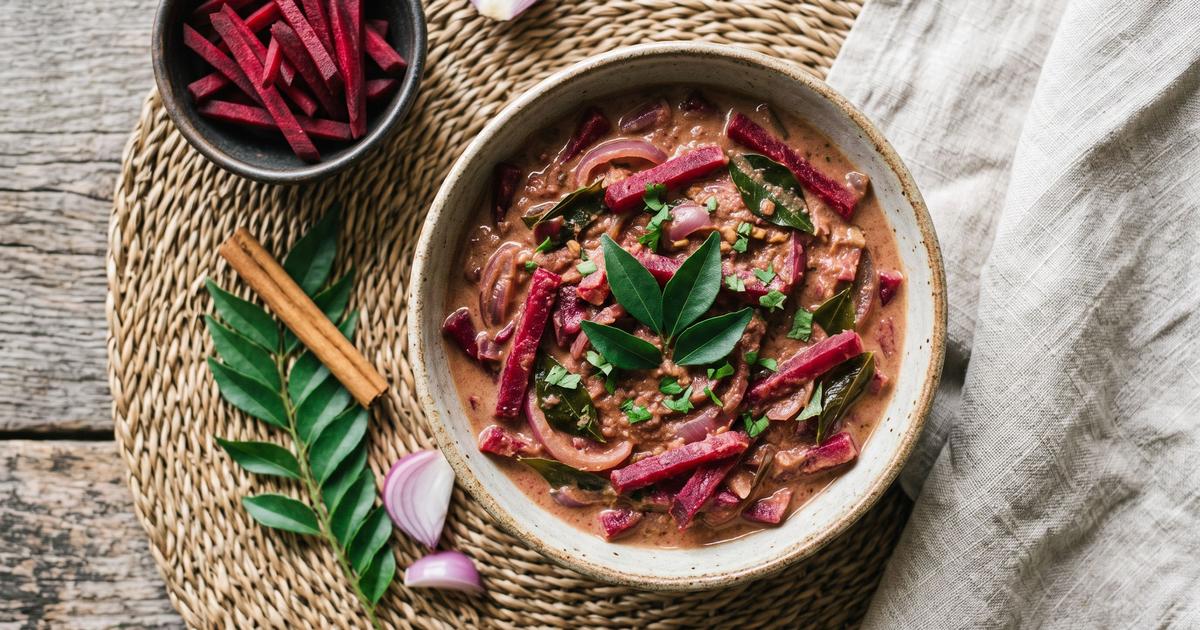
Beetroot curry is a fixture on a Sri Lankan rice-and-curry plate, cut into matchsticks so it cooks fast and stains everything around it magenta. The island version usually finishes in coconut milk; this one uses a splash of soy milk instead, which keeps the color vivid and the dish light. Ceylon cinnamon, pandan, and curry leaf are the aromatics that mark it as Sri Lankan rather than Indian. A last splash of vinegar does the seasoning.
Ingredients
- 1 lb Beets, peeled and cut into matchsticks
- 1 Red onion, thinly sliced
- 3 cloves Garlic, sliced
- 1/2 tsp Brown mustard seed
- 1/4 tsp Fenugreek seed
- 12 Curry leaves
- 1 leaf Pandan leaf, knotted, 3-inch (7.5 cm) piece
- 1 stick Ceylon cinnamon, 2-inch (5 cm) piece
- 1/2 tsp Turmeric
- 1/2 tsp Cayenne
- 1/2 cup Unsweetened soy milk
- 1 tbsp Apple cider vinegar
Method
- Toast the mustard and fenugreek seeds in a dry pot over medium heat until the mustard pops, about 1 minute. Keep the fenugreek moving; it turns bitter if it darkens too far.
- Add the onion and garlic with 3 tablespoons (45 ml) water and sweat until soft, about 5 minutes, adding a splash more water when the pot dries. Drop in the curry leaves, knotted pandan, and cinnamon.
- Add the beet matchsticks, turmeric, and cayenne. Stir to coat, then pour in enough water to come halfway up the beets, about 0.5 cup (120 ml).
- Cover and simmer for 15 to 18 minutes, until the beets are tender and stain the liquid deep red. Stir once or twice and add a little water if it runs dry.
- Pour in the soy milk and simmer uncovered for 3 minutes to make a light gravy. Coconut milk is the usual enrichment; soy milk keeps it lighter and lets the beet flavor through.
- Turn off the heat and stir in the vinegar. Fish out the pandan and cinnamon. The vinegar cuts the sweetness of the beets and brightens the dish where salt would, so add it, taste, and add a few more drops if it needs lift. Serve with rice.
Nutrition
Estimated per serving: 110 calories, 3 g protein, 5 g fiber, 70 mg sodium. Computed from USDA FoodData Central reference values for the main ingredients. This is an approximation, not a laboratory measurement. How these are computed.
Cost per serving is estimated from US national-average retail prices for cheap staple forms, using BLS dried-bean prices and USDA produce prices. Prices vary by store and season, so treat it as a guide, not a receipt. How this is computed.