Sri Lankan Pumpkin Curry
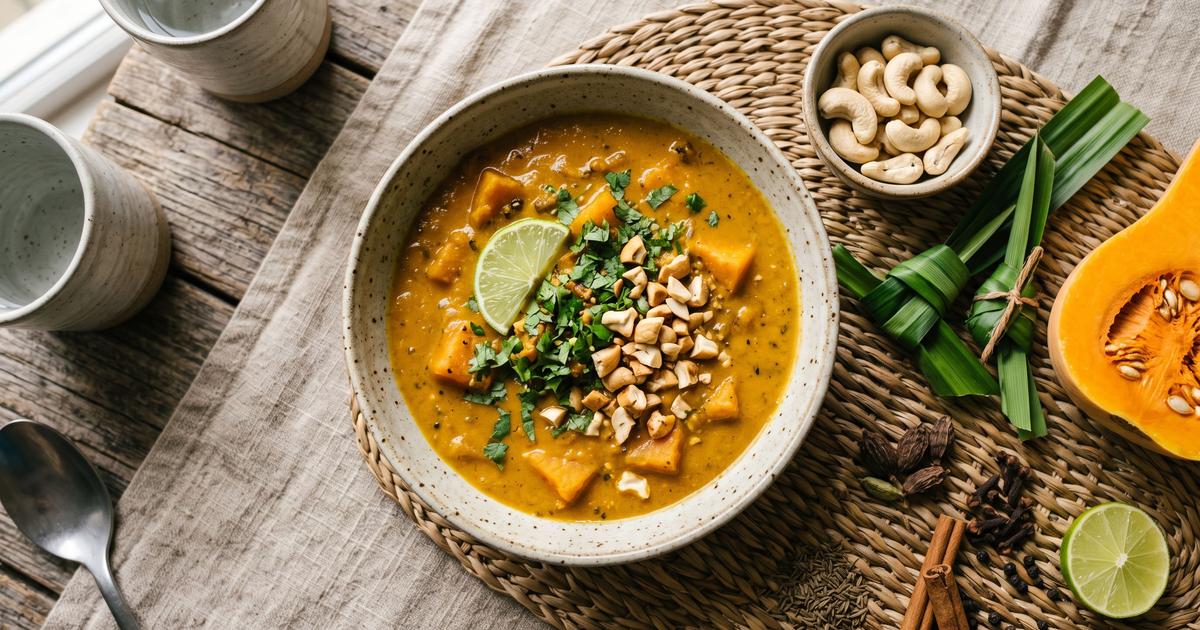
Sri Lankan curries come in three broad styles, and this is a white curry gone golden: gently spiced, built on a tempering, and usually finished in coconut milk. The signature is the roast, spices taken darker than an Indian cook would dare, which gives the island's food its particular depth. Blended cashews replace the coconut milk and bring a similar richness. Ceylon aromatics, pandan and curry leaf, and a squeeze of lime keep it honest to the plate it belongs on.
Ingredients
- 1 1/2 lb Butternut squash, peeled, 1-inch (2.5 cm) cubes
- 1 tsp Coriander seed
- 1/2 tsp Cumin seed
- 1/4 tsp Fennel seed
- 1/2 tsp Brown mustard seed
- 1/4 tsp Fenugreek seed
- 1 Red onion, sliced
- 3 cloves Garlic, sliced
- 12 Curry leaves
- 1 leaf Pandan leaf, knotted, 3-inch (7.5 cm) piece
- 1/2 tsp Turmeric
- 1/4 tsp Cayenne
- 3 tbsp Raw cashews
- 1 tbsp Lime juice
Method
- Soak the cashews in hot water while you start the curry. When soft, blend them with 0.5 cup (120 ml) fresh water into a smooth cream. This stands in for the coconut milk a Sri Lankan curry usually rides on.
- Toast the coriander, cumin, and fennel seeds in a dry pan over medium heat until they darken well past golden and smell almost roasted, about 2 minutes, then grind them. This dark roast is what separates a Sri Lankan curry from a milder Indian one, so take the spices further than feels comfortable.
- In a pot, toast the mustard and fenugreek seeds until the mustard pops. Add the onion and garlic with 3 tablespoons (45 ml) water and sweat until soft, about 5 minutes. Add the curry leaves and knotted pandan.
- Add the squash, turmeric, cayenne, and the dark-roasted ground spice. Stir to coat, then add water to come halfway up the squash. Cover and simmer 15 minutes, until the squash is tender but still holds its shape.
- Stir in the cashew cream and simmer uncovered for 3 minutes, until the gravy thickens and turns glossy. Mash a few cubes against the side of the pot to thicken it further.
- Fish out the pandan. Off the heat, stir in the lime juice. The dark spice and lime give it depth and lift without salt. Serve with rice.
Nutrition
Estimated per serving: 160 calories, 5 g protein, 5 g fiber, 40 mg sodium. Computed from USDA FoodData Central reference values for the main ingredients. This is an approximation, not a laboratory measurement. How these are computed.
Cost per serving is estimated from US national-average retail prices for cheap staple forms, using BLS dried-bean prices and USDA produce prices. Prices vary by store and season, so treat it as a guide, not a receipt. How this is computed.