Leeks Thel Dala, Sri Lankan Tempered Leeks
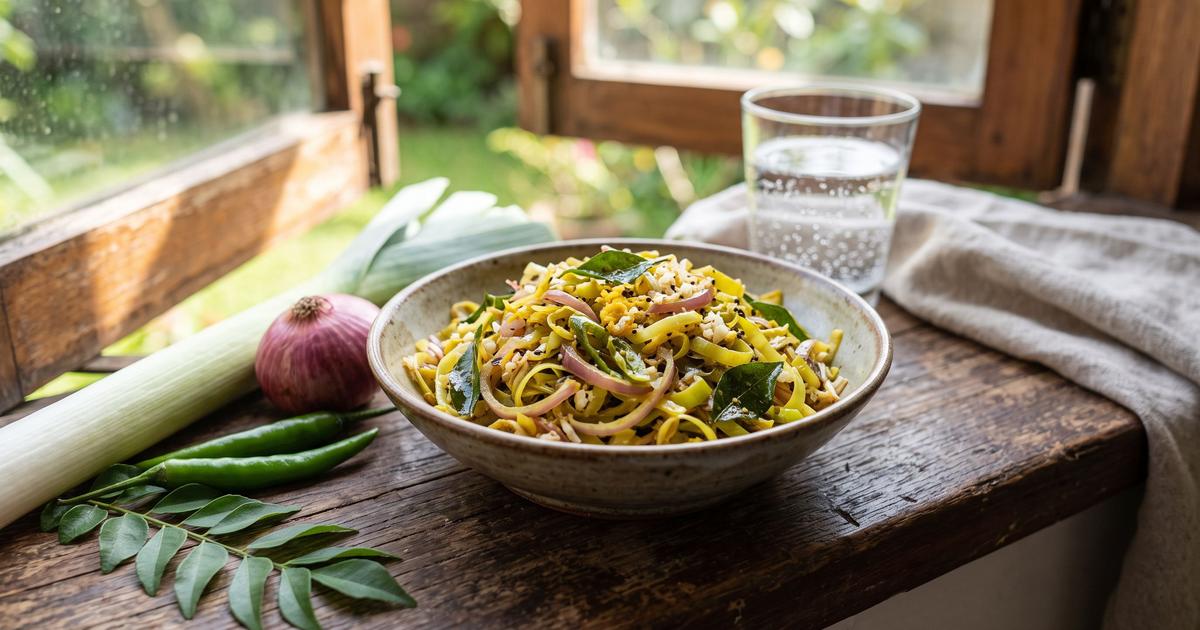
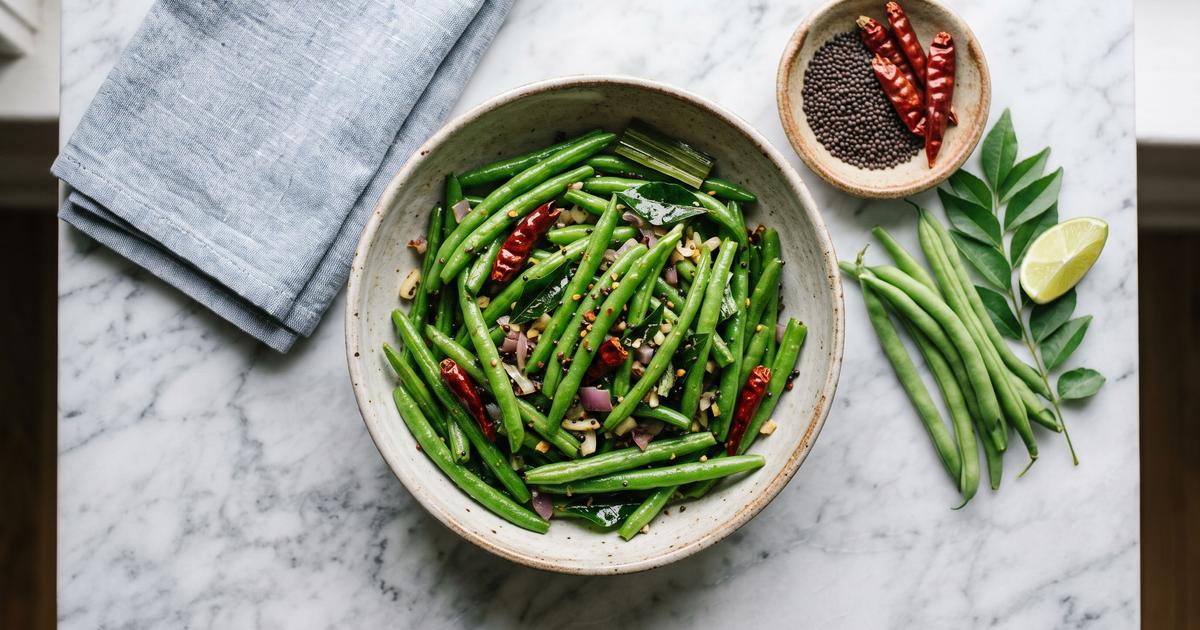
Leeks thel dala is a workhorse on the Sri Lankan table, the kind of tempered vegetable that turns up next to almost anything. The trick is patience: leeks are mostly water, and cooking them slowly drives that off and coaxes out a mellow sweetness that stands in for salt. A pinch of toasted fenugreek and a handful of curry leaves give it the specific Sri Lankan accent, while cracked pepper and lime sharpen the finish. Slice the leeks thin so they cook evenly.
Ingredients
- 2 lb Leeks, halved and sliced thin
- 1 Red onion, sliced thin
- 2 Indian green chiles, sliced
- 3 cloves Garlic, sliced
- 15 Curry leaves
- 1/2 tsp Brown mustard seed
- 1/4 tsp Fenugreek seed
- 1/2 tsp Turmeric
- 1 tsp Kashmiri chile, ground
- 1/2 tsp Black peppercorns, coarsely cracked
- 2 tsp Lime juice
Method
- Wash the sliced leeks in a bowl of water and lift them out, leaving the grit behind. Leeks trap sand in their layers, and the sliced pieces float while the dirt sinks. Drain them well.
- Warm a wide dry pan over medium heat. Toast the mustard and fenugreek seeds until the mustard pops, about 1 minute. The few fenugreek seeds add a faint maple bitterness that marks this as Sri Lankan rather than plain sauteed leeks, so keep the amount small.
- Add the red onion, green chile, garlic, and curry leaves with 2 tablespoons (30 ml) water. Sweat 4 minutes until the onion is soft and the leaves crackle.
- Pile in the leeks with the turmeric and ground Kashmiri chile. They will look like too much, then collapse to a third of the volume. Cook 10 to 12 minutes, stirring often and adding a splash of water only if the pan runs dry, until the leeks are silky and starting to caramelize at the edges. That slow reduction is where the sweetness comes from.
- Stir in the cracked pepper. Off the heat, add the lime juice, taste, and add a few more drops until it tastes bright. The pepper and lime carry the seasoning so no salt is needed. Serve alongside rice and dal.
Nutrition
Estimated per serving: 65 calories, 2 g protein, 3 g fiber, 20 mg sodium. Computed from USDA FoodData Central reference values for the main ingredients. This is an approximation, not a laboratory measurement. How these are computed.
Cost per serving is estimated from US national-average retail prices for cheap staple forms, using BLS dried-bean prices and USDA produce prices. Prices vary by store and season, so treat it as a guide, not a receipt. How this is computed.