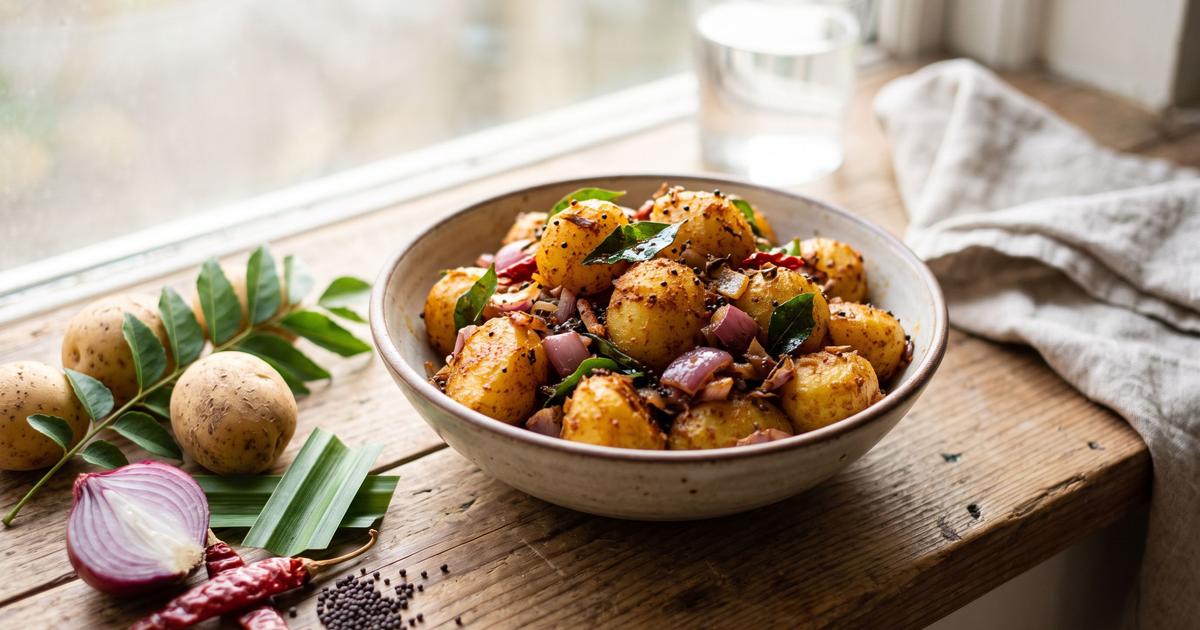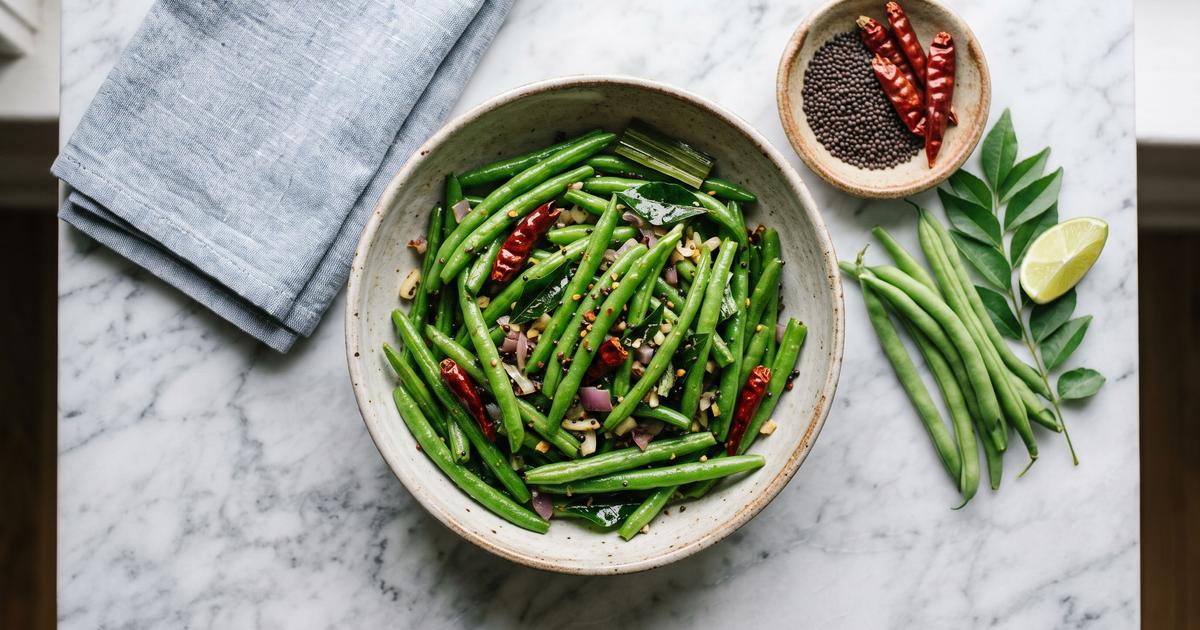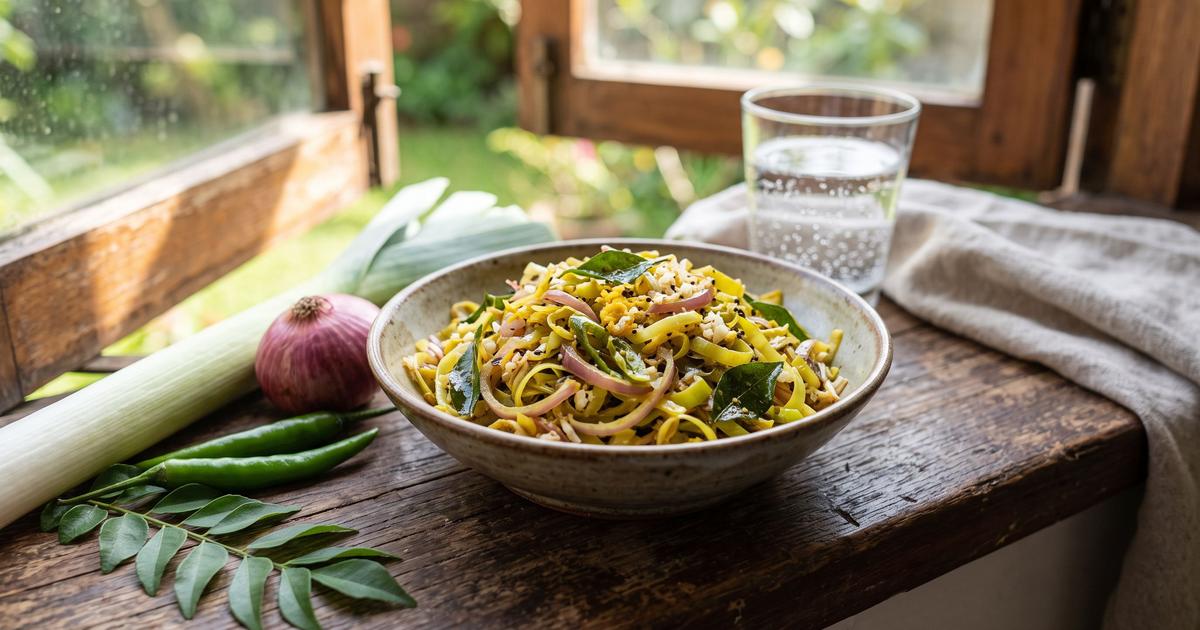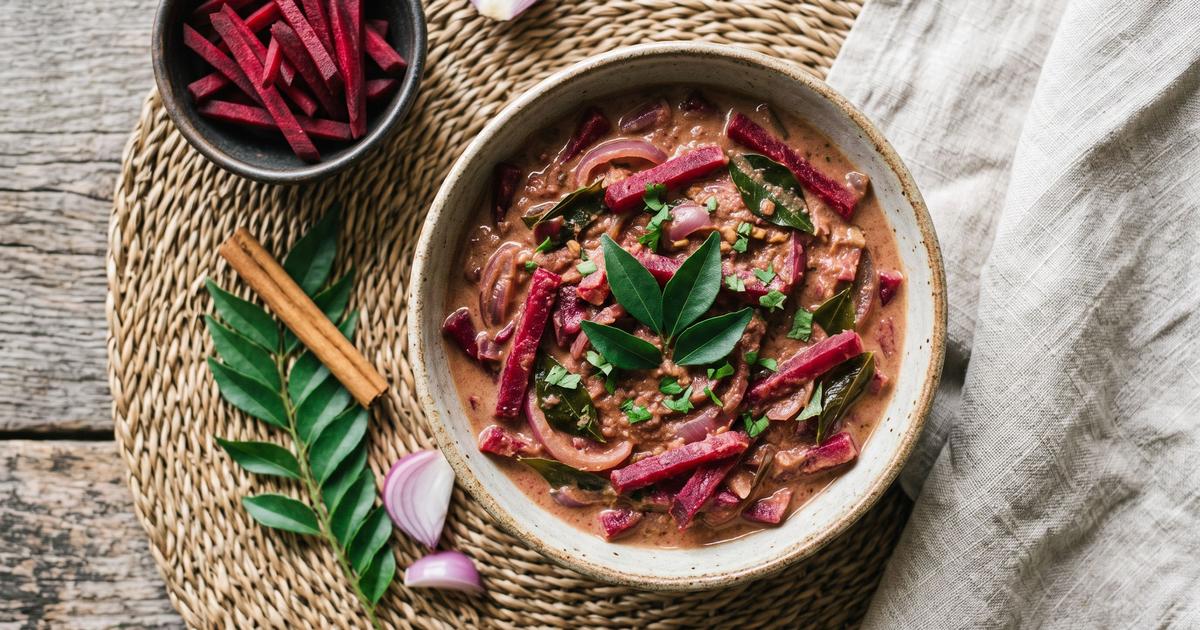
Bandakka Thel Dala, Sri Lankan Deviled Okra
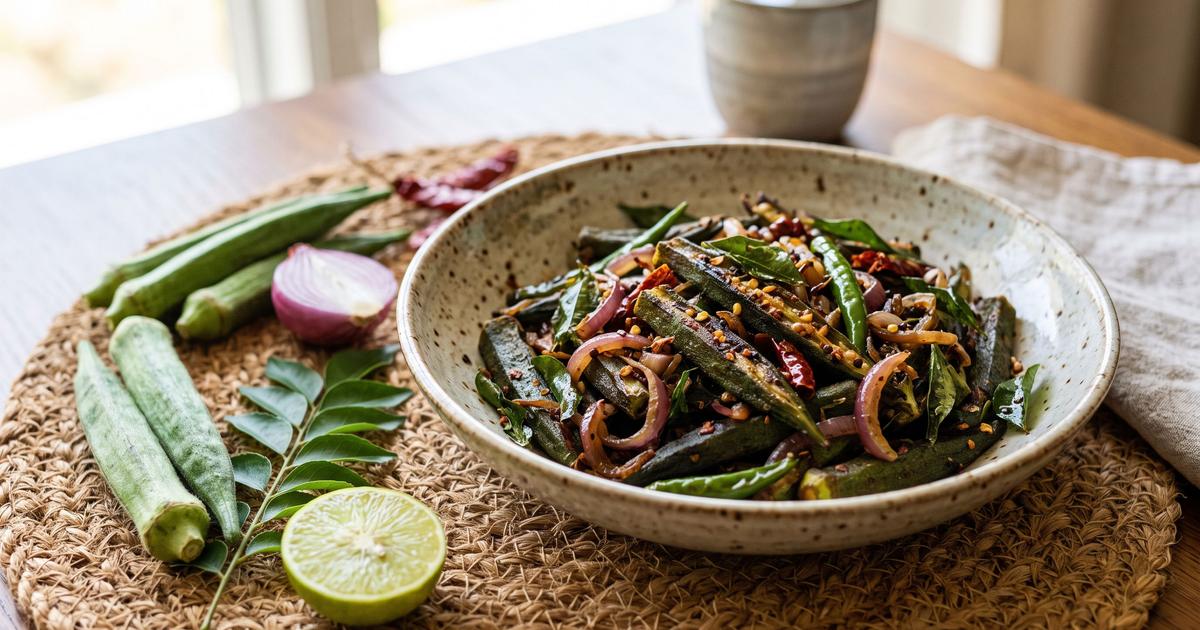
Thel dala means tempered, and it is how Sri Lankan cooks turn a plain vegetable into a fierce little side. Okra has a reputation for sliminess that scares people off, but the fix is simple: brown it dry before anything wet touches it. From there the onion, chile, curry leaf, and pandan build the deep tempered flavor, while tamarind and lime carry the seasoning that salt usually would. Keep the pieces in one layer while they roast so they brown instead of steam.
Ingredients
- 1 lb Okra, trimmed and cut in 1-inch lengths
- 1 Red onion, sliced thin
- 2 Indian green chiles, slit lengthwise
- 3 cloves Garlic, sliced
- 15 Curry leaves
- 1 piece Pandan leaf, 2-inch knot
- 1/2 tsp Turmeric
- 1 tsp Kashmiri chile, ground
- 1 piece Ceylon cinnamon, 1-inch shard
- 1 tsp Tamarind paste
- 1 tbsp Lime juice
Method
- Heat a wide dry pan over medium-high and add the okra in one layer. Roast it, turning now and then, for about 8 minutes until the cut faces brown and dry. Okra weeps when it meets water and oil, so the dry heat here sets the surface and stops the slime before any liquid goes in.
- Push the okra to the side. Add the red onion, slit chiles, garlic, curry leaves, pandan knot, and cinnamon shard with 2 tablespoons (30 ml) water. Sweat 4 minutes until the onion softens and the curry leaves smell toasted.
- Stir in the turmeric and ground Kashmiri chile and toss everything together for 1 minute. The chile is for color and gentle warmth, not raw heat, so let it coat the okra evenly.
- Dissolve the tamarind in 3 tablespoons (45 ml) warm water and pour it in. Cook 3 minutes, tossing, until the liquid is gone and the okra looks glossy rather than wet. Tamarind does double duty here: its acid keeps the pods from turning ropey and stands in for the salt.
- Pull the pandan and cinnamon out. Off the heat, add the lime juice and toss. Taste and add a few more drops of lime until it tastes bright and finished. Serve with rice and a dal.
Nutrition
Estimated per serving: 75 calories, 3 g protein, 4 g fiber, 20 mg sodium. Computed from USDA FoodData Central reference values for the main ingredients. This is an approximation, not a laboratory measurement. How these are computed.
Cost per serving is estimated from US national-average retail prices for cheap staple forms, using BLS dried-bean prices and USDA produce prices. Prices vary by store and season, so treat it as a guide, not a receipt. How this is computed.