Thakkali Curry, Sri Lankan Tomato Curry
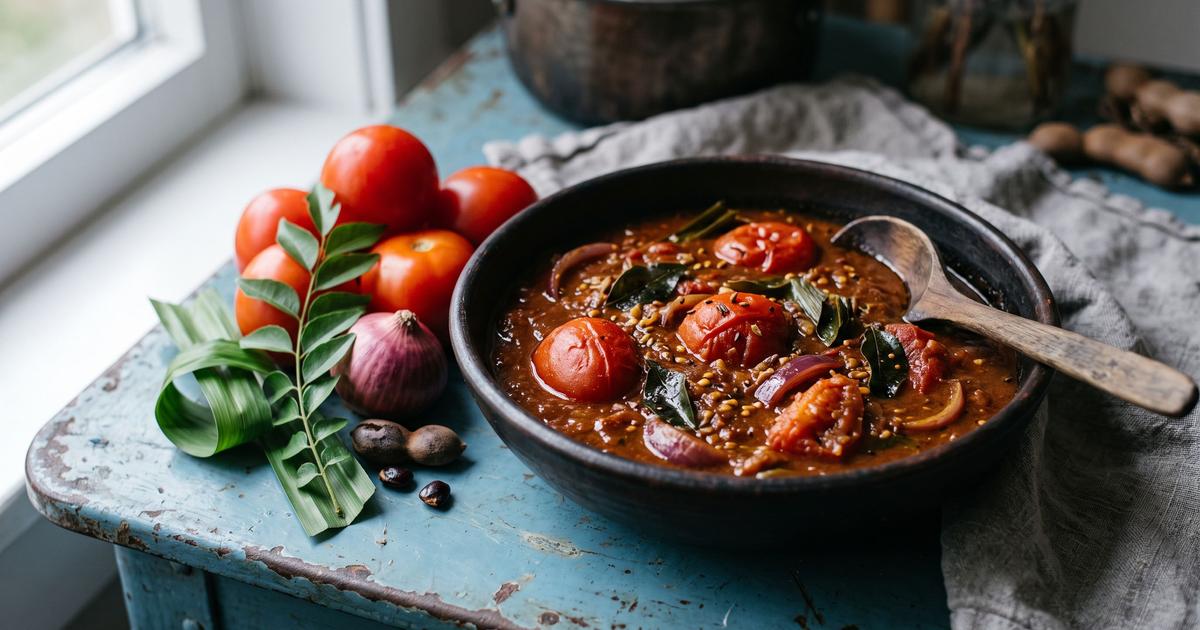
Thakkali curry is the weeknight tomato curry of Sri Lankan home cooking, quicker than any meat or lentil curry and built on whatever tomatoes are ripe. The coconut milk many versions add is doing texture work the tomatoes can do themselves: simmered down with onion and roasted spices, they thicken into their own loose sauce. Two moves define the flavor, the dry-toasted fenugreek at the start and the tamarind at the end, standing in for the sour goraka rind that traditionally cuts the sweetness. Serve it as a saucy side to spoon over rice.
Ingredients
- 1 1/2 lb Fresh tomatoes, cut in wedges
- 1 whole Yellow onions, sliced
- 4 cloves Garlic, sliced
- 1 tbsp Ginger, grated
- 12 leafs Curry leaves
- 1 piece Pandan leaf, knotted, 2-inch
- 1/2 tsp Brown mustard seed
- 1/4 tsp Fenugreek seed
- 1 stick Ceylon cinnamon, 2-inch
- 1/2 tsp Turmeric
- 1 1/2 tsp Curry powder
- 1/4 tsp Cayenne
- 1/2 tsp Tamarind paste
- 2 tbsp Cilantro, chopped
Method
- Warm a pot over medium heat and pop the mustard and fenugreek seeds dry until the mustard jumps and the fenugreek turns from pale to nutty brown, about 40 seconds. Fenugreek is bitter raw and sweet once toasted, but it scorches fast, so pull it the moment it colors.
- Add the onion, garlic, ginger, curry leaves, knotted pandan, and cinnamon with 3 tablespoons (45 ml) water and cook until the onion collapses, about 6 minutes.
- Stir in the turmeric, curry powder, and cayenne for 30 seconds, then add the tomato wedges and a splash of water. Cover and simmer 12 to 15 minutes, until the tomatoes break down into a loose curry. The tomatoes give up enough liquid to make their own sauce, so no coconut milk is needed for body.
- Stir in the tamarind paste and simmer 2 minutes more. The tamarind sharpens the curry the way a Sri Lankan cook would reach for a piece of goraka, and it means the dish needs no salt.
- Remove the pandan and cinnamon, finish with cilantro, and serve with rice.
Nutrition
Estimated per serving: 70 calories, 3 g protein, 3 g fiber, 30 mg sodium. Computed from USDA FoodData Central reference values for the main ingredients. This is an approximation, not a laboratory measurement. How these are computed.
Cost per serving is estimated from US national-average retail prices for cheap staple forms, using BLS dried-bean prices and USDA produce prices. Prices vary by store and season, so treat it as a guide, not a receipt. How this is computed.