Kabocha Purin, Kabocha and Tofu Pudding
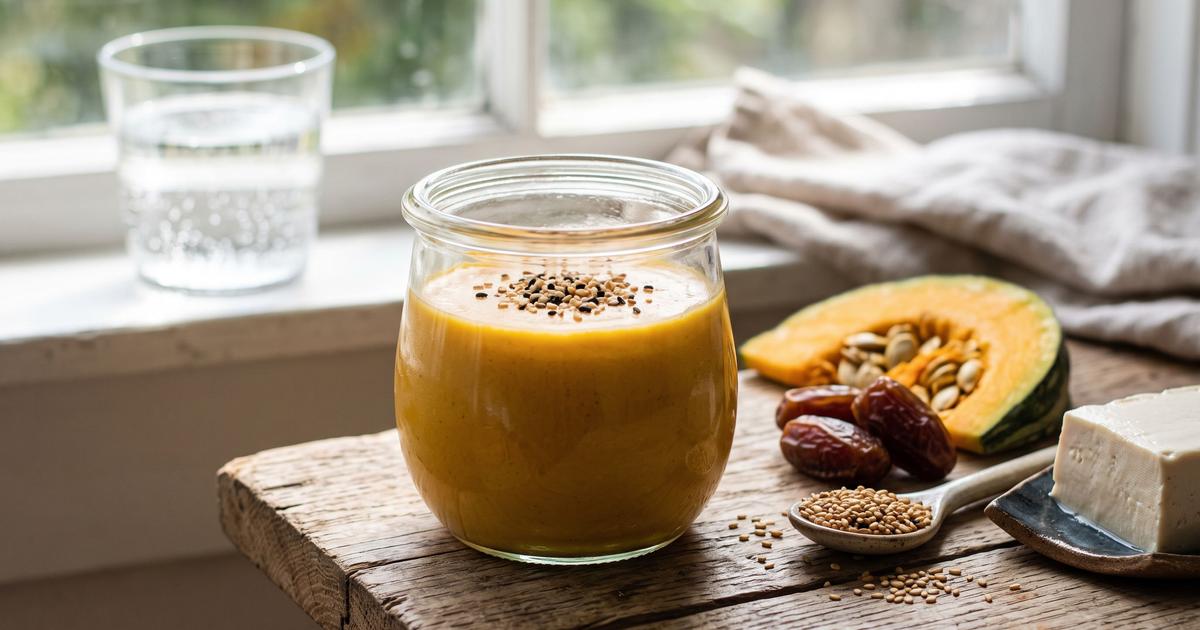
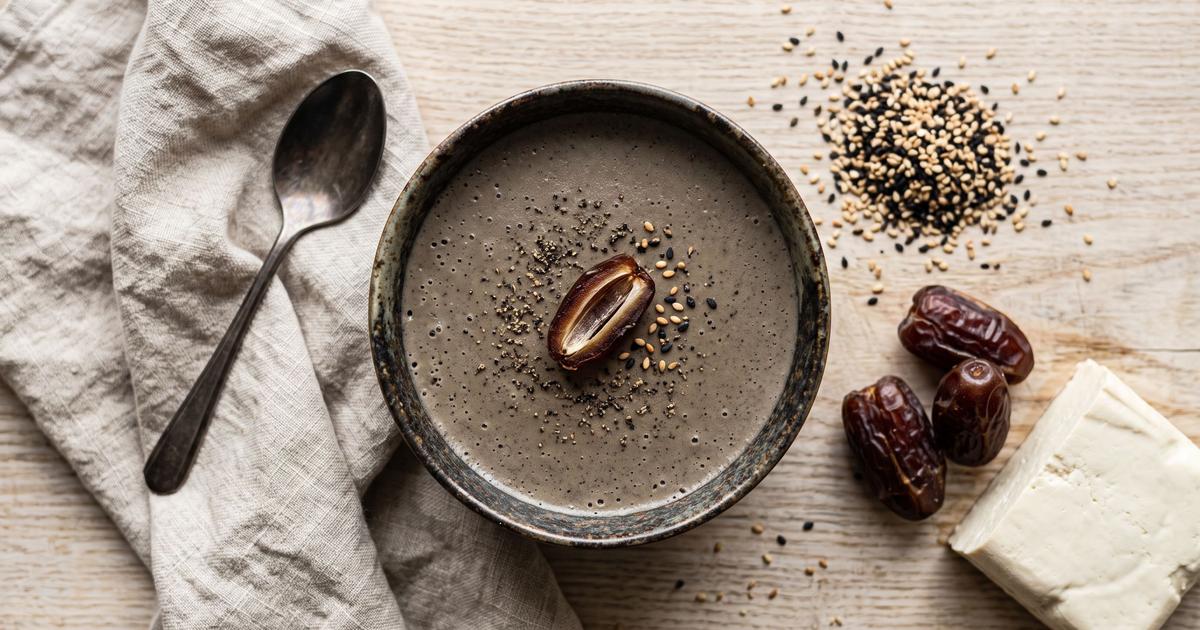
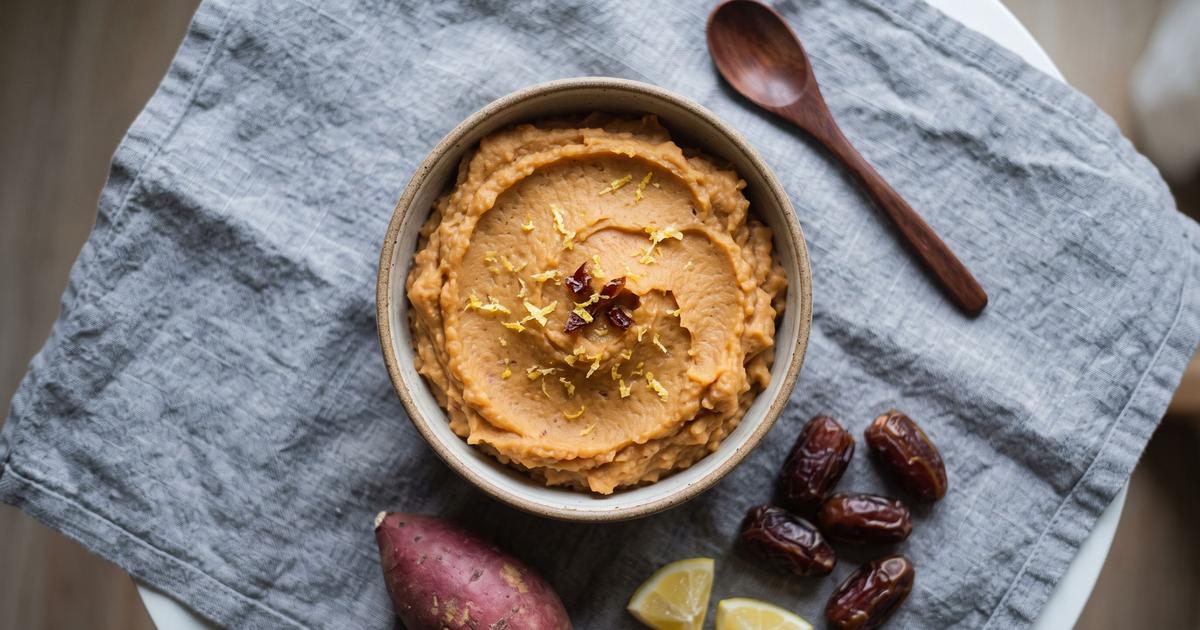
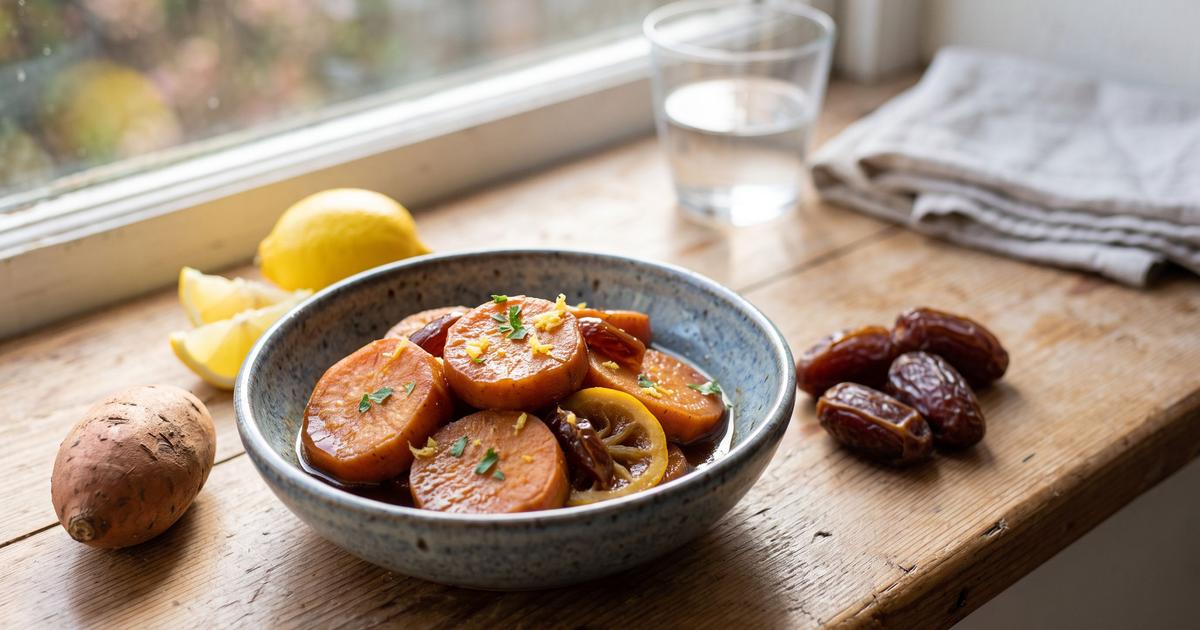
Purin is Japan's beloved custard pudding, usually eggs, cream, and caramel; this version keeps the silky, spoonable texture and builds it instead from kabocha squash and silken tofu. Kabocha is the right squash for the job because it is dense, dry, and genuinely sweet, so blended with tofu it needs only dates to taste like dessert. Steaming rather than boiling keeps the flesh concentrated, and a short cook with a little cornstarch sets the pudding to a soft, sliceable custard as it chills. It is a make-ahead sweet with fiber and a little protein standing in for the dairy, finished simply with toasted sesame.
Ingredients
- 1 lb Kabocha squash, about 450 g, seeded and cut into chunks, skin on
- 7 oz Silken tofu, about 200 g
- 3 pieces Medjool dates, pitted
- 1/2 cup Unsweetened soy milk
- 1 tbsp Cornstarch
- 1 pinch cassia cinnamon
- 1 tsp Sesame seeds, toasted, for serving
Method
- Steam the kabocha chunks for about 15 minutes, until a fork slides in easily, then scoop the flesh from the skin. Steaming keeps the squash from soaking up water the way boiling would, so the pudding sets firm instead of turning loose and wet.
- Blend the kabocha flesh, tofu, dates, soy milk, cornstarch, and cinnamon until completely smooth. Silken tofu blends into a custard body that stands in for the eggs and cream of a classic purin, and the dates are the only sweetener the dry, sweet squash needs.
- Cook the blend in a saucepan over low heat, stirring constantly, for 4 to 5 minutes until it thickens and gently bubbles. Heating sets the cornstarch and the squash's own starch to work, which is what lets it firm into a spoonable pudding once cold.
- Pour into 4 small cups and chill at least 2 hours until set. It firms as it cools, so the wait is what turns a warm puree into a pudding; skip it and you have soup.
- Top each cup with toasted sesame before serving. Kabocha is dry and sweet enough on its own that it asks for nothing behind the dates.
Nutrition
Estimated per serving: 130 calories, 5 g protein, 4 g fiber, 25 mg sodium. Computed from USDA FoodData Central reference values for the main ingredients. This is an approximation, not a laboratory measurement. How these are computed.
Cost per serving is estimated from US national-average retail prices for cheap staple forms, using BLS dried-bean prices and USDA produce prices. Prices vary by store and season, so treat it as a guide, not a receipt. How this is computed.